Every war, from the kings to Justinian
100 wars and campaigns, 753 BC to AD 565, with their maps, battle plans, commanders and consequences.
About this compendium
The wars, campaigns, armies and battlefields of Rome, from the foundation traditions to the age of Justinian
Historical frame: traditional 753 BC–AD 565.
Edition: 30 October 2026.
Contents: 100 war and campaign dossiers; 12 regional plates; 8 campaign-route diagrams; 12 tactical and technical diagrams; 26 incorporated battle illustrations; 64 additional campaign maps and educational plates; 8 newly generated interpretive plates; 102 gazetteer entries.
The subject of this compendium is the conduct of war: why armies were raised, where they could move, how they fought, what sustained them, and what their victories and defeats did to states and communities. Its dossiers join the political history to the campaign narrative, the battlefield to the supply route, and the famous commander to the people who experienced the war.
- Reading the compendium
- Regional atlas
- Armies, weapons and campaign systems
- Chronological register
- I. The making of Roman Italy
- II. Carthage and the connected Mediterranean
- III. Mediterranean hegemony and its resistance
- IV. The Republic at war with itself
- V. The early Principate: conquest and provincial war
- VI. The high empire and the third-century emergencies
- VII. The fourth-century empire
- VIII. The western imperial system under pressure
- IX. The eastern empire and Justinian's wars
- Battle and siege finder
- Gazetteer and uncertain locations
- Historical sources and critical register
The numbered dossiers are the main body. Each begins with a concise account of the conflict, identifies the leading belligerents and military problem, then develops the campaign through detailed narrative, operational study, maps or contemporary testimony as the surviving record permits. Some large conflicts have linked theater dossiers; these are components of the same war, not additional independent wars.
Use the chronological register to follow time, the regional plates to follow geography, and the battle finder or gazetteer to find a particular engagement or place. The individual dossiers are also supplied as separate Markdown documents for reading and annotation.
Dates and numbers. There is no year zero. Conventional opening dates, last battles, treaties and provincial settlements can differ. Early Roman dates and some late-war dates remain disputed. Numerical strengths and losses preserved in the extended narratives are reported historical claims, not verified headcounts; where the account gives a firm-looking number, its literary and transmission context still applies.
Evidence and reconstruction. The edition combines edited narrative studies, newly written synthesis and, in selected later dossiers, substantial passages of the contemporary campaign chronicle translated by H. B. Dewing. Those passages are visibly attributed and retain ancient book/section numbers. Ancient speeches, divine explanations, motives and judgments of peoples are testimony to the account, not independent modern findings. The depth of a dossier follows the evidence: a well-documented siege can support much more detail than an early traditional battle.
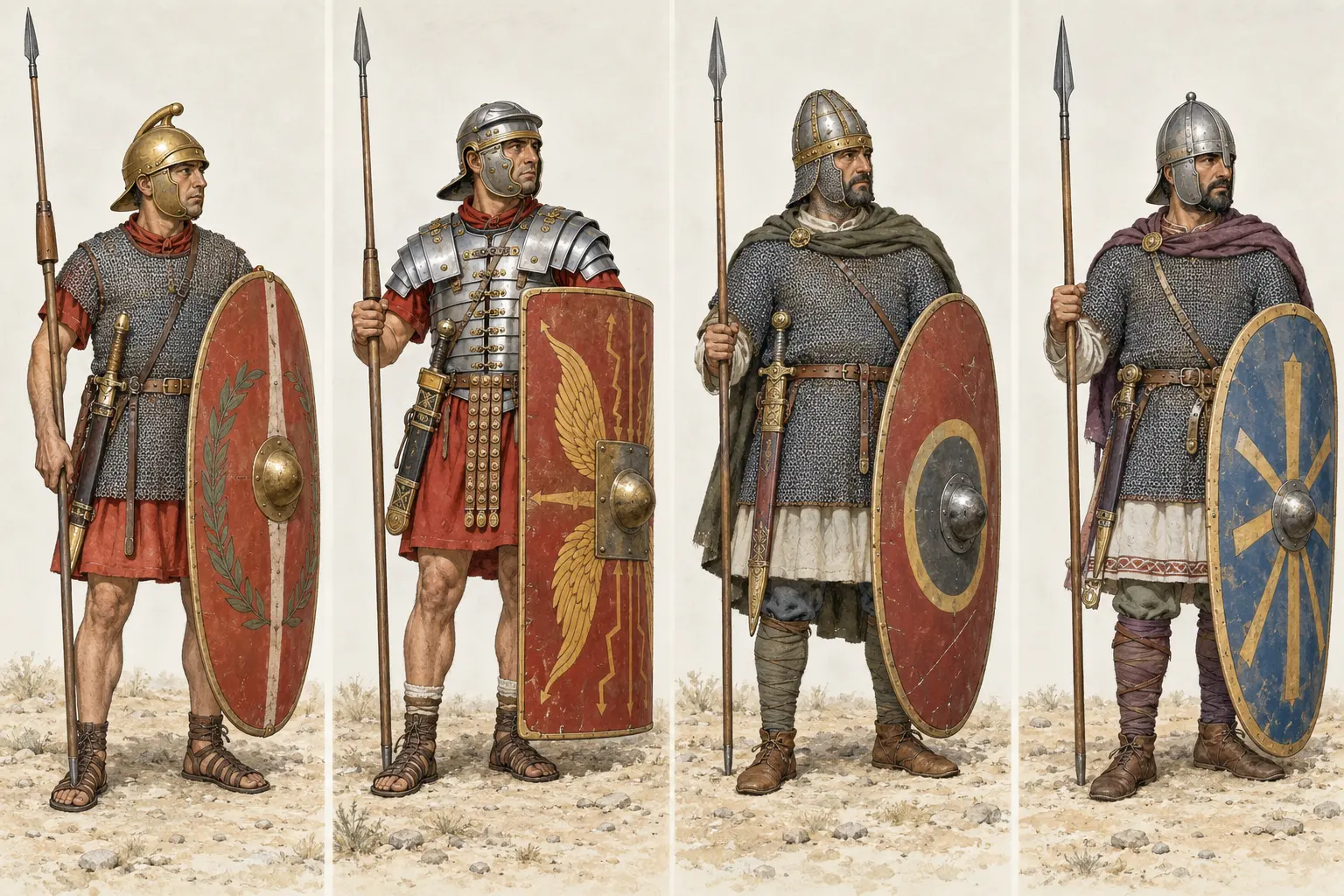
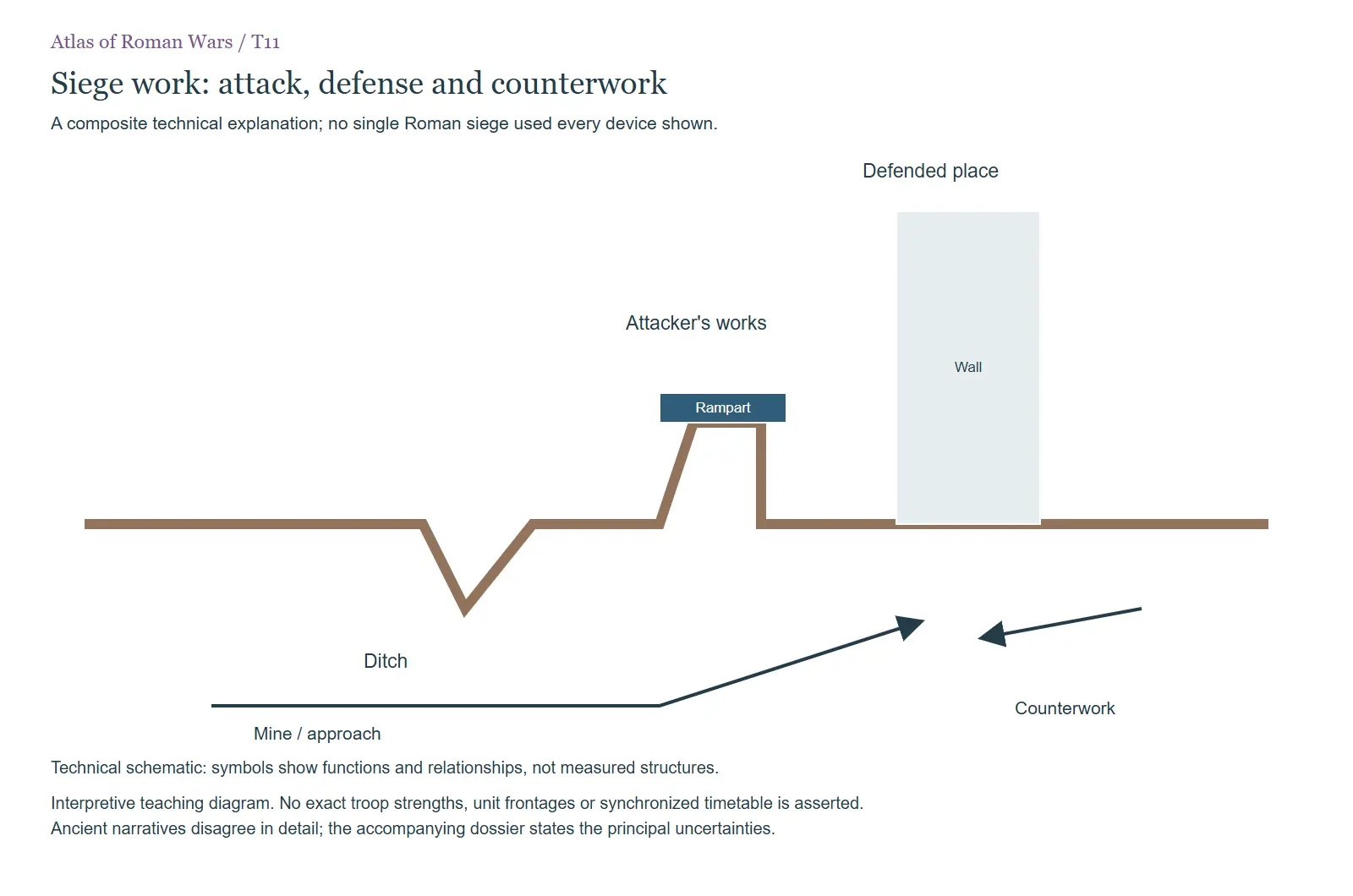
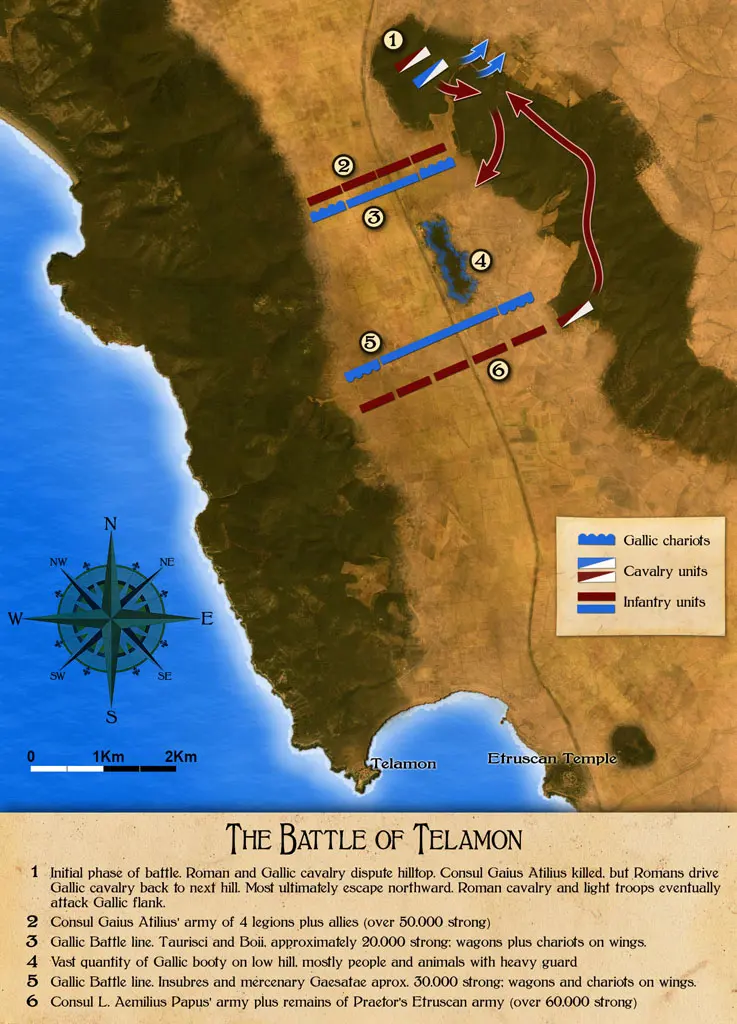
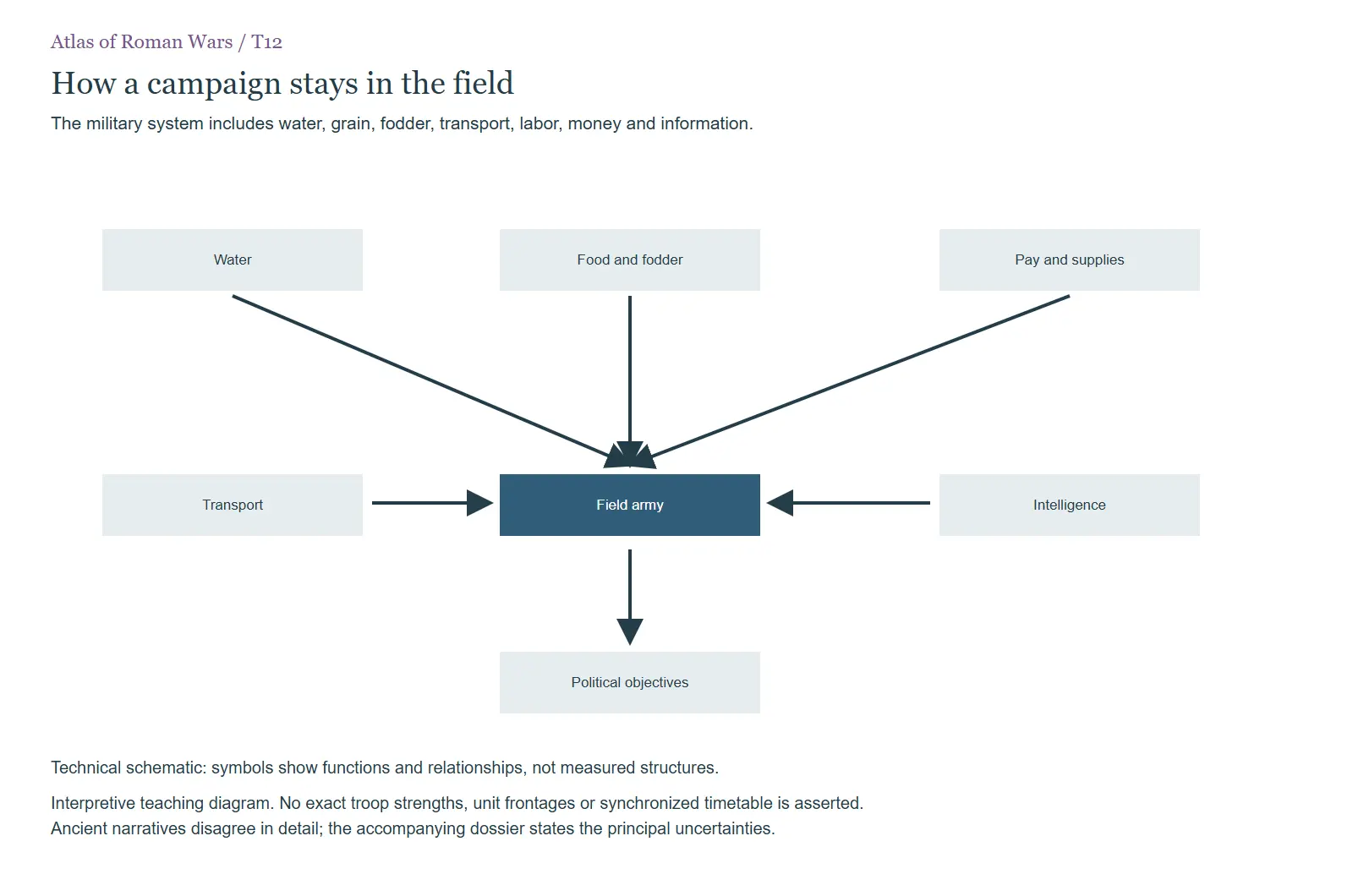
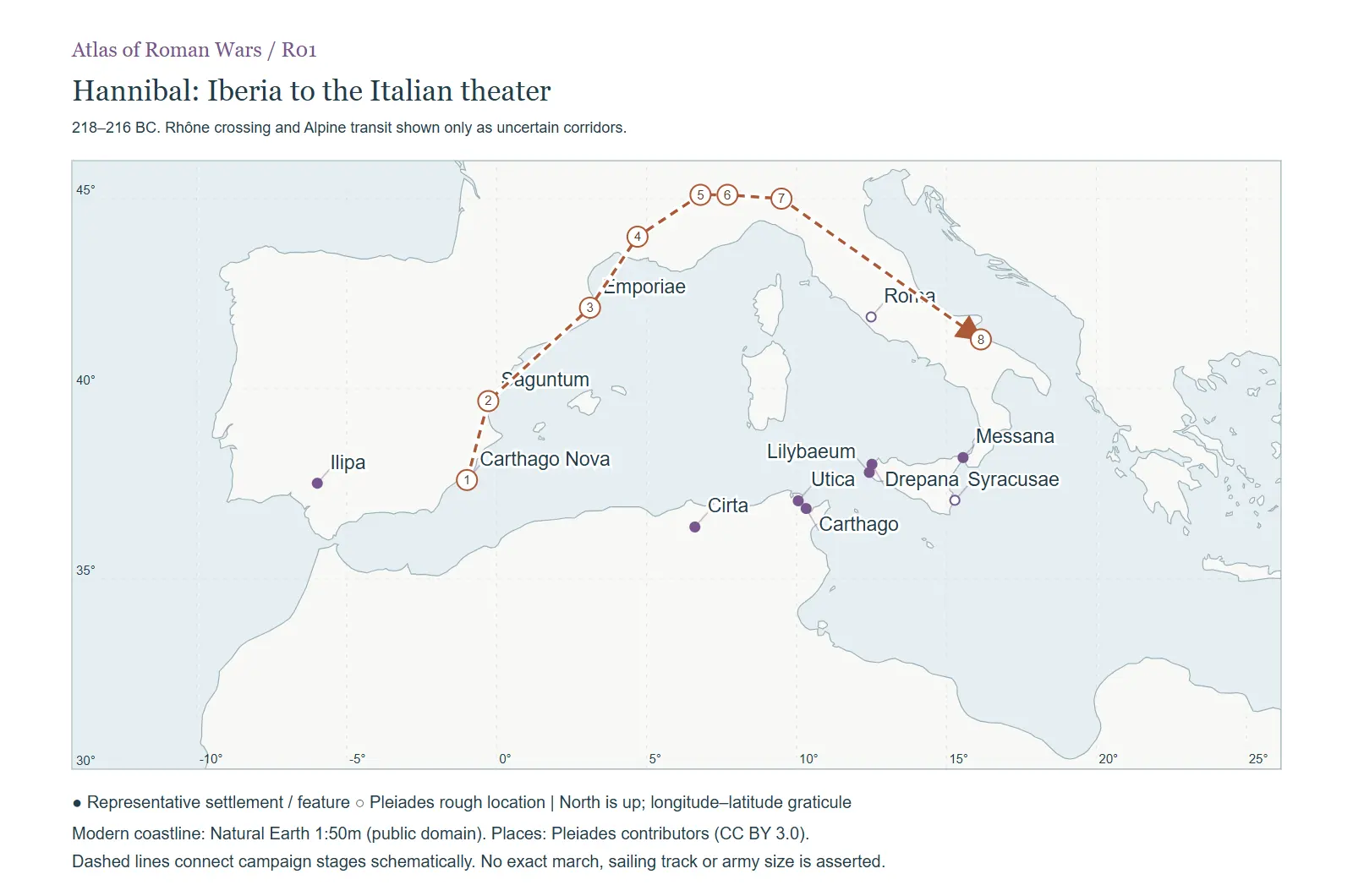
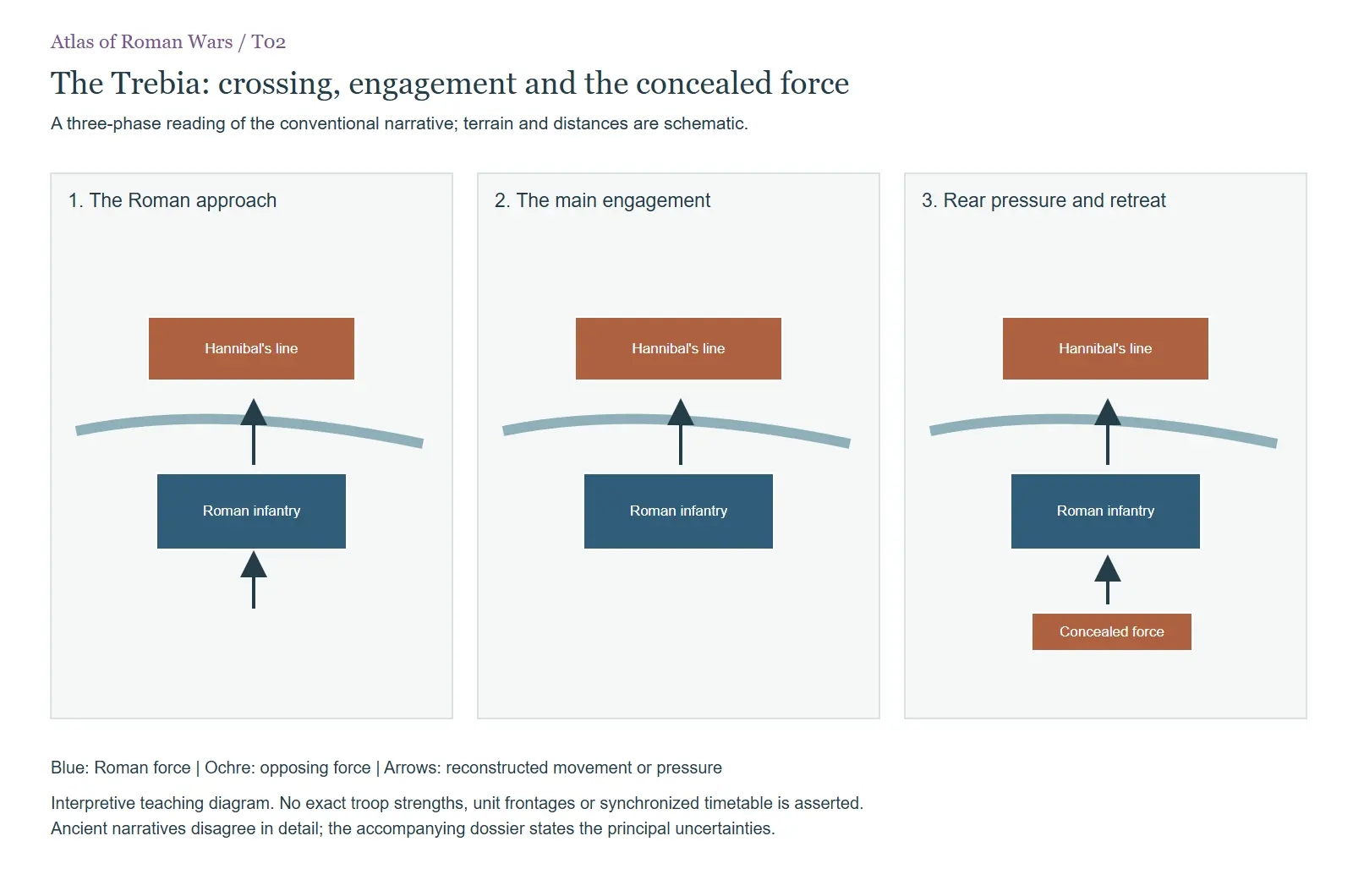
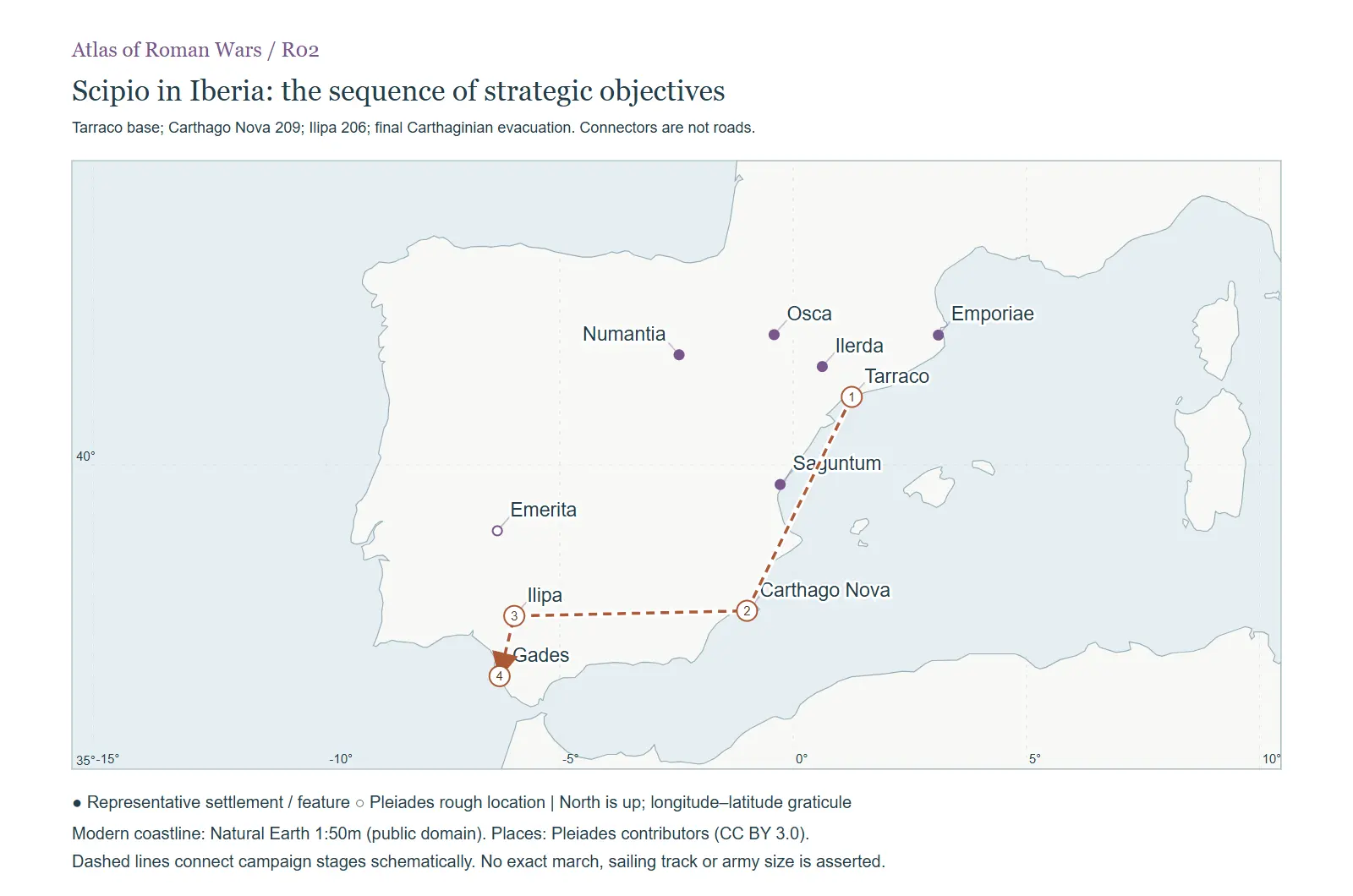
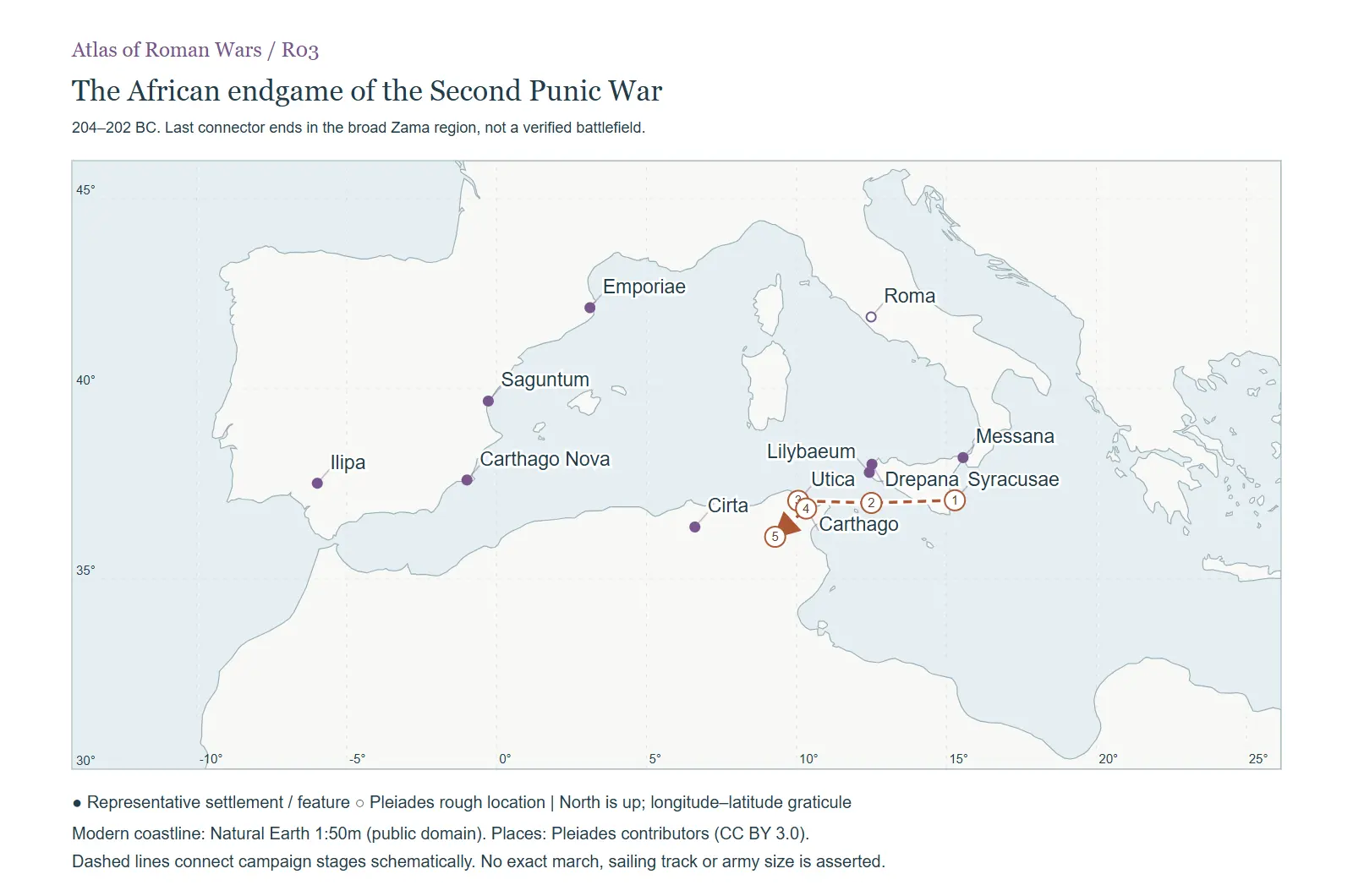
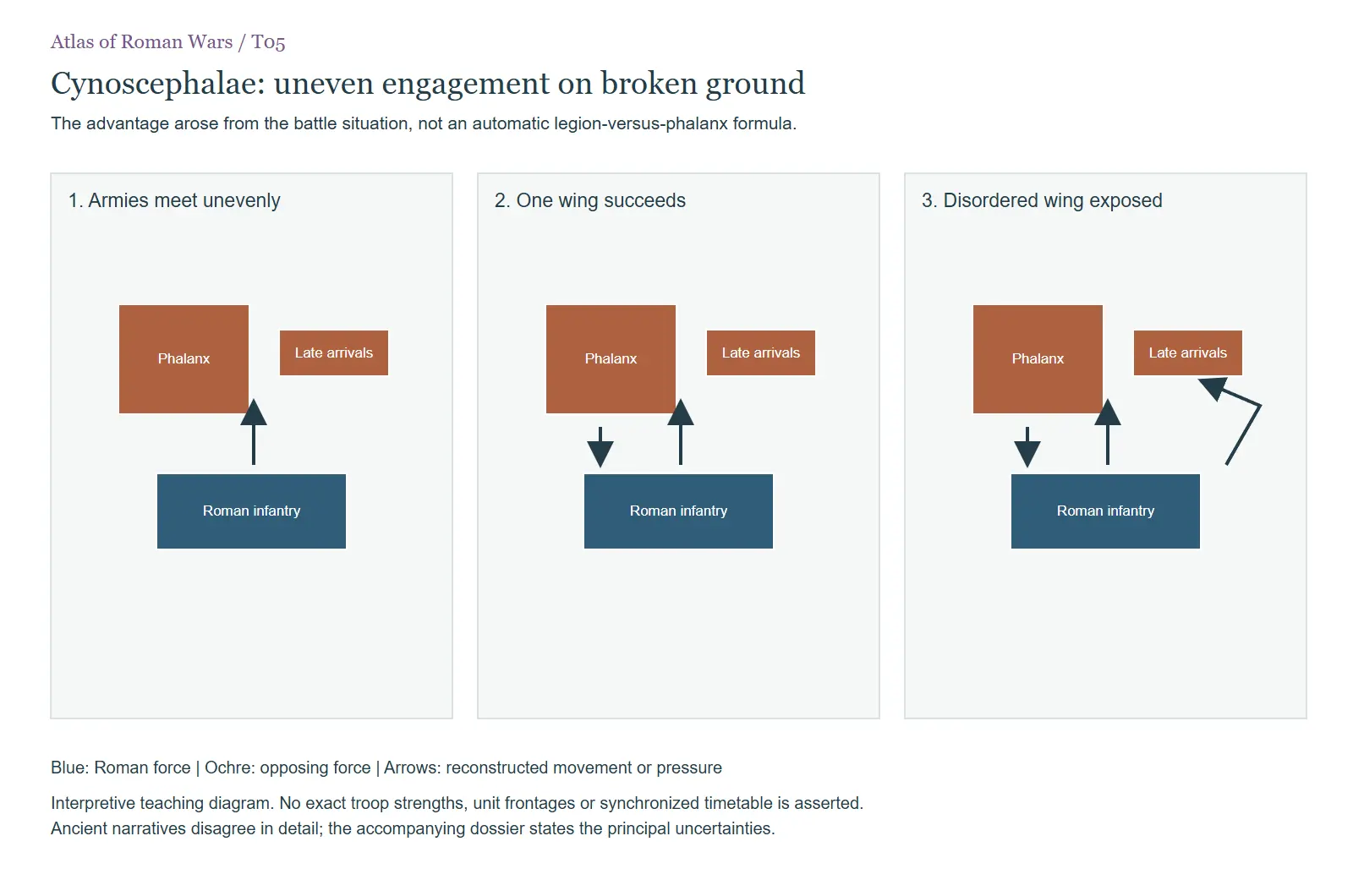
Images. Regional plates use modern simplified coastlines and ancient-place locators. Route lines connect campaign stages schematically; they are not surveyed marching or sailing tracks. Tactical diagrams explain reconstructed relationships without asserting exact unit strengths, distances or timing. Inherited tactical illustrations preserve modern interpretations, with disputed labels corrected in captions. Generated scenes and equipment plates are interpretive illustrations, not archaeological evidence or portraits of specific individuals.
Additional campaign maps, provincial context maps and educational plates accompany the individual war dossiers. Their captions distinguish the date of a map from the date of the war, identify schematic or disputed details, and explain the military problem each figure illuminates. A graphic's printed strength, casualty total or confident reconstruction is not an additional independent witness. Original visual credits are retained.
Scope. The core volume covers antiquity through Justinian. It includes conquest, revolt, civil war, provincial resistance, siege and negotiated settlement, and continues after the removal of the western emperor in AD 476. It is a substantial account of the principal conflicts within that frame, not a claim that every raid or skirmish is independently recoverable. The later eastern Roman centuries are a distinct continuation, not silently treated as non-Roman history.
Keep the maps, illustrations, battle_illustrations and library_plates folders beside this document. The complete text remains readable as Markdown; the image folders supply its visual plates.
Also: Figures · Legions · Provinces · The guides ↓
I. The making of Roman Italy 11
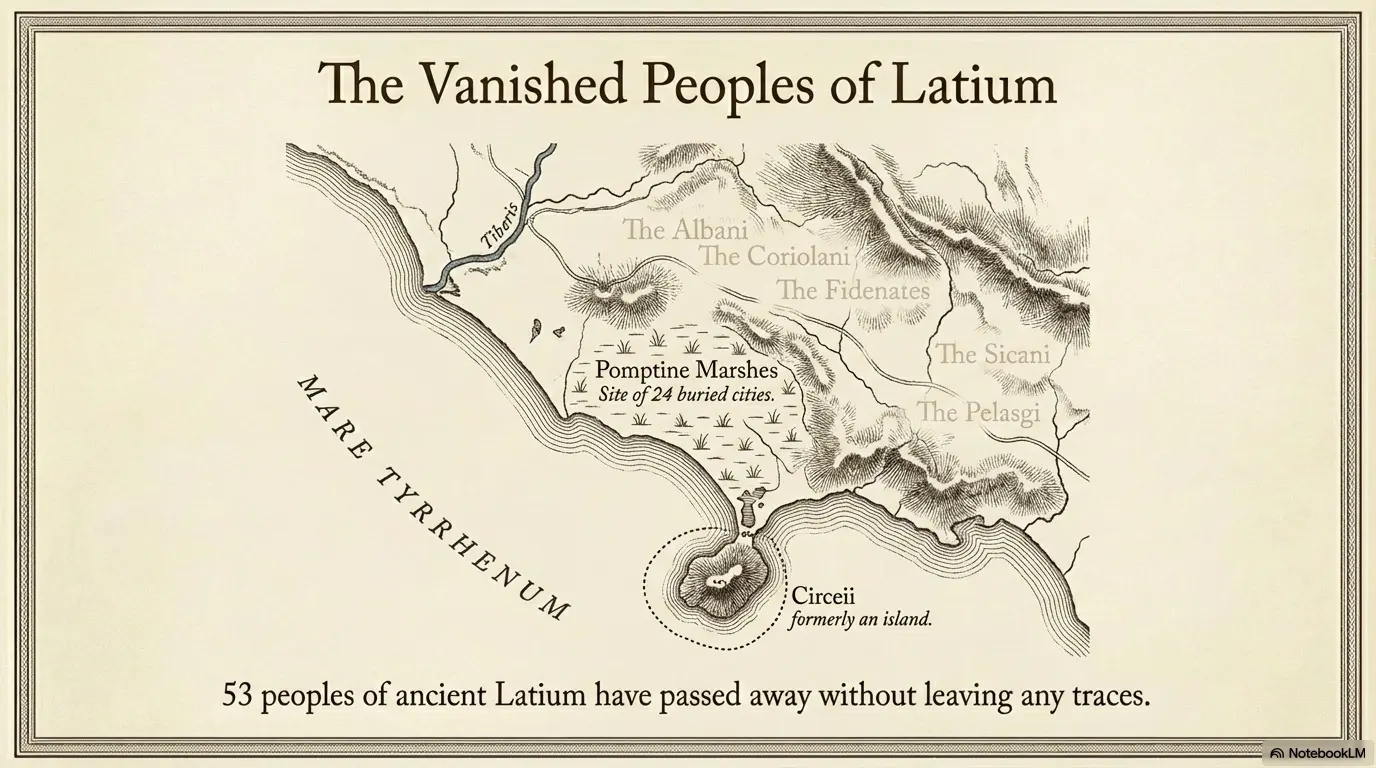
The first geography is small: Tiber crossings, the Alban hills, Etruscan neighbors and the routes into Campania. The narrative is much less secure than its familiar names suggest. Livy wrote long after the regal and early Republican wars; heroic episodes often explain institutions or family prestige as much as operations. The record becomes more substantial as Rome approaches the third century BC.
W001 | W002 | W003 | W004 | W005 | W006 | W007 | W008 | W009 | W011 | W010
 W001
The wars attributed to the kings
foundation and regal traditions.
- 509 BCW002W002
The Tarquinian restoration wars and Lake Regillus
regime conflict and regional war.
- W003
The Aequian, Volscian, Sabine and Fidenate wars
recurring regional wars.
- 406 BCW004W004
The final war with Veii
siege and territorial conquest.
- 390 BCW005W005
The Allia and the Gallic sack of Rome
invasion, defeat and occupation.
- 343 BCW006W006
The First Samnite War
regional war and alliance intervention.
- 340 BCW007W007
The Latin War
war within a regional alliance system.
 W008
The Second Samnite War
prolonged regional war.
- 298 BCW009W009
The Third Samnite War and the Italian coalition
coalition war.
 W011
Cisalpine Gallic and Ligurian wars
regional conquest and resistance.
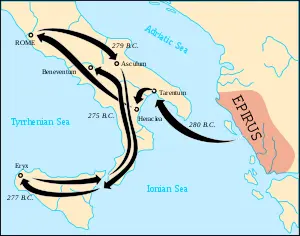 W010
Pyrrhus, Tarentum and the conquest of the Italian south
overseas intervention and regional conquest.
II. Carthage and the connected Mediterranean 7
Rome's first overseas wars required it to sustain armies across water. Sicily, Sardinia, Iberia and Africa were not peripheral stages: ports, ships, grain and allied governments joined them to the survival of armies in Italy. The Second Punic War is therefore cataloged both as a whole and by its principal theaters.
 W012
The First Punic War
interstate war, naval war and siege.
- 241 BCW013W013
The Mercenary War and Rome's seizure of Sardinia
contextual non-Roman war and Roman coercive expansion.
 W014
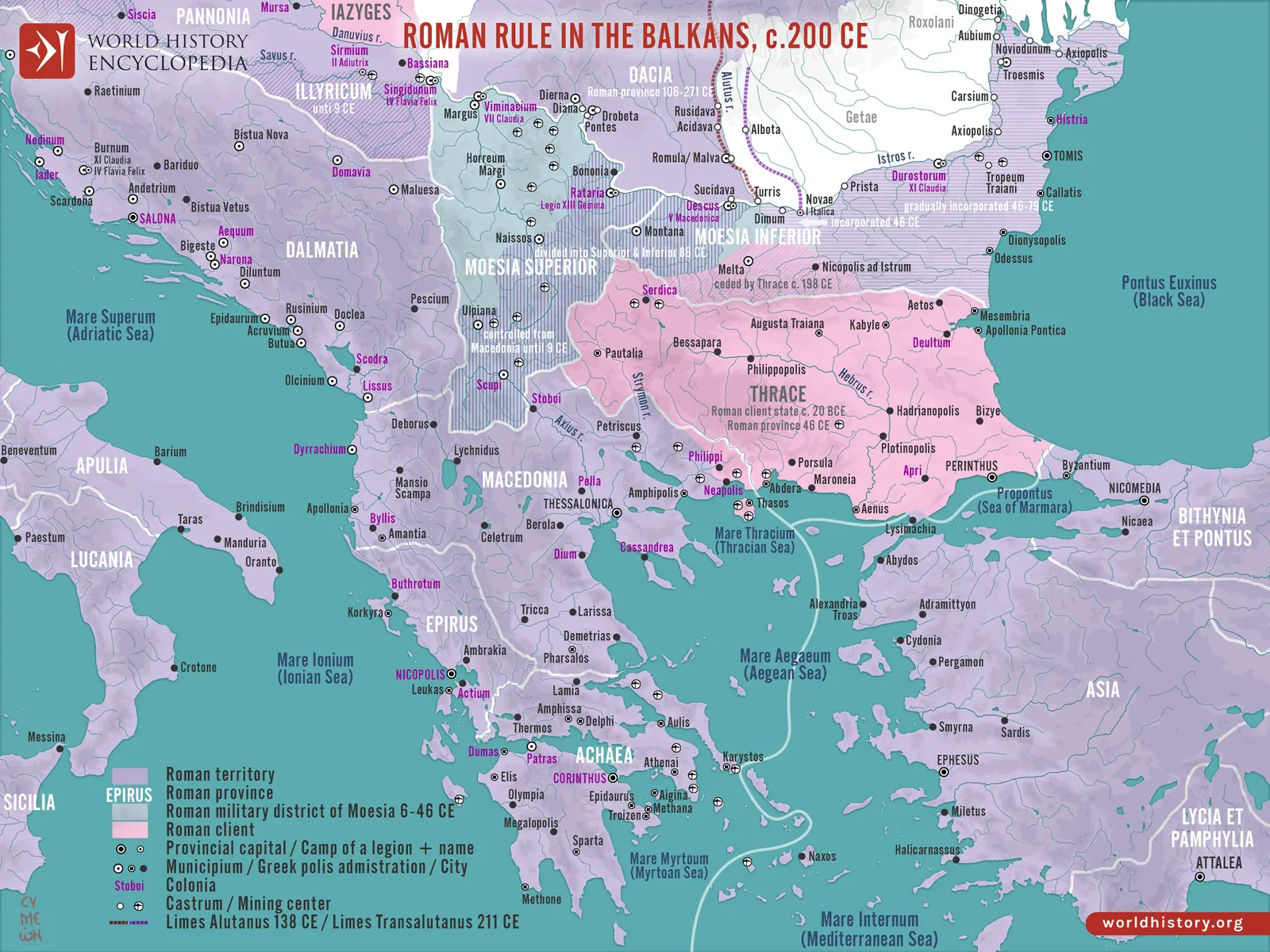
The first two Illyrian wars
maritime intervention and regional war.
 W015
The Second Punic War: the whole conflict
interstate coalition war.
 W016
Hannibal in Italy
theater of W015.
 W017
The Iberian theater of the Hannibalic War
theater of W015.
 W018
Scipio in Africa and the battle of Zama
theater and settlement of W015.
III. Mediterranean hegemony and its resistance 11
The defeat of Carthage did not produce one universal Roman blueprint. Rome fought kings, leagues, cities, enslaved rebels and inland peoples. Treaties, indemnities, client relationships and provincial annexation followed different schedules. The Aegean and Iberian dossiers should be read together: spectacular victories in the East coexisted with prolonged difficulty in the West.
W019 | W020 | W021 | W022 | W027 | W023 | W026 | W024 | W025 | W029 | W028
- W019
The First Macedonian War
interstate war linked to W015.
 W020
The Second Macedonian War
interstate war.
- 195 BCW021W021
Nabis, Aetolia and Galatia: the enforcement campaigns
three related but distinct interventions.
- 192 BCW022W022
The Roman–Seleucid War
interstate war and coalition war.
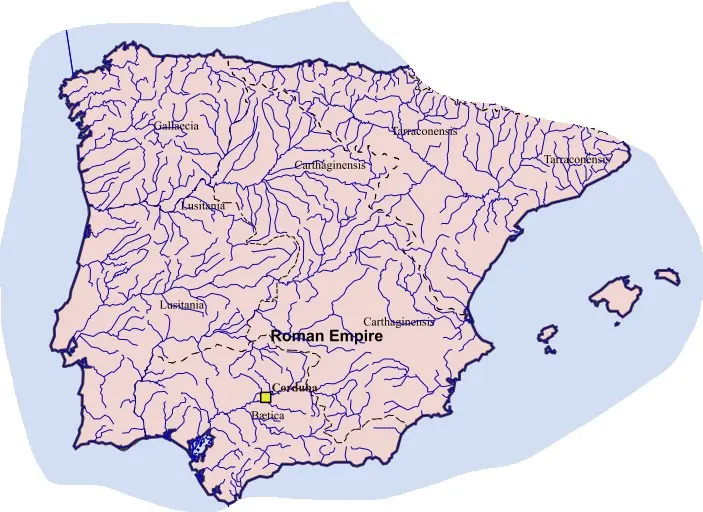 W027
The Celtiberian wars and Numantia
recurring resistance and siege.
- W023
The Third Macedonian and Third Illyrian wars
allied but distinct interstate conflicts.
- W026
The Lusitanian wars and Viriathus
conquest, resistance and negotiated war.
- 150 BCW024W024
The Fourth Macedonian and Achaean wars
restoration attempt and league war.
- 149 BCW025W025
The Third Punic War
siege war and destruction of a state.
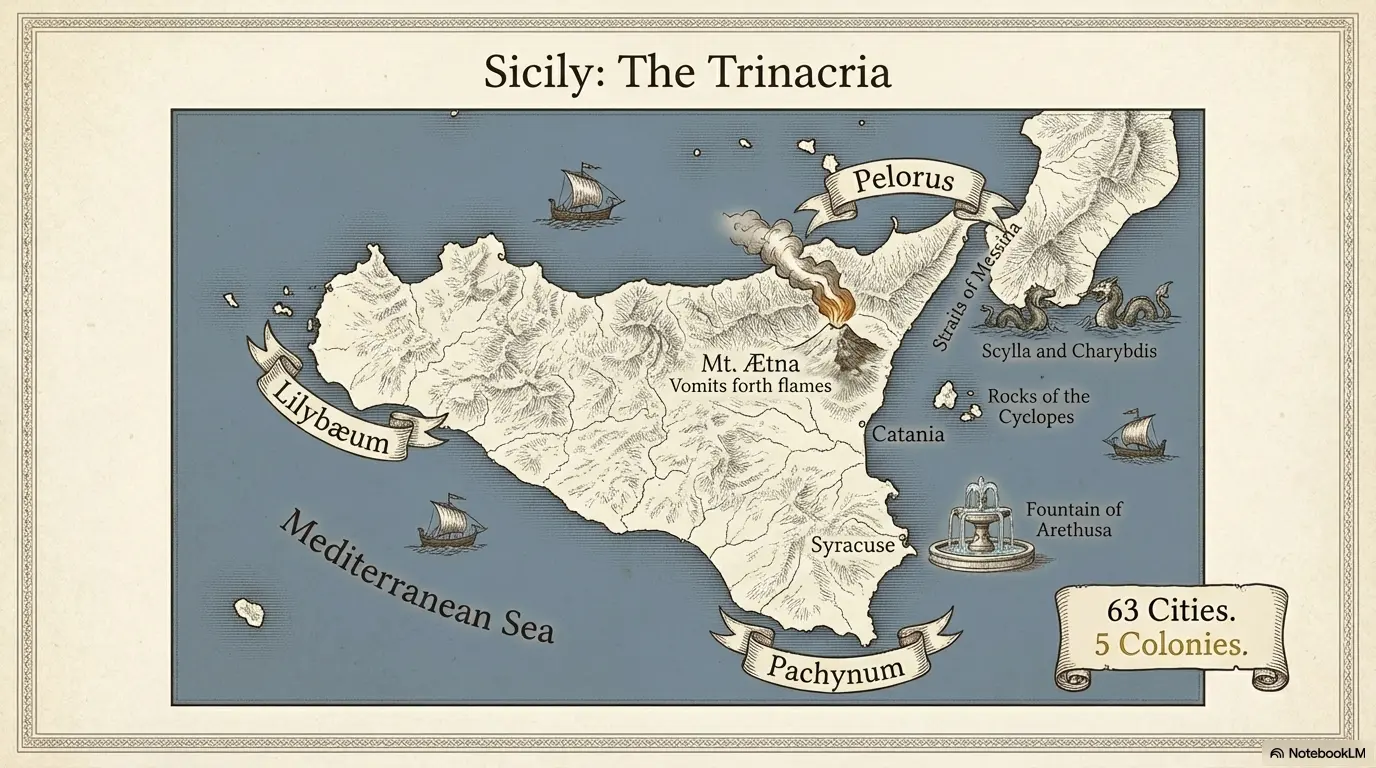 W029
The Sicilian servile wars
two distinct rebellions of enslaved people.
- 133 BCW028W028
Aristonicus and the Attalid succession
succession war and resistance to Roman incorporation.
IV. The Republic at war with itself 17
Expansion and civil conflict overlapped. Commands in Africa, Spain and the East generated prestige and resources; disputes over citizenship and authority brought war into Italy itself. The categories "foreign war" and "civil war" are useful catalog fields, but the following records repeatedly cross their boundary.
W031 | W030 | W032 | W034 | W033 | W035 | W037 | W036 | W038 | W039 | W040 | W041 | W042 | W043 | W093 | W044 | W045
- 113 BCW031W031
The Cimbrian and Teutonic wars
repeated encounters with migrating and campaigning groups.
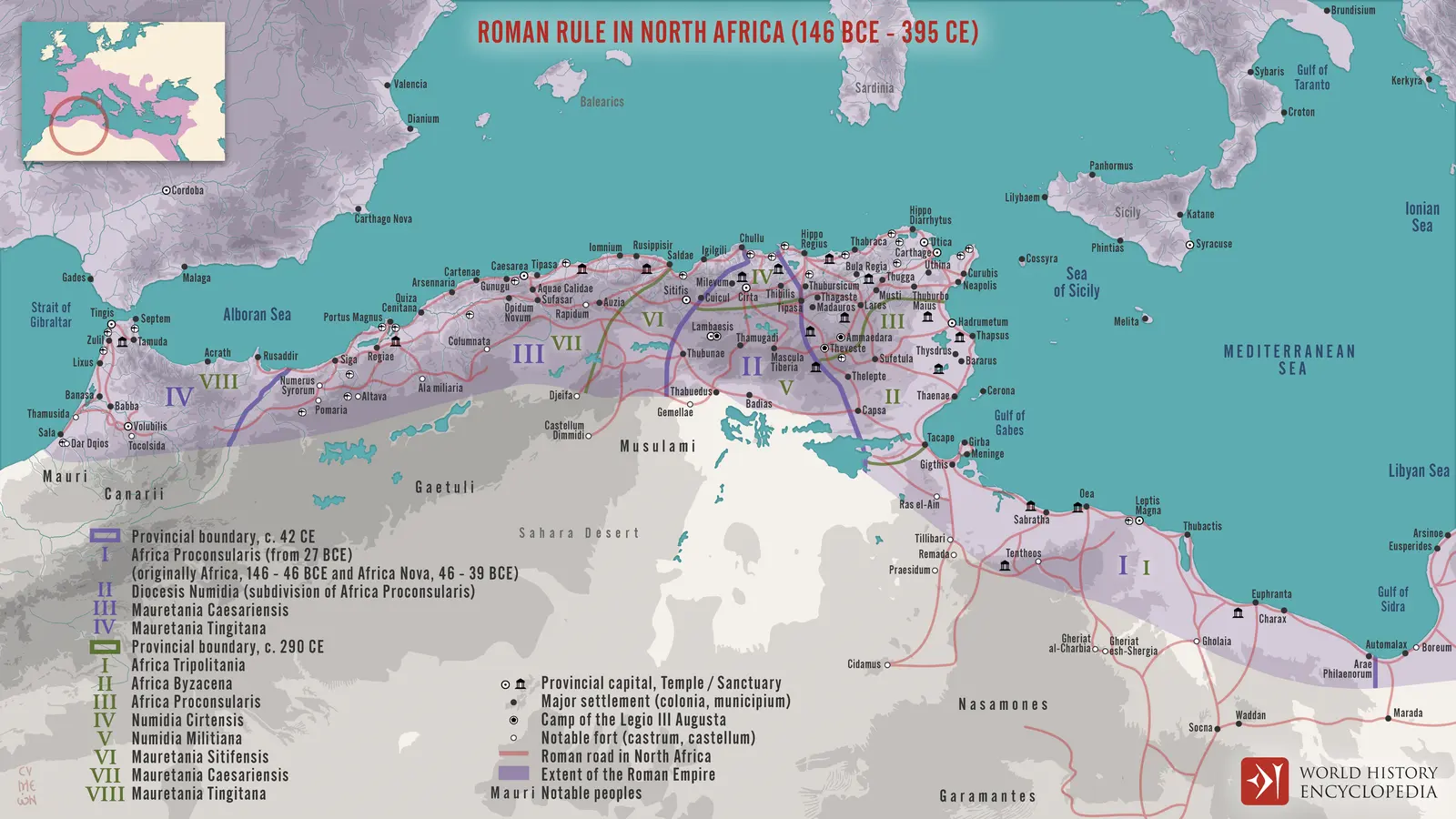 W030
The Jugurthine War
succession and interstate war.
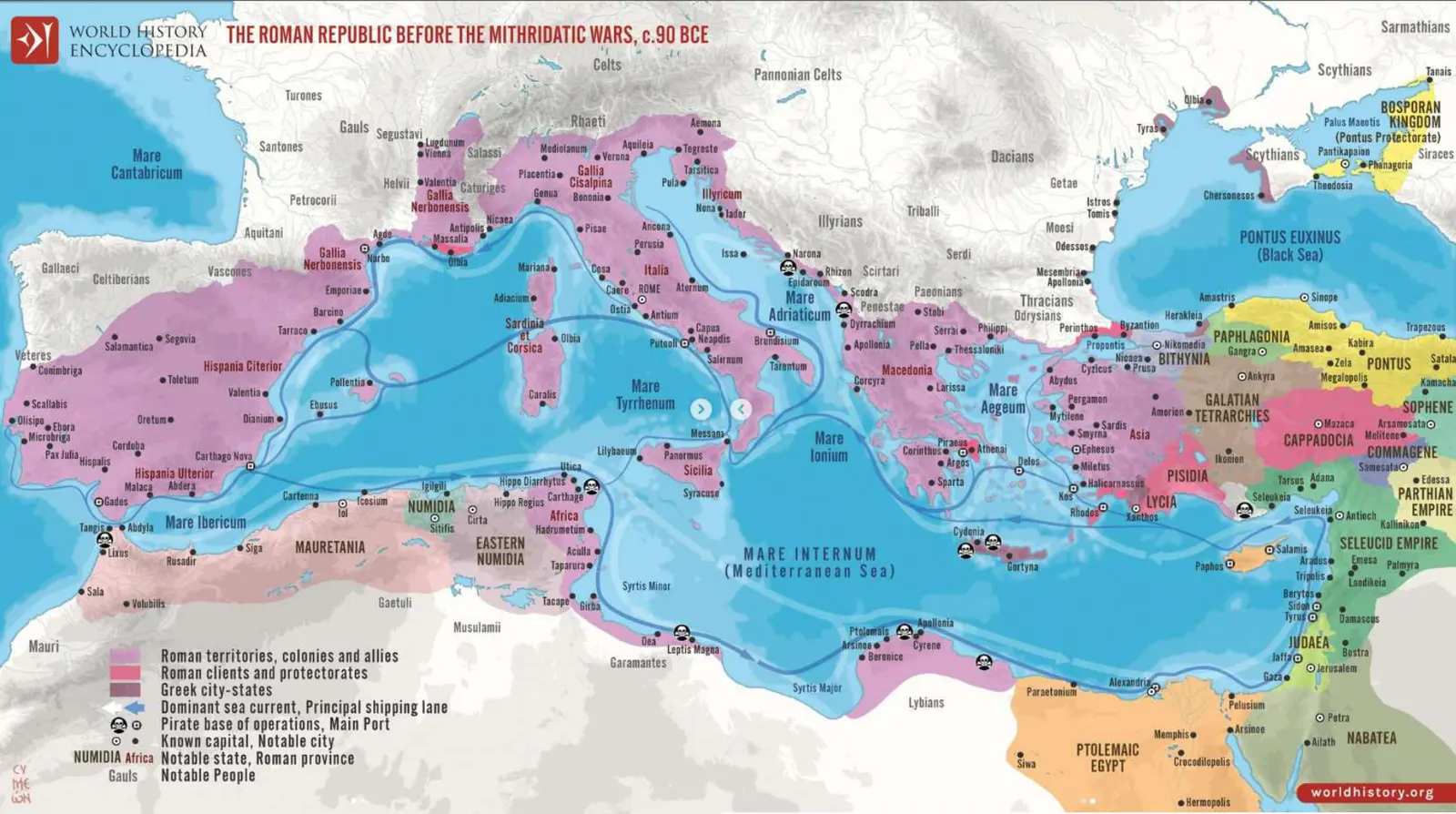 W032
The Social War
allied revolt and Italian civil conflict.
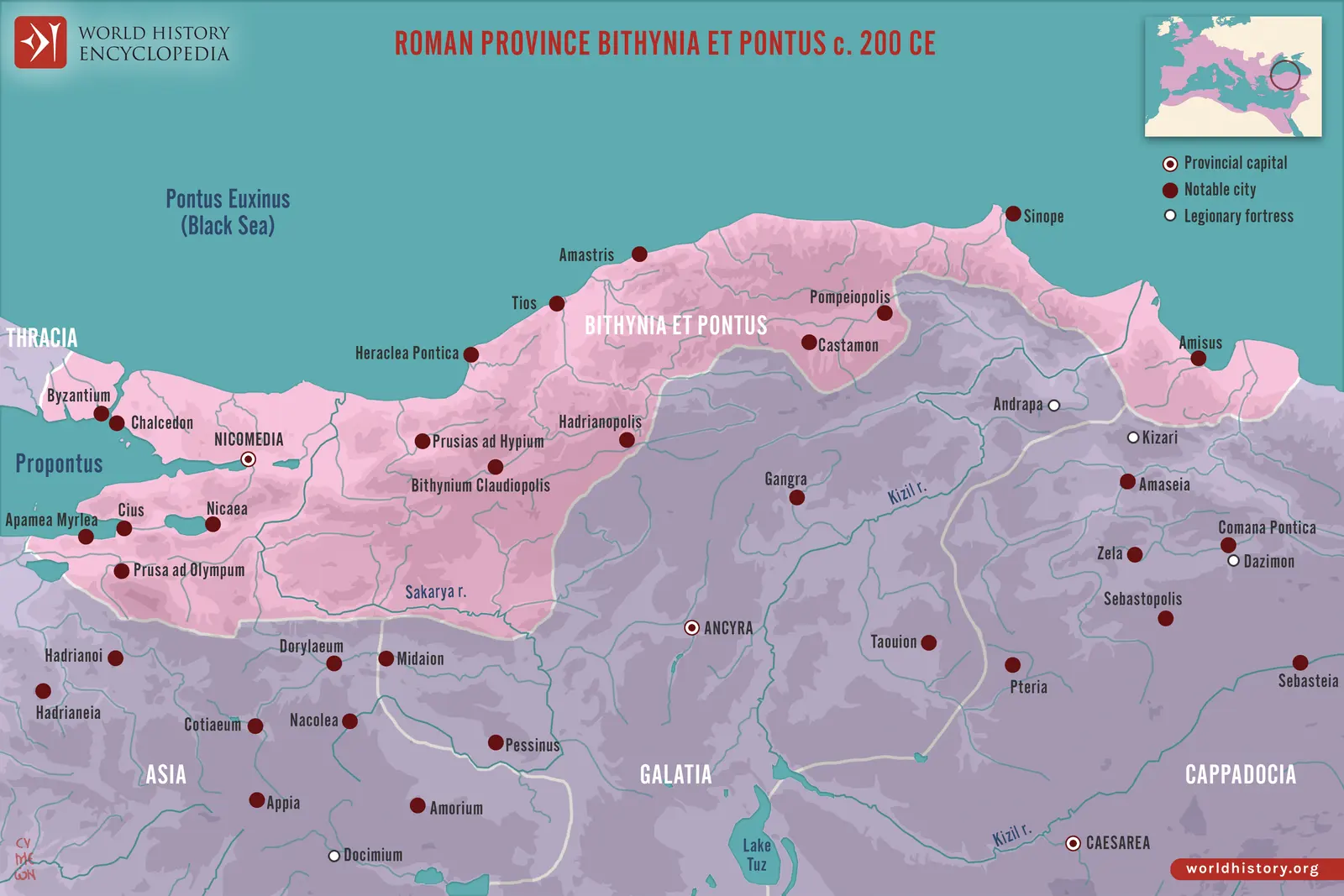 W034
The First Mithridatic War
interstate war and revolt against Roman power.
- 88 BCW033W033
The civil wars of Marius, Cinna and Sulla
civil war.
- W035
The Second Mithridatic War
renewed frontier war.
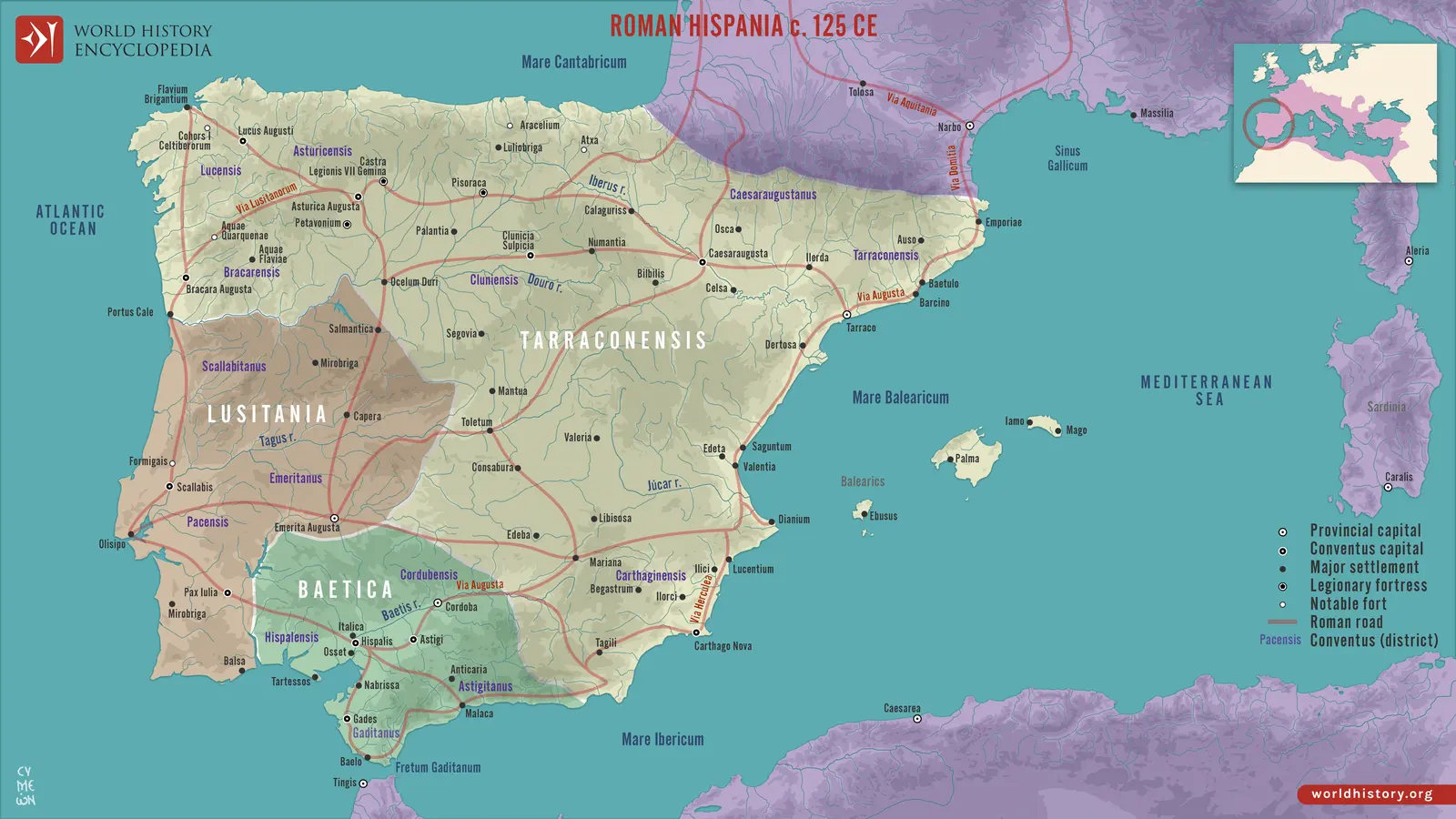 W037
The Sertorian War
Roman civil war with Iberian alliances.
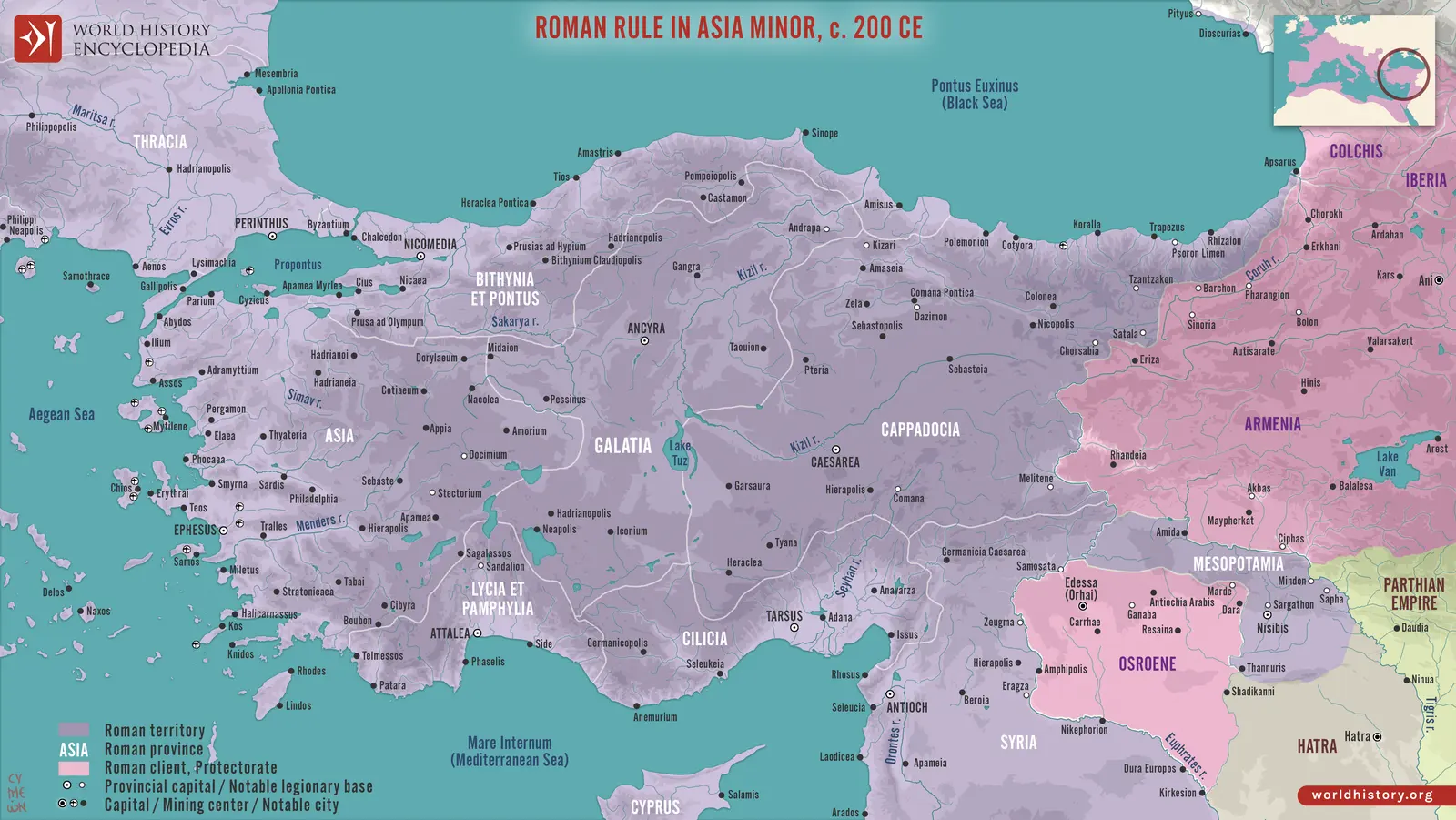 W036
The Third Mithridatic War and the Armenian campaigns
interstate and succession war.
- 73 BCW038W038
Spartacus and the Third Servile War
revolt of enslaved people and large-scale internal war.
- 67 BCW039W039
Pompey's war against the pirates
maritime campaign.
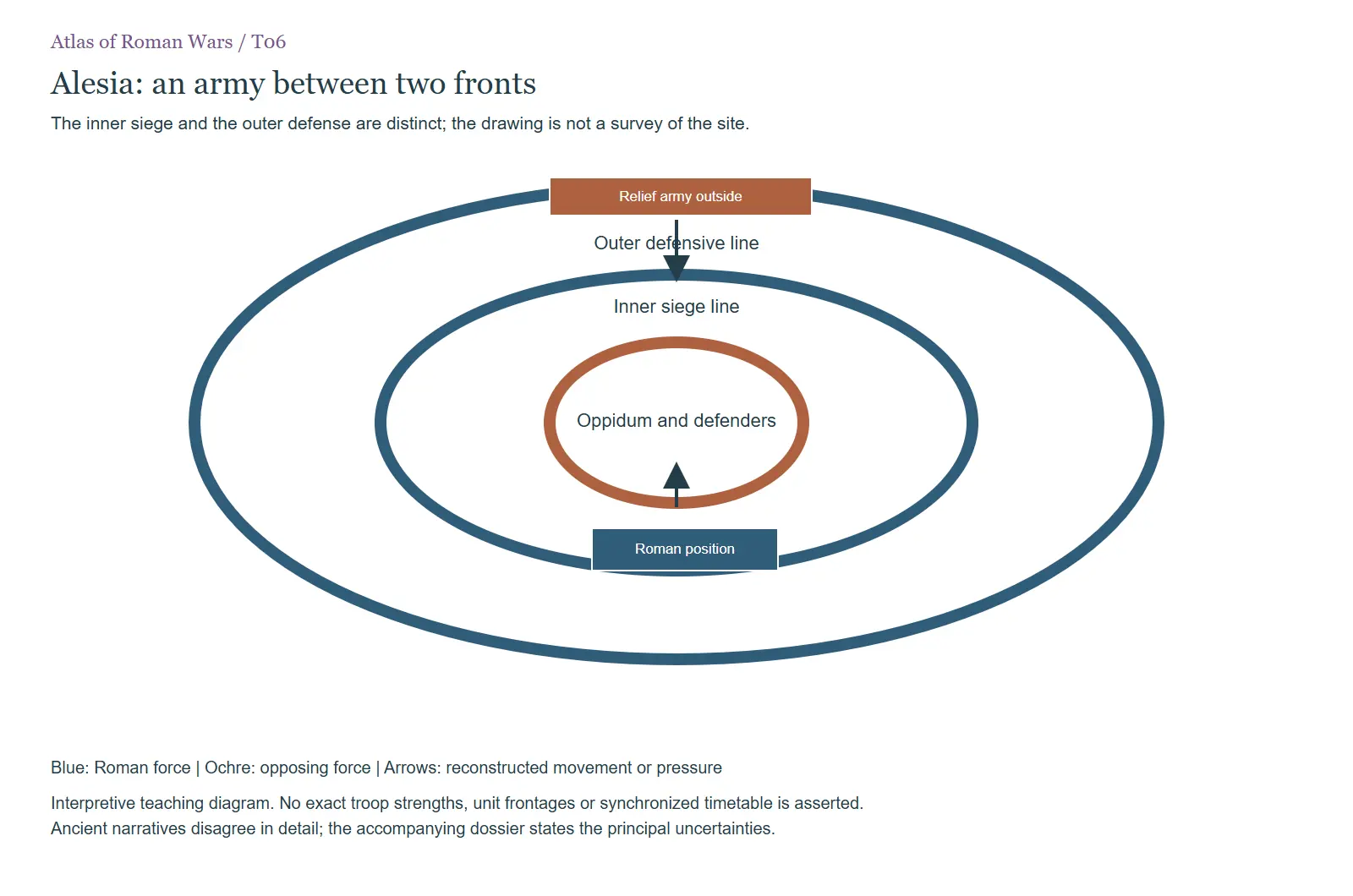 W040
Caesar's Gallic wars
conquest, coalition war and revolt.
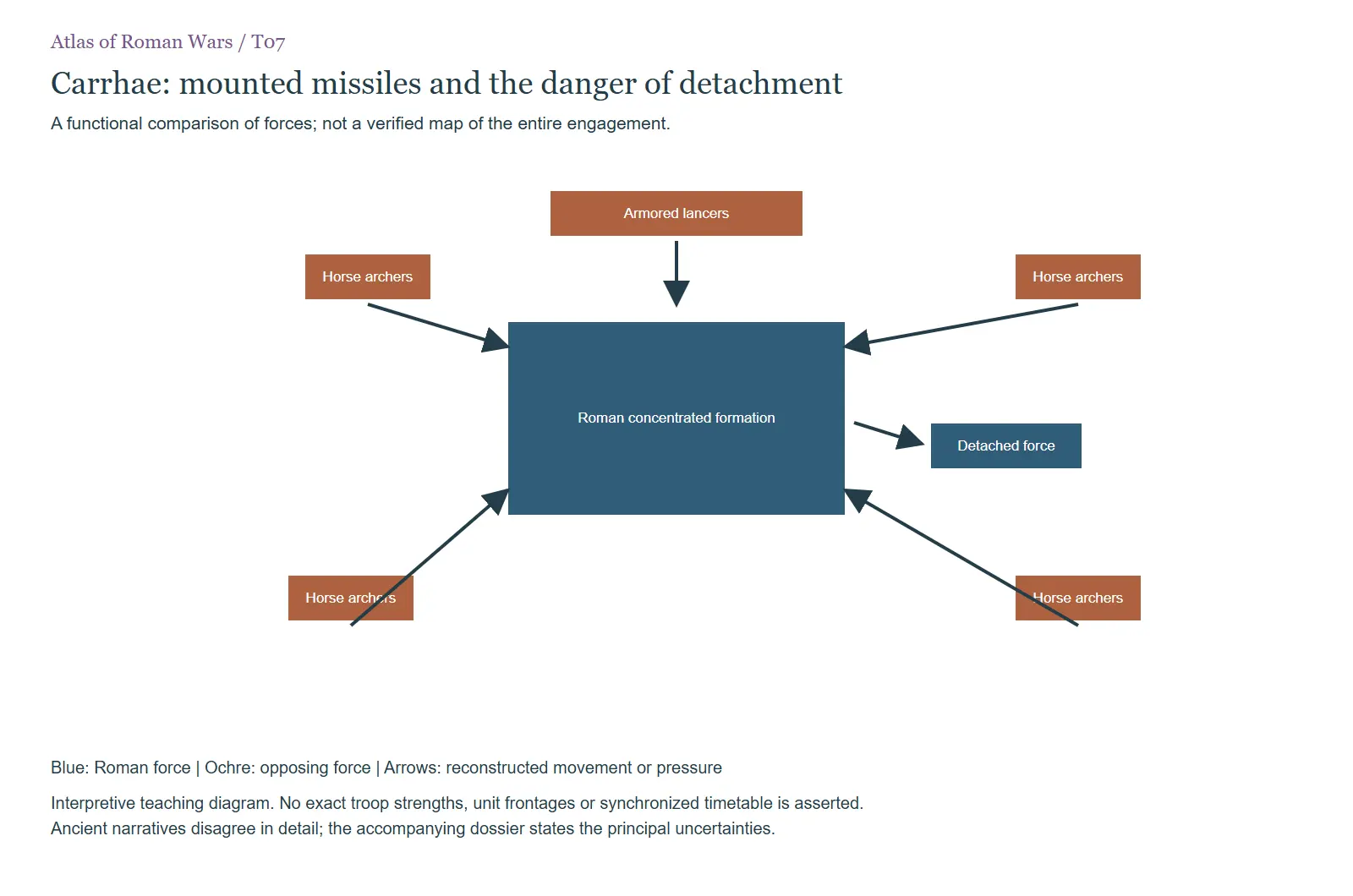 W041
Crassus and the Parthian disaster at Carrhae
invasion and interstate war.
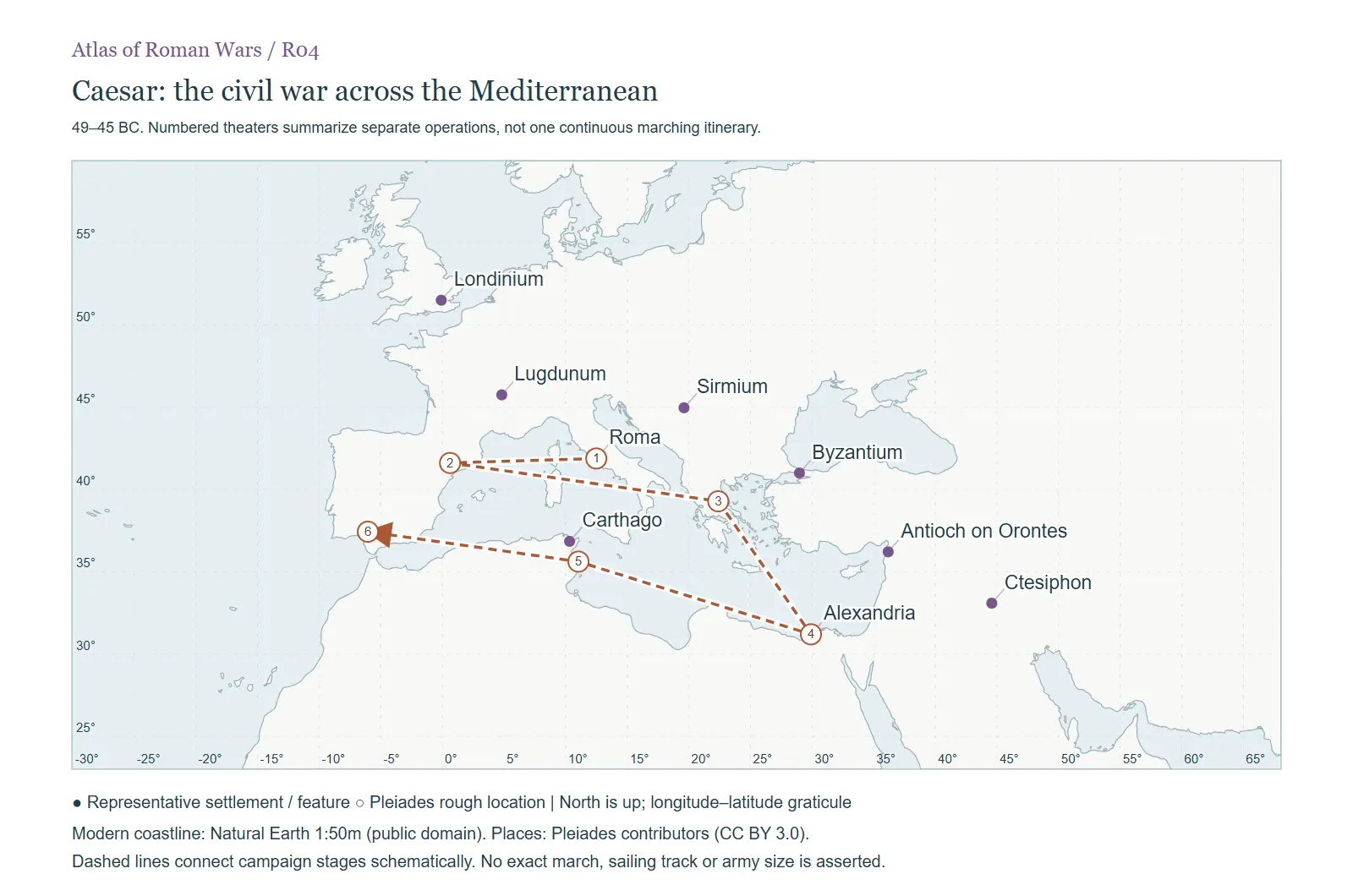 W042
Caesar's civil war and the wars of the Caesarian corpus
civil war across multiple theaters.
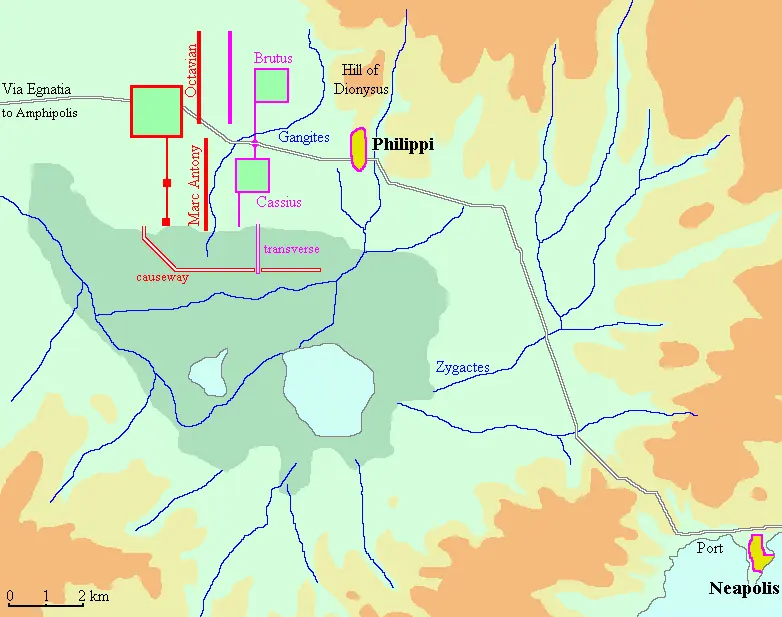 W043
The wars after Caesar: Mutina, Philippi and Perusia
related but distinct civil wars.
- 40 BCW093W093
Ventidius, Antony and the Parthian wars
interstate war entangled with Roman civil conflict.
- 38 BCW044W044
Sextus Pompey and the Sicilian war
civil and naval war.
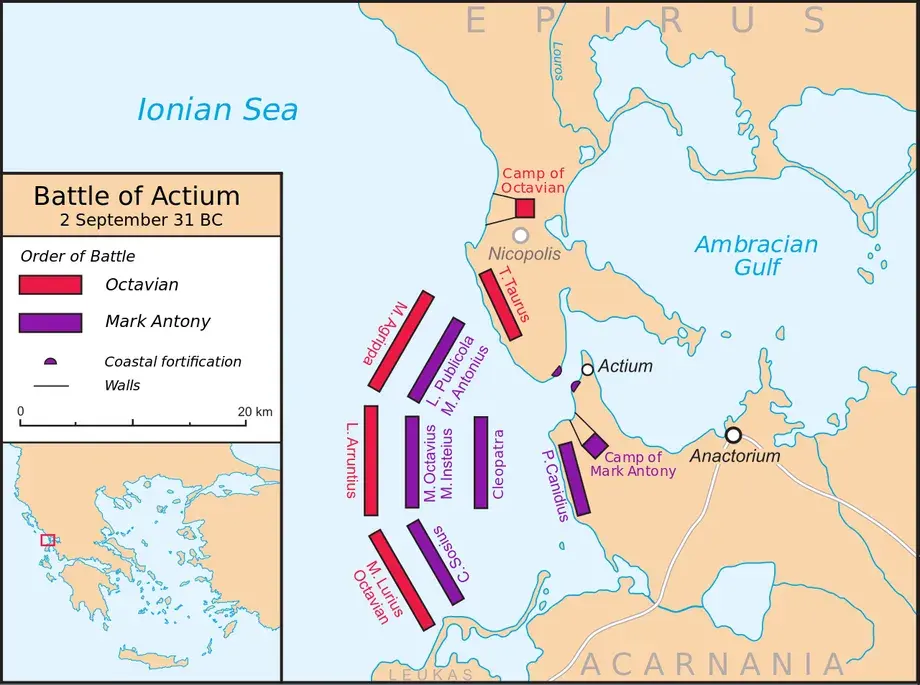 W045
Actium and the conquest of Egypt
Roman civil war involving the Ptolemaic monarchy.
V. The early Principate: conquest and provincial war 11
The imperial settlement concentrated political authority, but it did not make military activity uniform or continuous. Conquests, punitive expeditions, client-kingdom disputes and provincial revolts coexisted. Britain and Judaea show how a province's apparent establishment could precede major renewed war.
W046 | W047 | W048 | W049 | W050 | W051 | W053 | W052 | W054 | W055 | W056
 W046
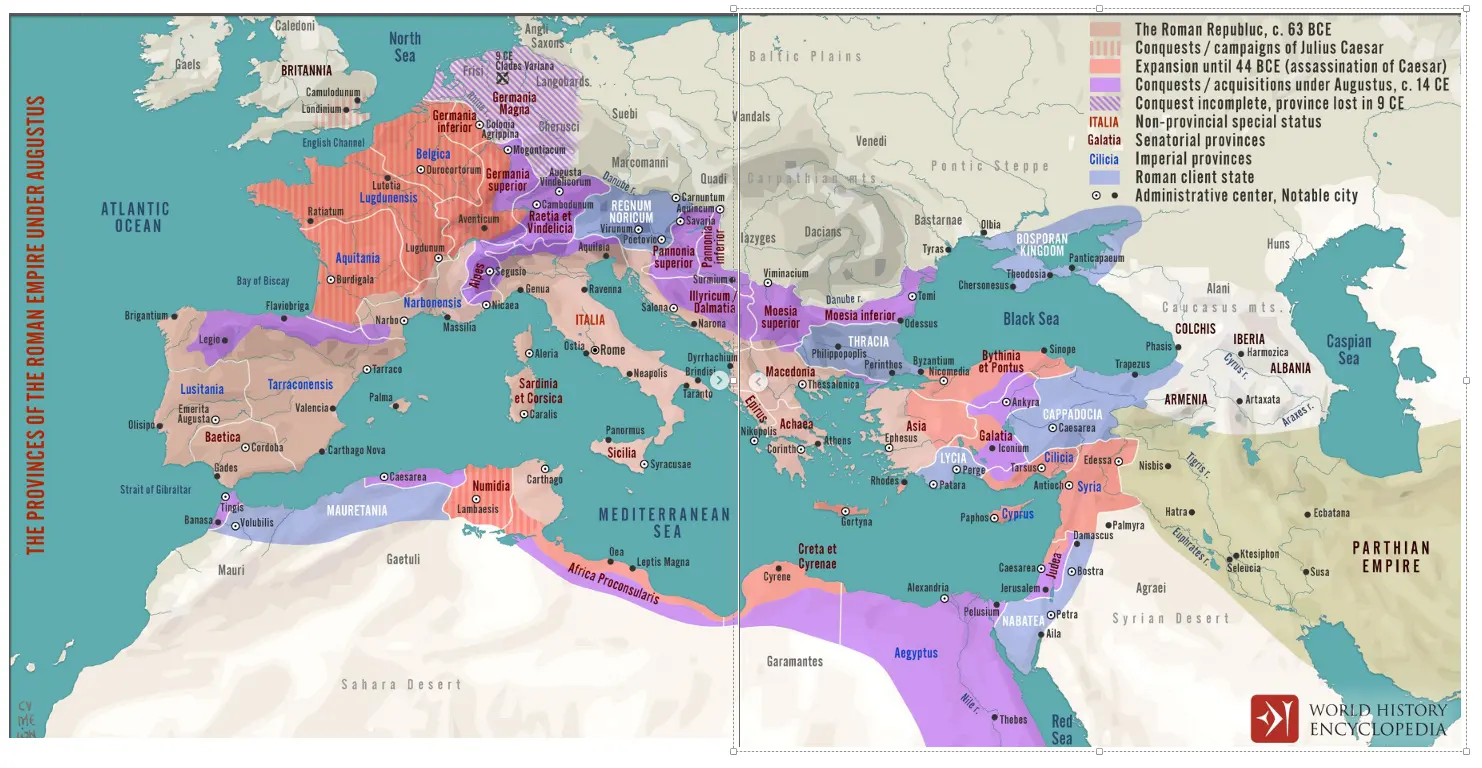
Augustus' western, Alpine and Danubian conquests
conquest and frontier formation.
 W047
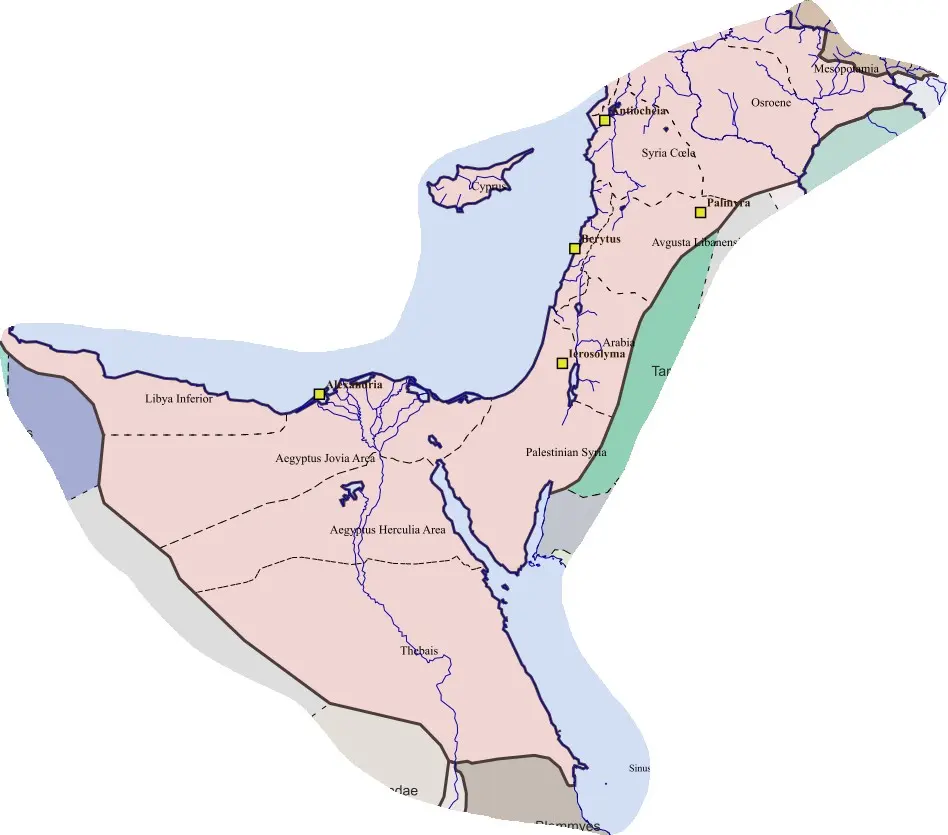
The Arabian expedition and the Nubian wars
expedition and frontier war.
- W048
The great Illyrian revolt
large provincial and regional revolt.
 W049
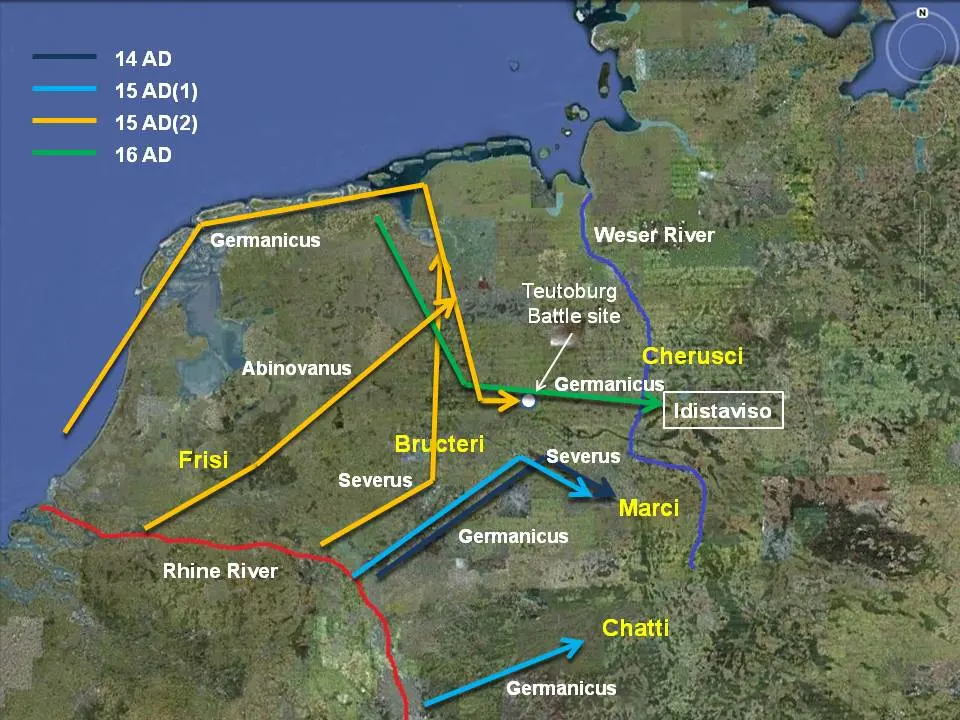
Varus' defeat and Germanicus' campaigns
revolt, expedition and frontier war.
- W050
Tacfarinas and the Mauretanian annexation wars
distinct North African provincial wars.
 W051
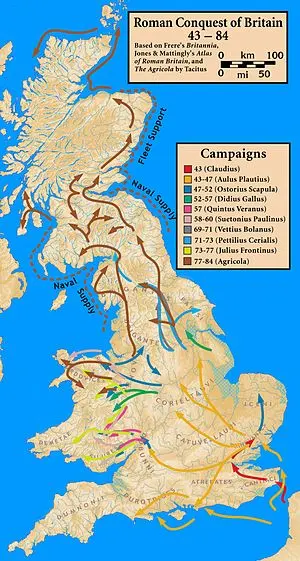
The conquest of Britain and Agricola's northern campaigns
conquest and continuing provincial warfare.
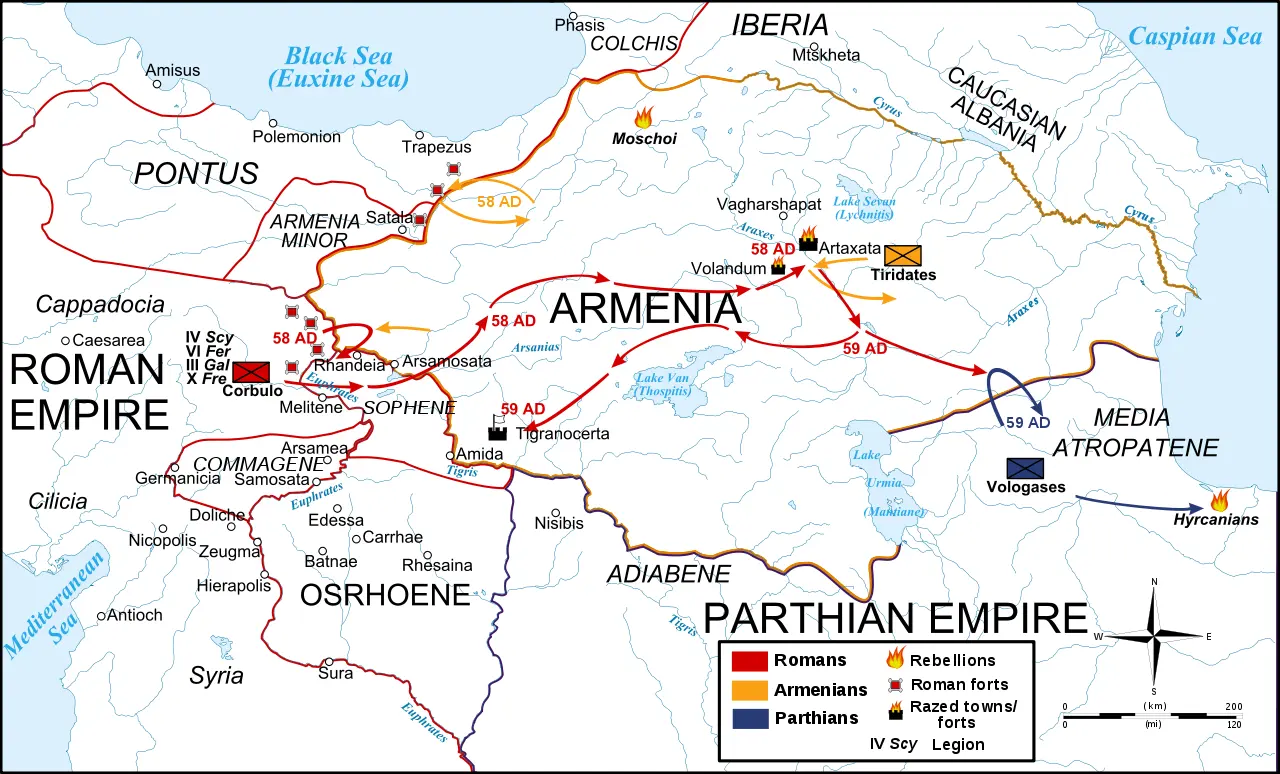 W053
Corbulo, Armenia and the Parthian settlement
interstate and client-kingship war.
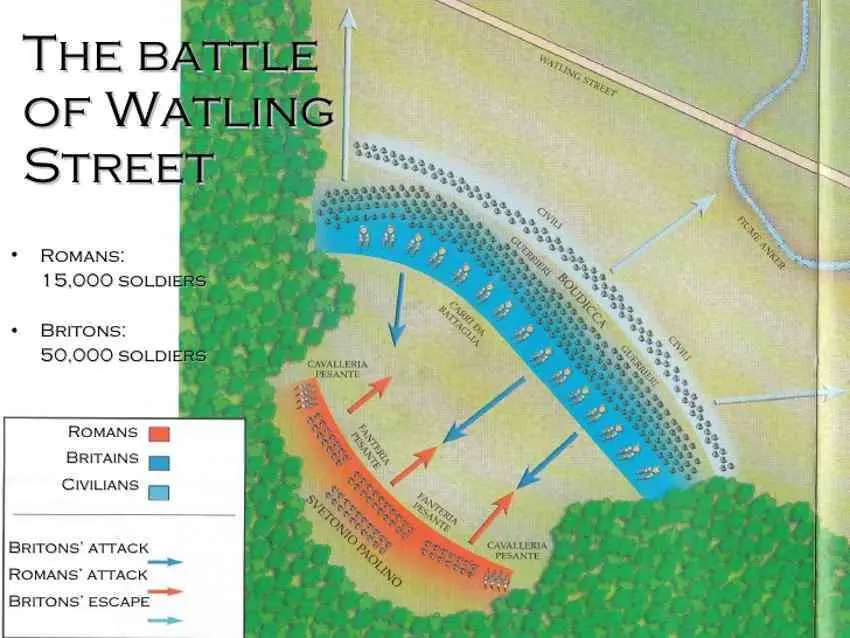 W052
Boudica's revolt
provincial revolt.
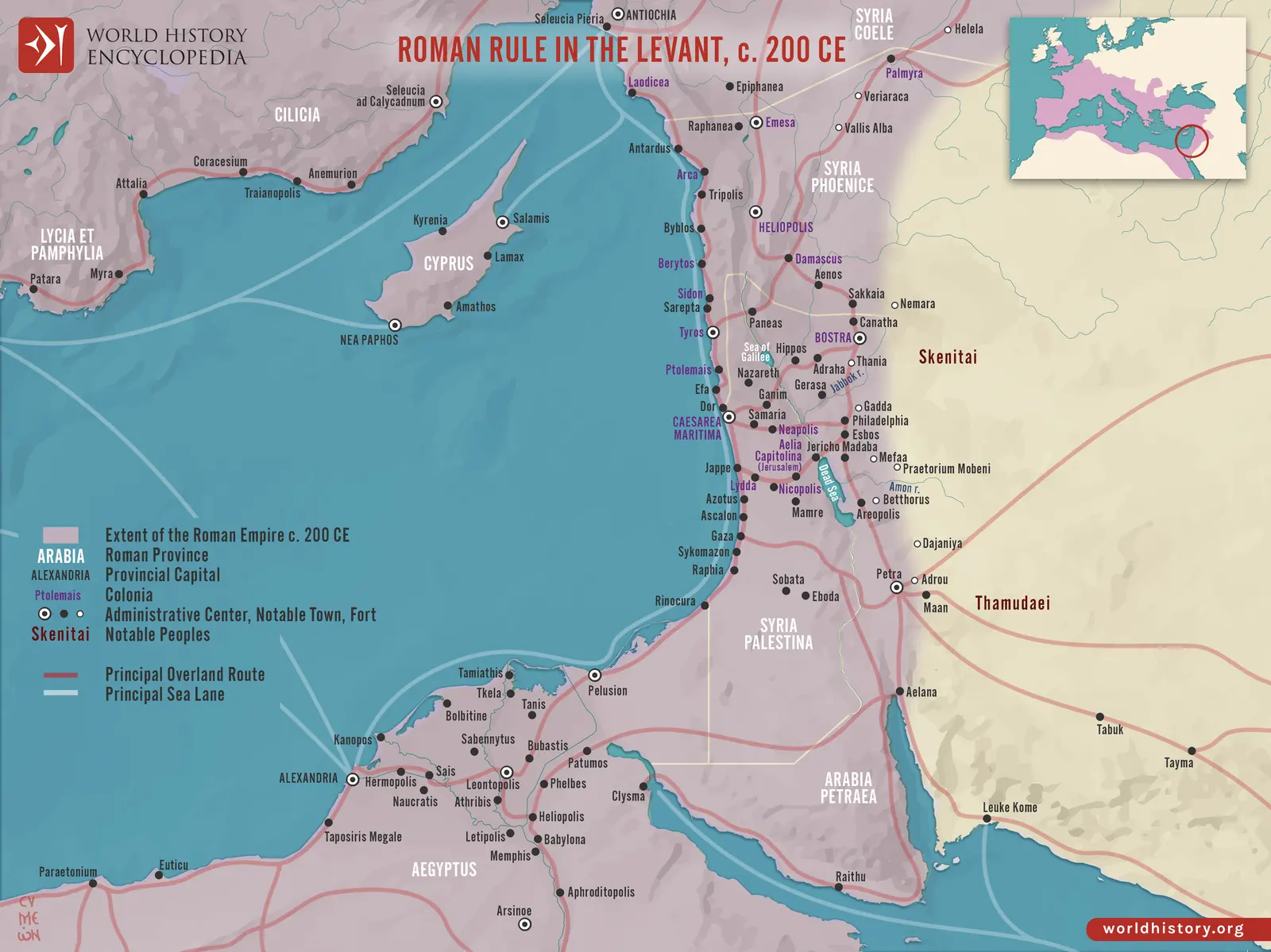 W054
The first Jewish revolt
provincial revolt and siege war.
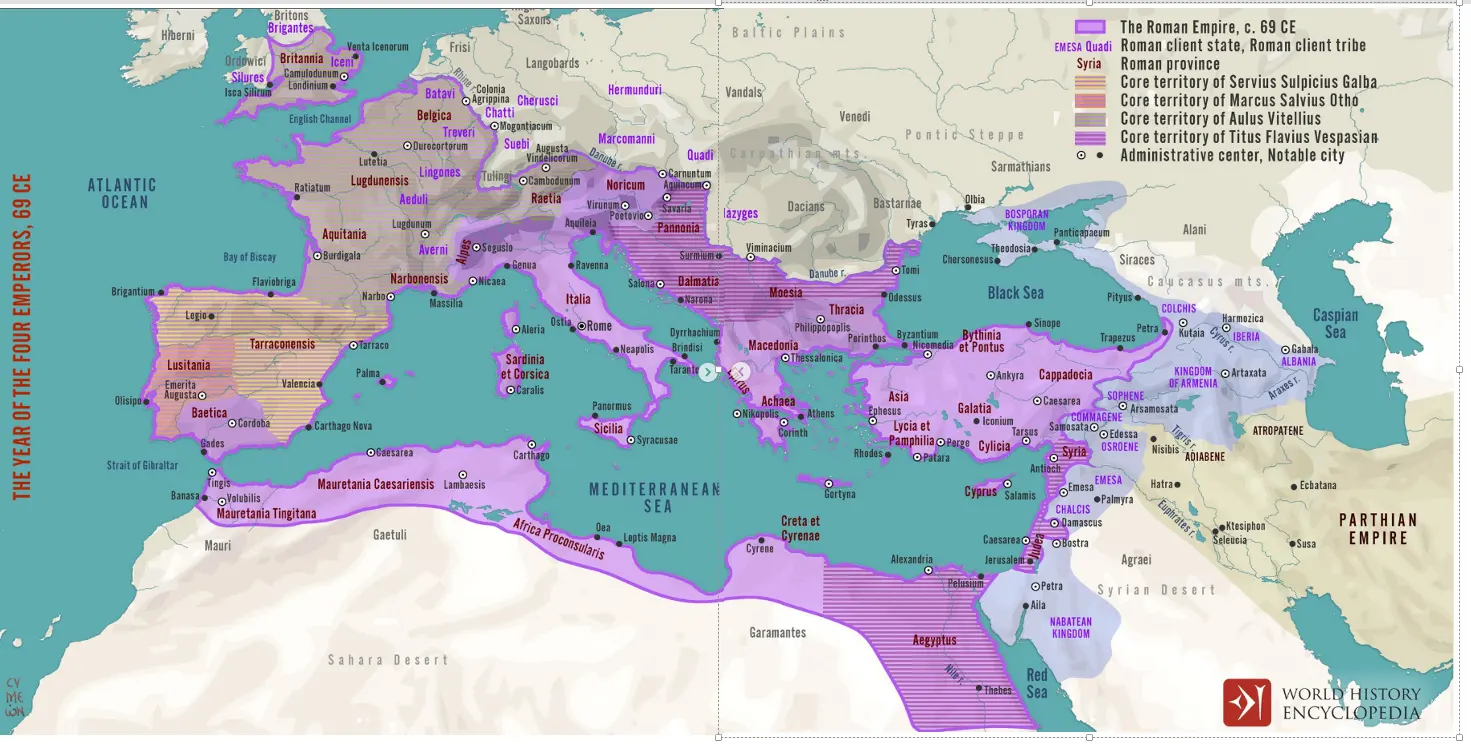 W055
The civil war of AD 68–69 and the Batavian revolt
connected civil and provincial wars.
- AD 81W056W056
Domitian's German and Danubian wars
frontier wars.
VI. The high empire and the third-century emergencies 15
The empire at its greatest extent was not a single stable military moment. Trajan's eastern conquests proved less durable than his Dacian province. Epidemic, rebellion, dynastic conflict and war on several frontiers challenged the state in different combinations. The third-century record is especially uneven: abbreviated histories and later biographies must often stand where continuous contemporary narrative is missing.
W057 | W058 | W059 | W060 | W094 | W061 | W062 | W063 | W064 | W095 | W065 | W066 | W067 | W068 | W069
- W057
Trajan's Dacian wars
two wars of conquest.
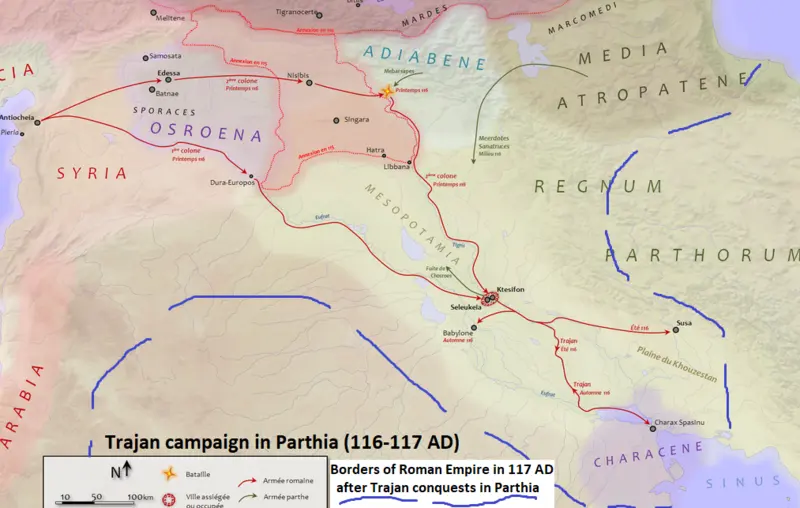 W058
Trajan's Parthian war
conquest and imperial war.
- AD 115W059W059
The diaspora revolts under Trajan
revolts and communal warfare in several regions.
- W060
The Bar Kokhba war
provincial revolt.
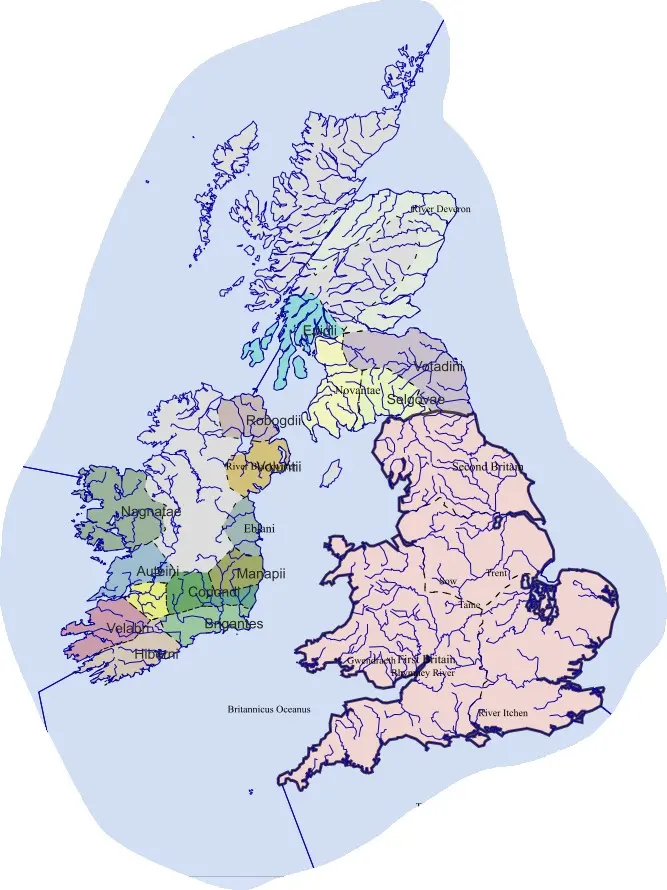 W094
The later British wars of the second century
separate frontier campaigns and restoration wars.
- AD 161W061W061
The Roman–Parthian war of Lucius Verus
interstate war.
- AD 166W062W062
The Marcomannic wars
frontier and coalition wars.
- AD 193W063W063
The Severan civil wars
civil war.
- AD 194W064W064
Severan frontier wars in the East and Britain
distinct frontier wars.
- AD 216W095W095
Caracalla, Macrinus and the Parthian war
interstate war and succession crisis.
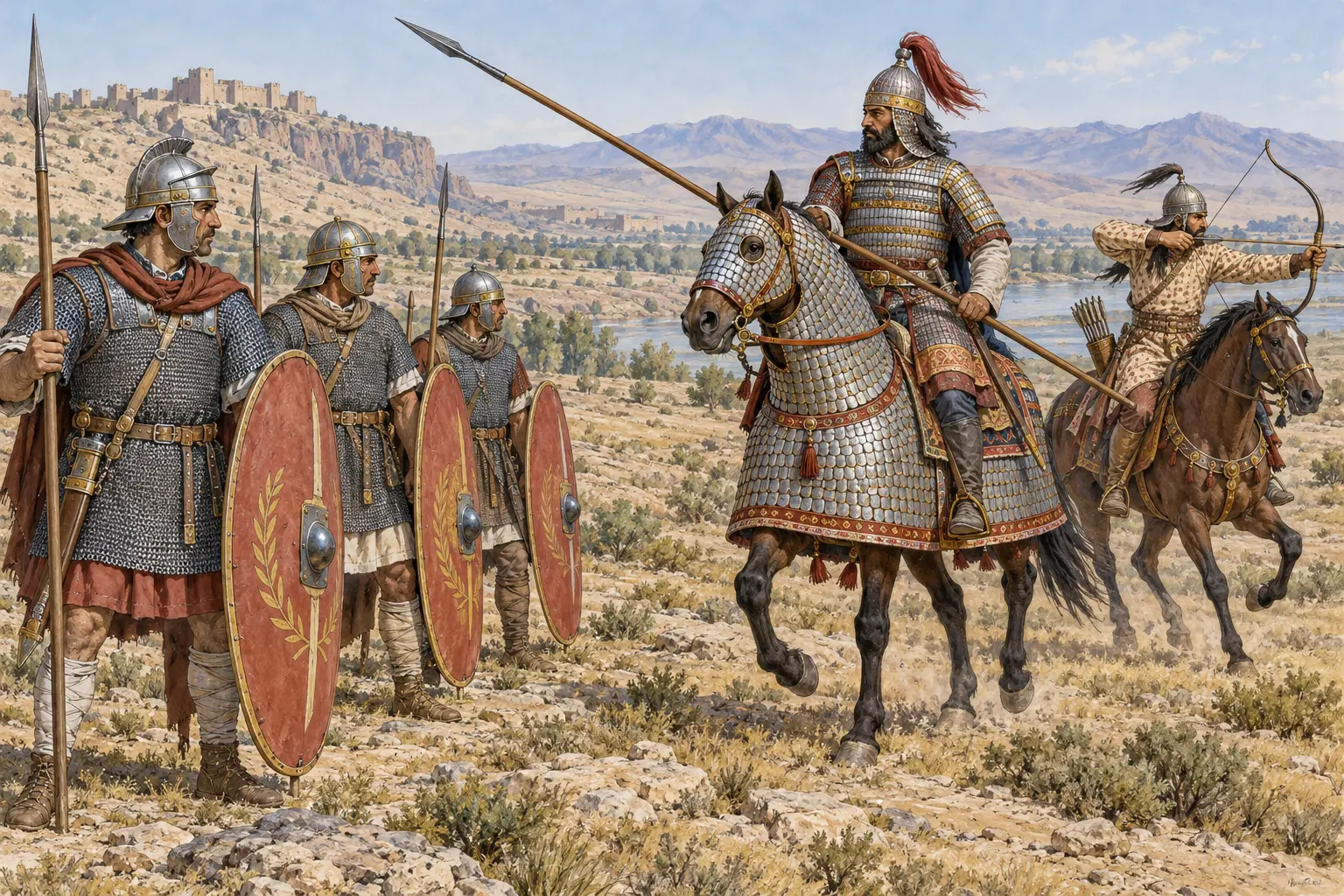 W065
The emergence of Sasanian power and the third-century Persian wars
interstate wars and frontier crises.
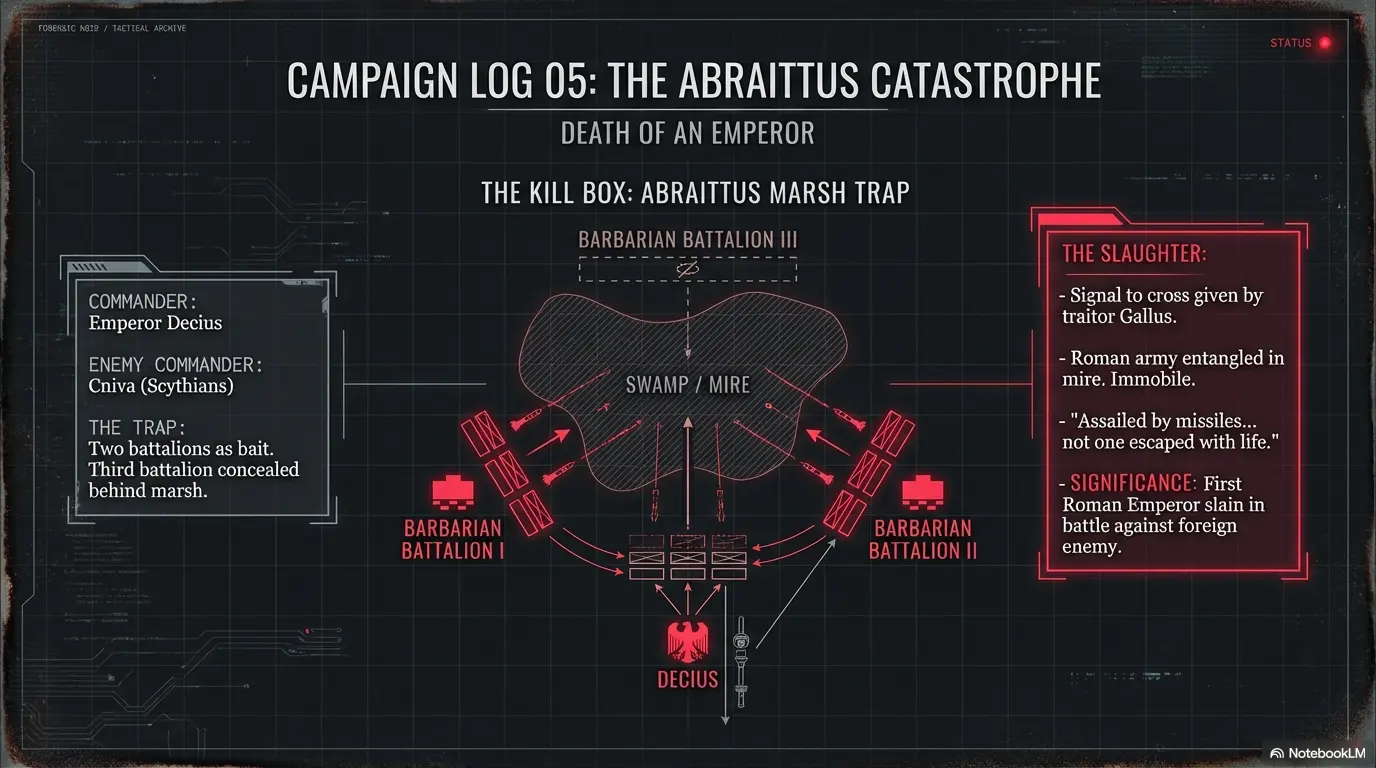 W066
Gothic and other incursions in the third century
repeated invasions, raids and frontier wars.
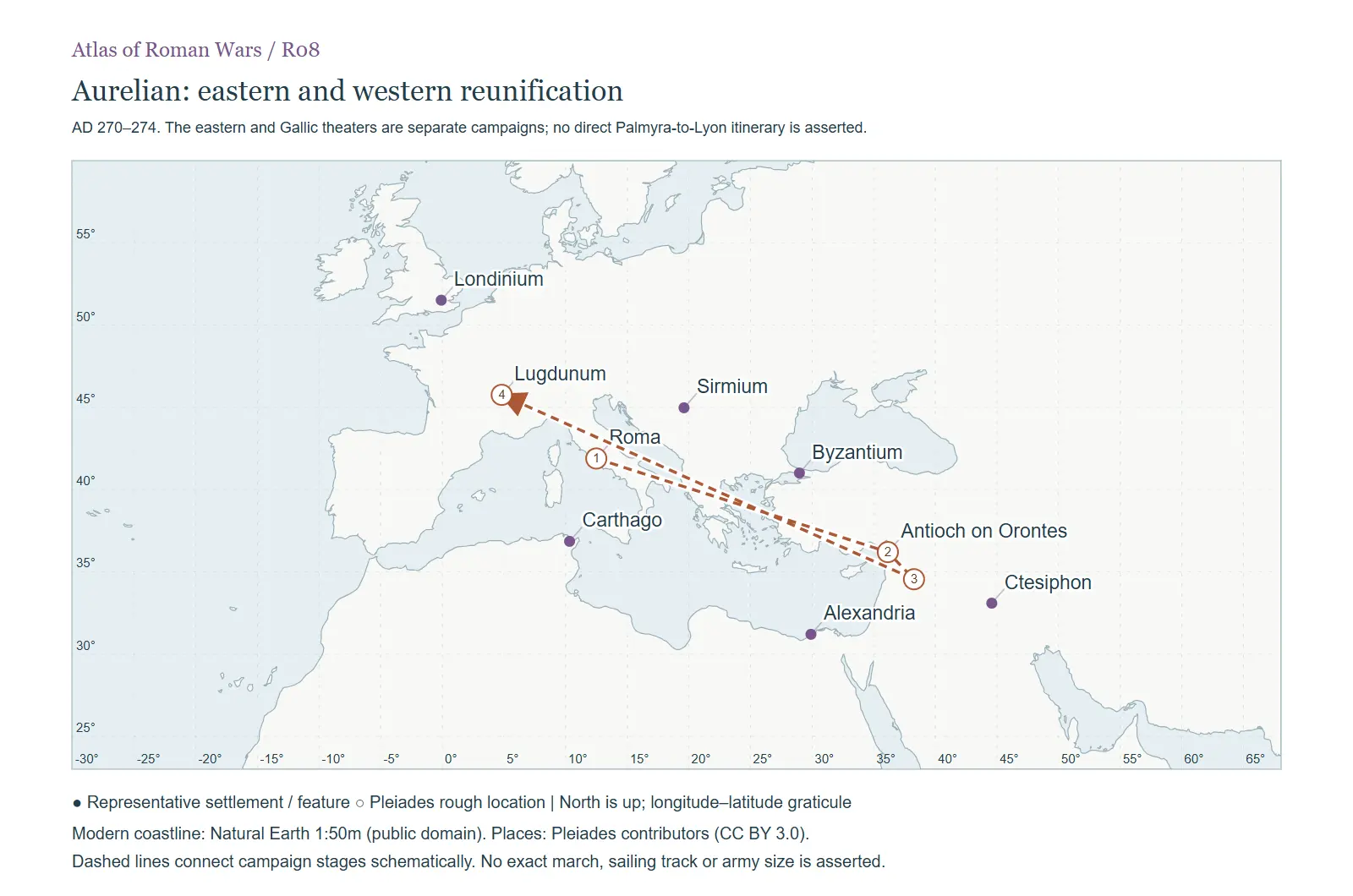 W067
Aurelian's reunification wars
frontier and reunification wars.
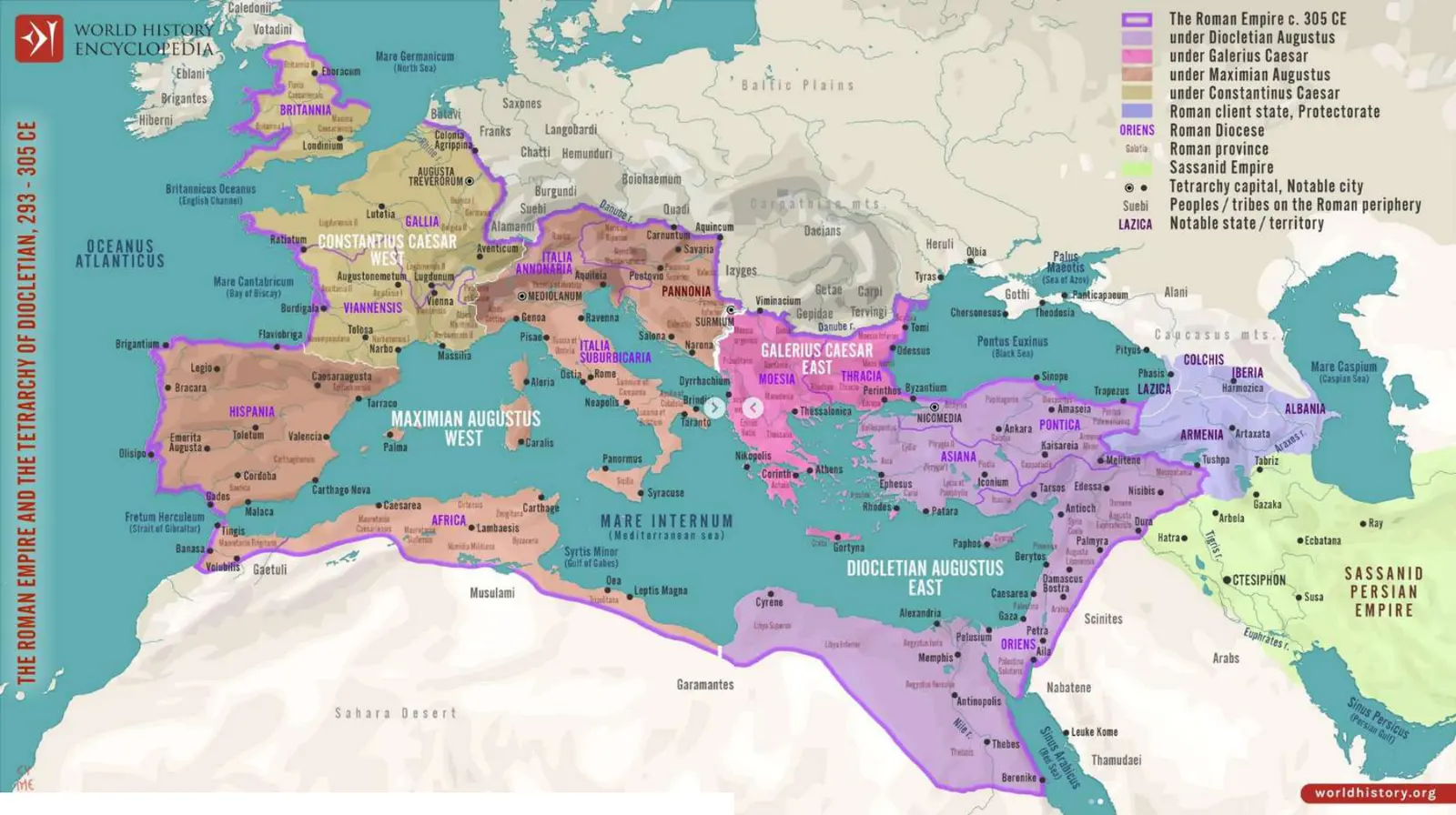 W068
Carausius, Allectus and the tetrarchic recovery campaigns
usurpation and regional restoration wars.
- AD 296W069W069
Galerius' war with Narseh
Roman–Sasanian war.
VII. The fourth-century empire 9
This century combines exceptionally powerful field armies with recurrent struggles over succession and security. Ammianus supplies a detailed contemporary military narrative for AD 353–378, but he did not witness everything he describes. The reader must distinguish his presence at Amida and on Julian's expedition from reconstructed speeches and reports of distant operations.
W070 | W071 | W072 | W074 | W073 | W075 | W076 | W077 | W078
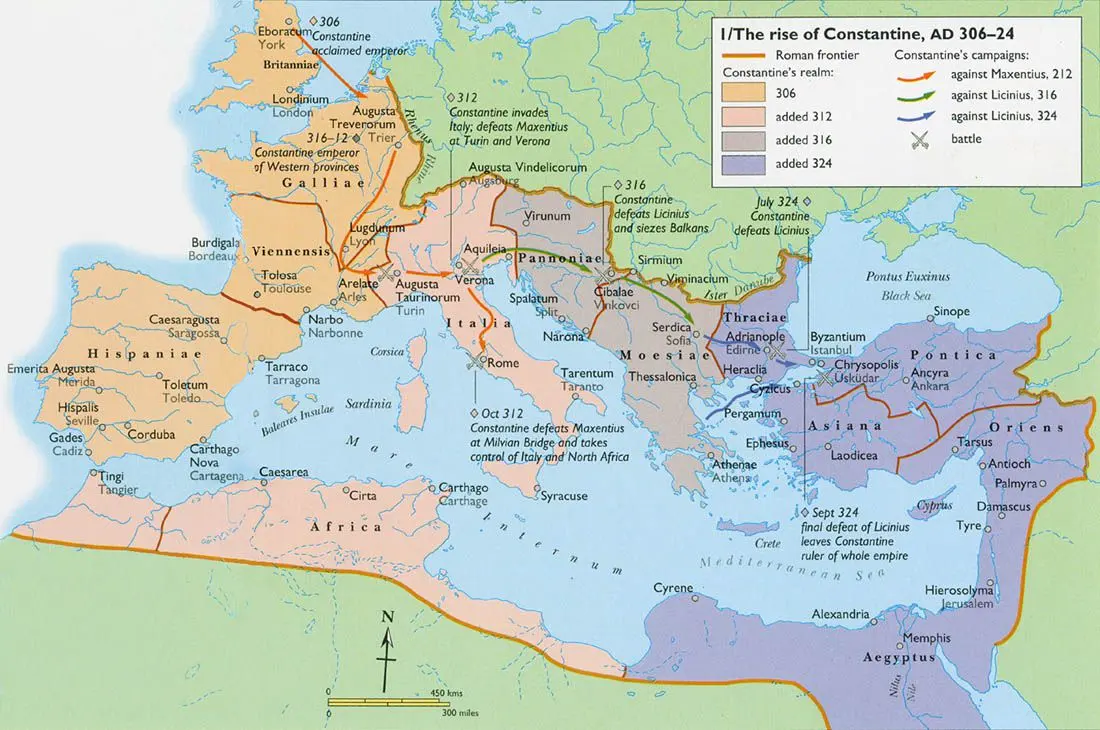 W070
Constantine and the wars of the tetrarchic succession
civil wars.
- AD 337W071W071
The civil wars of Constantine's heirs and Magnentius
dynastic and imperial civil wars.
- AD 337W072W072
Constantius II and Shapur II
Roman–Sasanian frontier wars.
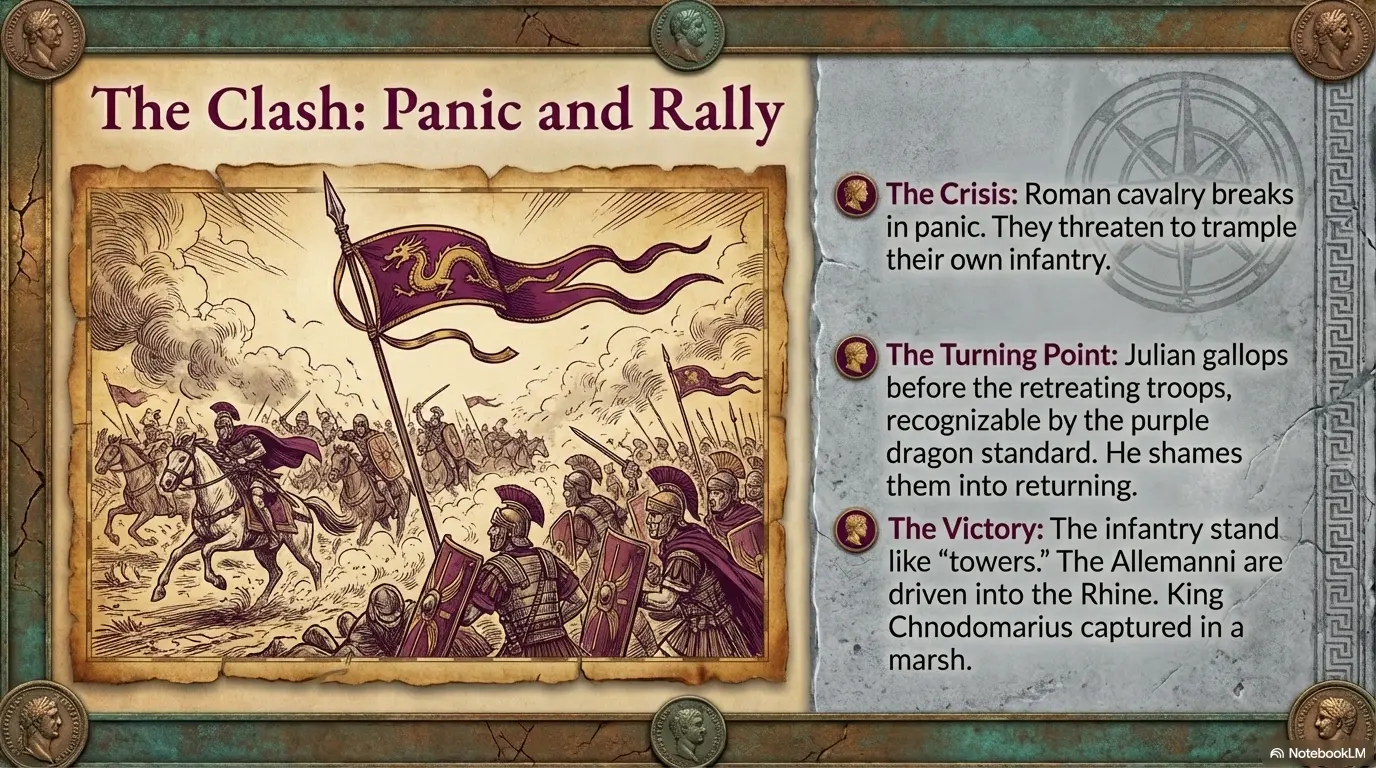 W074
Julian's Gallic campaigns and Strasbourg
frontier restoration and field war.
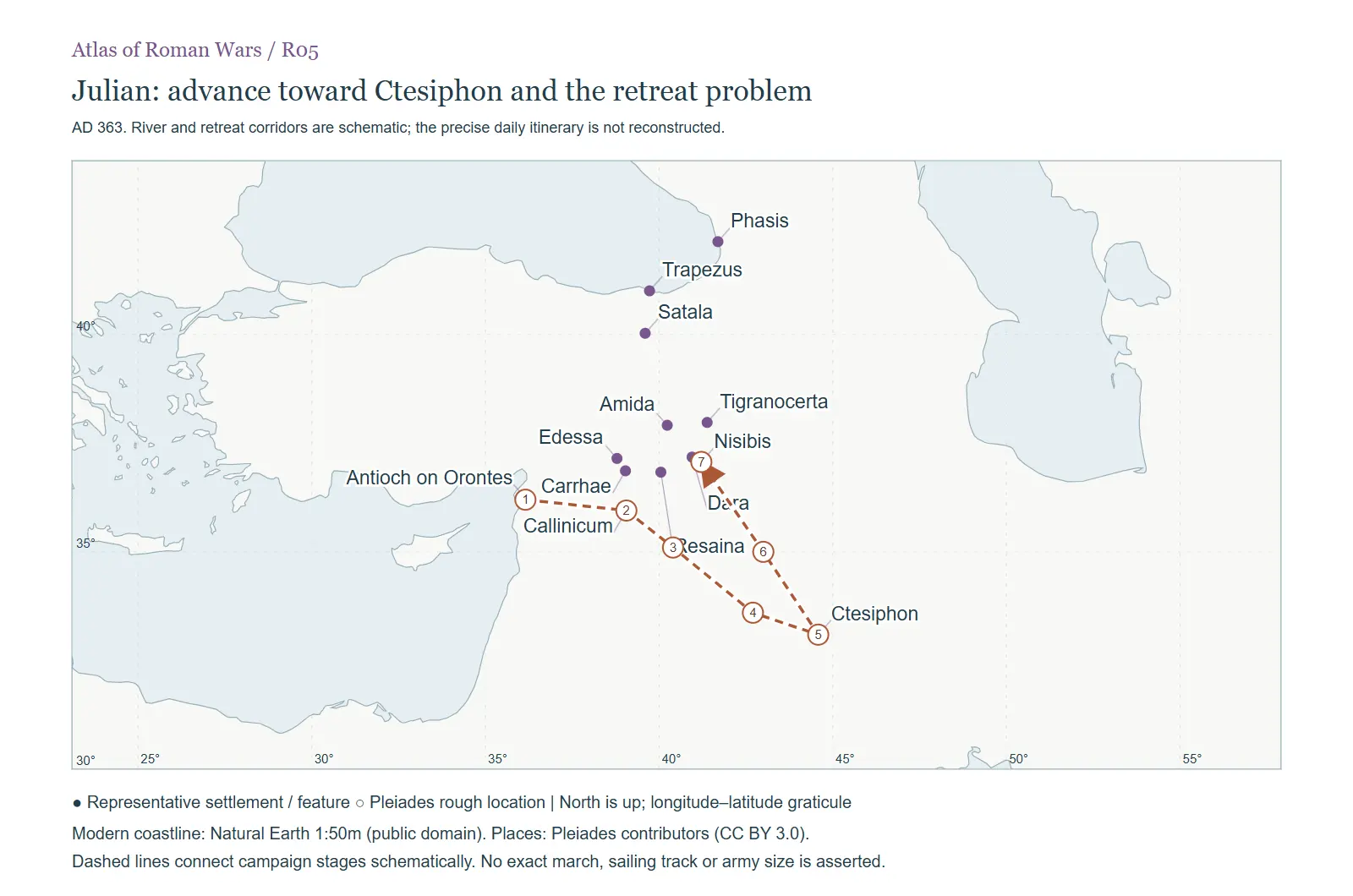 W073
Julian's Persian expedition
invasion and failed strategic campaign.
- AD 367W075W075
The British crisis and the elder Theodosius
provincial military crisis and restoration.
- AD 372W076W076
The revolt of Firmus
regional revolt and internal imperial war.
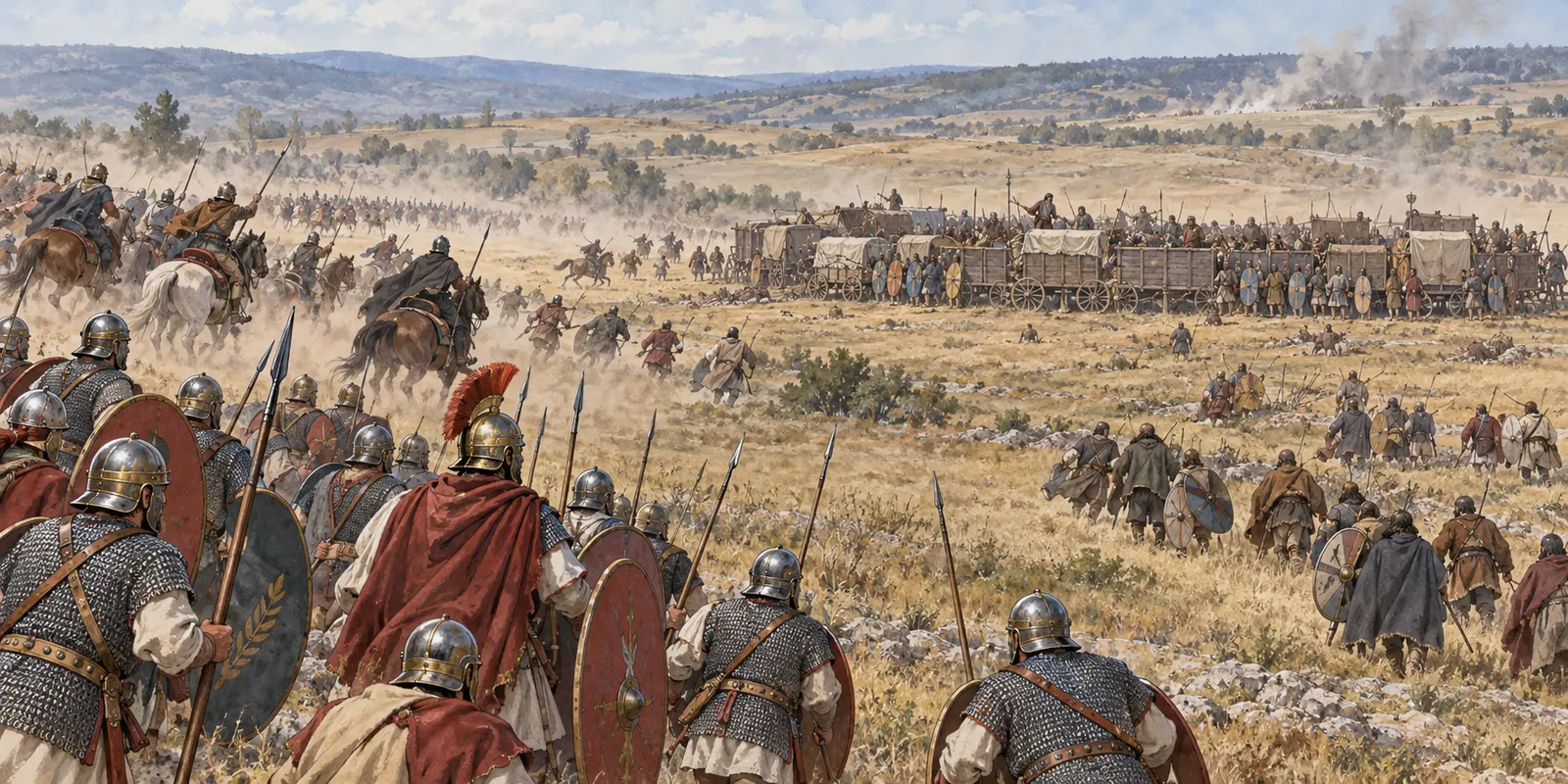 W077
The Gothic war and Adrianople
migration crisis, revolt and imperial war.
- AD 387W078W078
Theodosius I's civil wars
two civil wars.
VIII. The western imperial system under pressure 9
The following records concern a changing military and political system, not a single invasion that began at one frontier and ended automatically in AD 476. Rival Roman governments, allied forces, imperial armies and emerging kingdoms repeatedly cooperated as well as fought. Africa's revenues and Mediterranean shipping were central to what governments could still finance.
W079 | W080 | W081 | W096 | W082 | W083 | W097 | W084 | W085
 W079
Stilicho's wars: Africa, Italy and the Gothic challenge
provincial, frontier and coalition wars.
- AD 406W080W080
The Rhine crossing, the western usurpations and the sack of Rome
linked incursions, civil war and siege.
- AD 409W081W081
The wars and settlements of Gaul and Spain
regional wars, imperial restoration attempts and kingdom formation.
- AD 421W096W096
The Roman–Persian war of AD 421–422
interstate and frontier war.
- W082
The Vandal conquest of Africa and the sack of AD 455
conquest, settlement and maritime war.
 W083
Attila's Balkan, Gallic and Italian wars
imperial frontier and coalition wars.
- AD 440W097W097
The Roman–Persian conflict of AD 440–441
brief interstate frontier war.
- AD 455W084W084
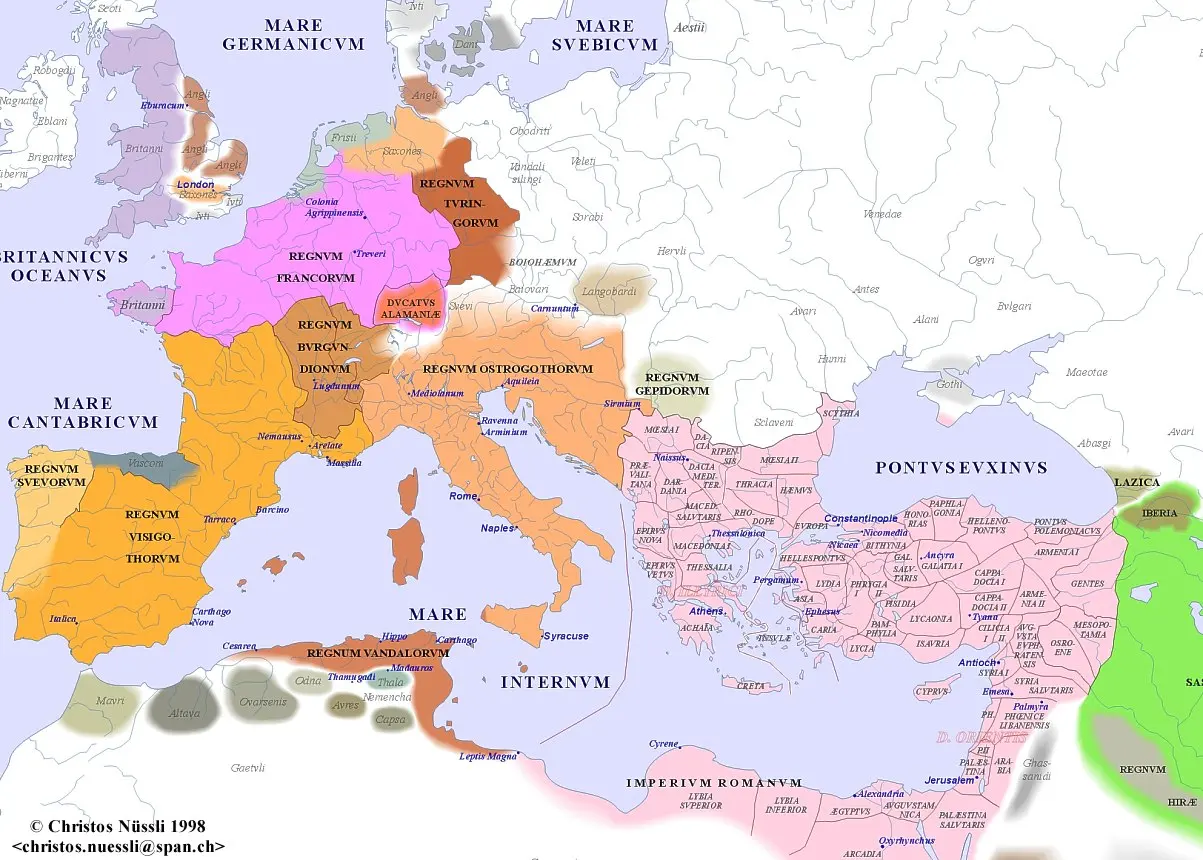
The failed recoveries of Africa and the last western civil wars
recovery expeditions and civil wars.
 W085
Odoacer, Theodoric and the wars for Italy
military seizure of power and war for Italy.
IX. The eastern empire and Justinian's wars 10
The Roman state that launched the sixth-century campaigns was governed from Constantinople and fought on several fronts. Procopius' Wars supplies an unusually extensive account, especially where its author accompanied Belisarius. His proximity to command does not make him neutral, and his Wars, Buildings and Secret History must not be blended without regard to genre and purpose.
W098 | W086 | W099 | W087 | W088 | W090 | W092 | W091 | W089 | W100
- W098
The Isaurian war of Anastasius
internal imperial war.
- AD 502W086W086
The Anastasian war
Roman–Sasanian war.
- AD 513W099W099
The revolt of Vitalian
internal imperial war.
 W087
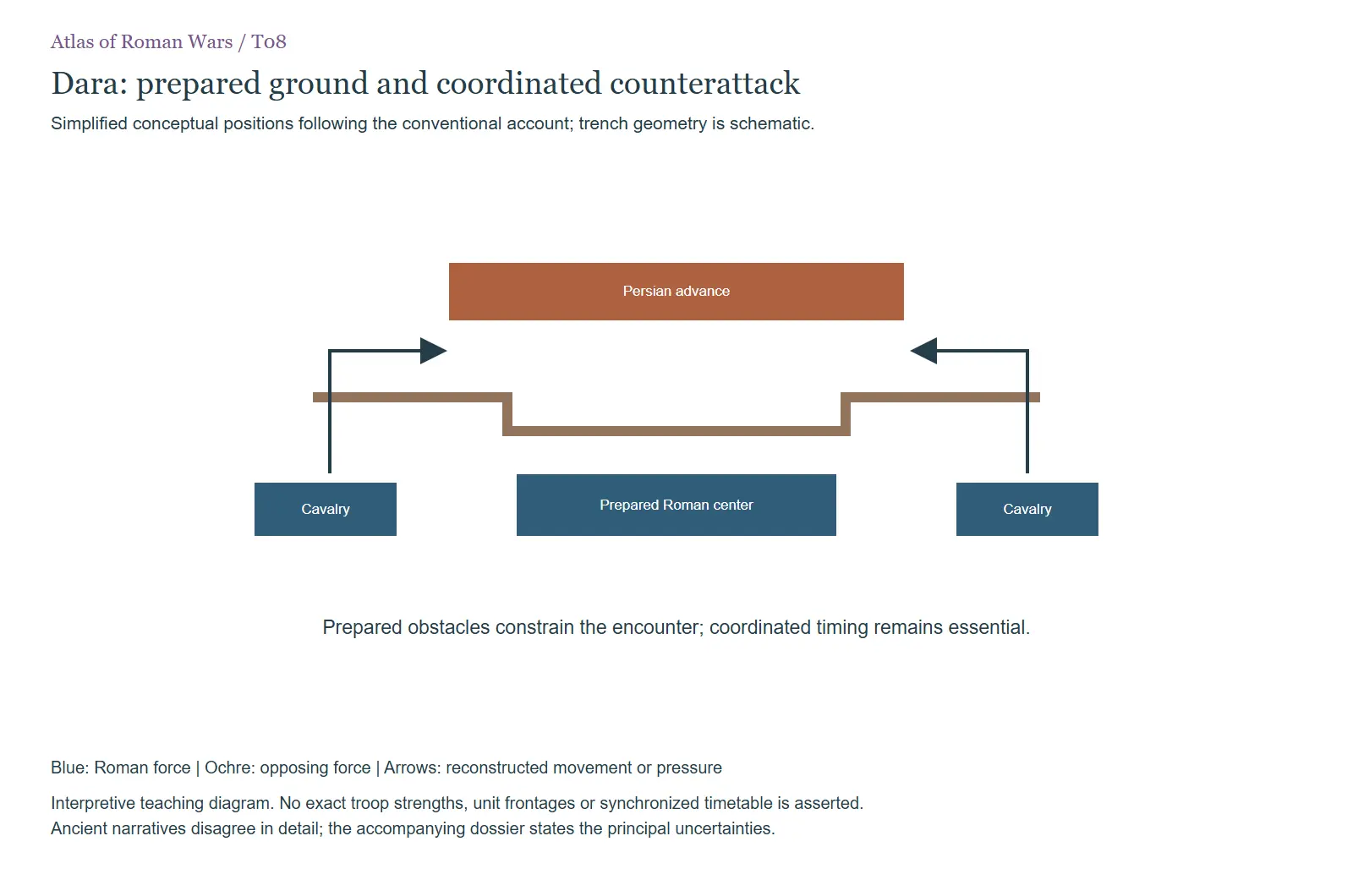
The Iberian war: Dara and Callinicum
Roman–Sasanian war.
 W088
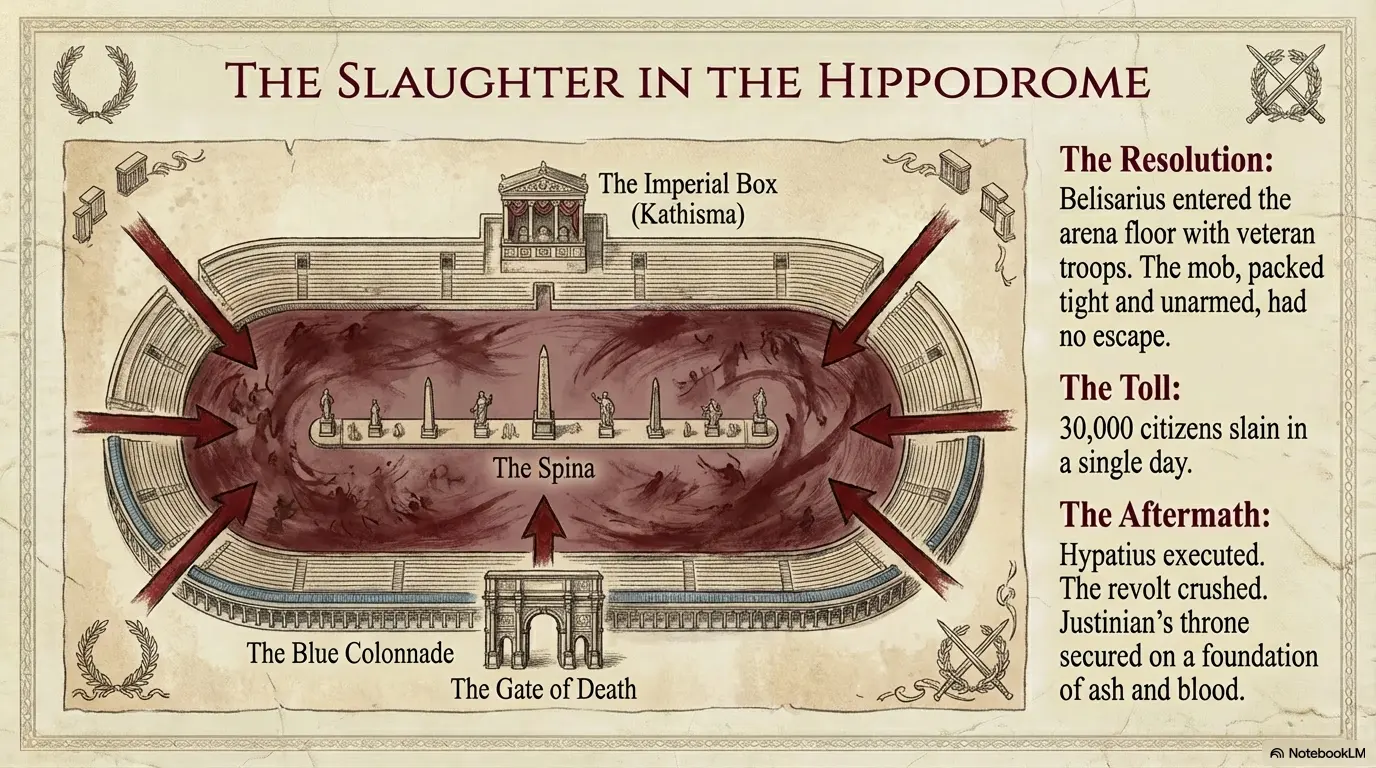
The Nika insurrection
urban insurrection and regime crisis.
 W090
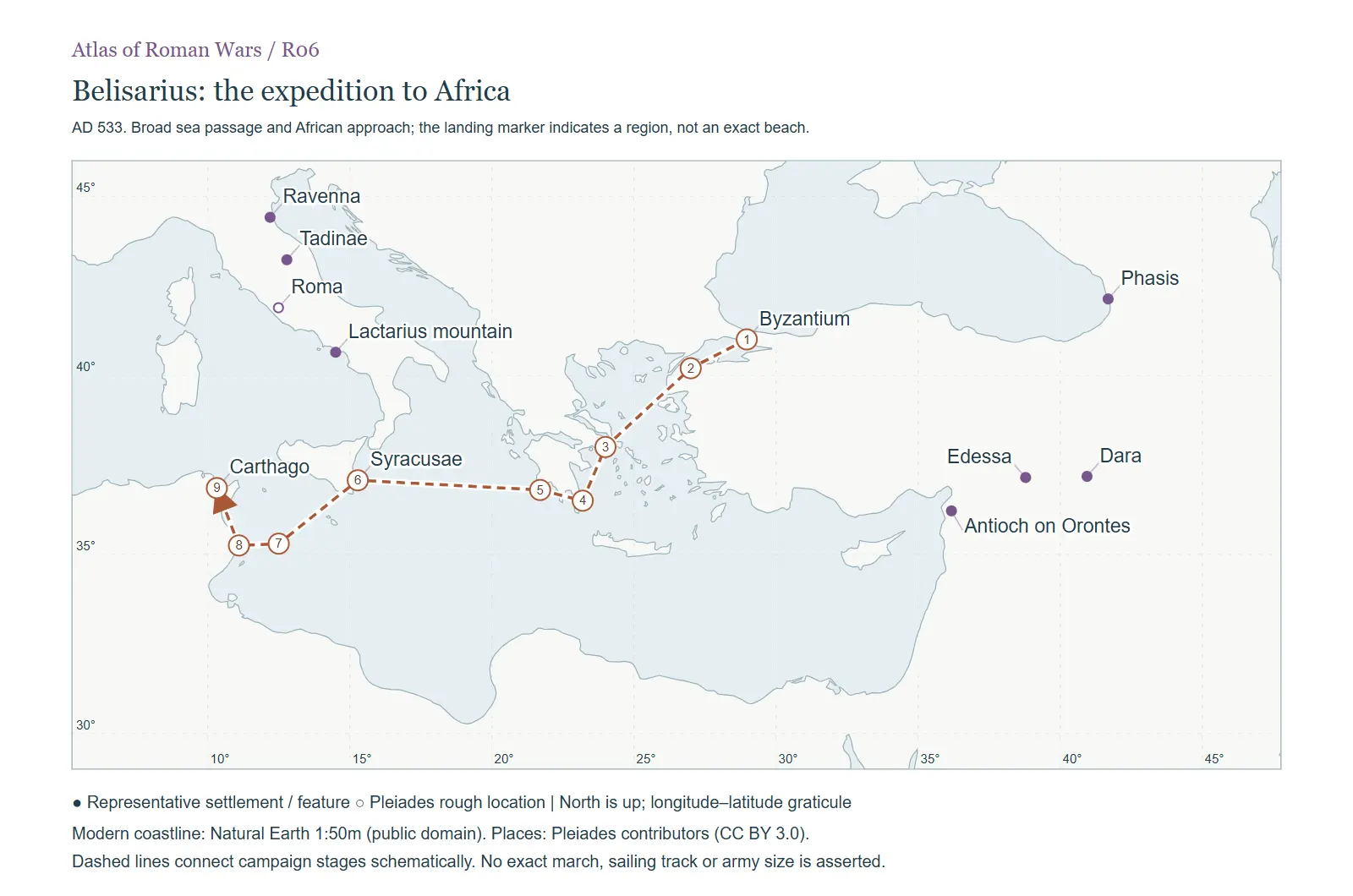
The Vandalic war
invasion and reconquest.
- AD 534W092W092
Africa after the conquest: mutiny and the wars with the Mauri
mutiny, regional war and consolidation.
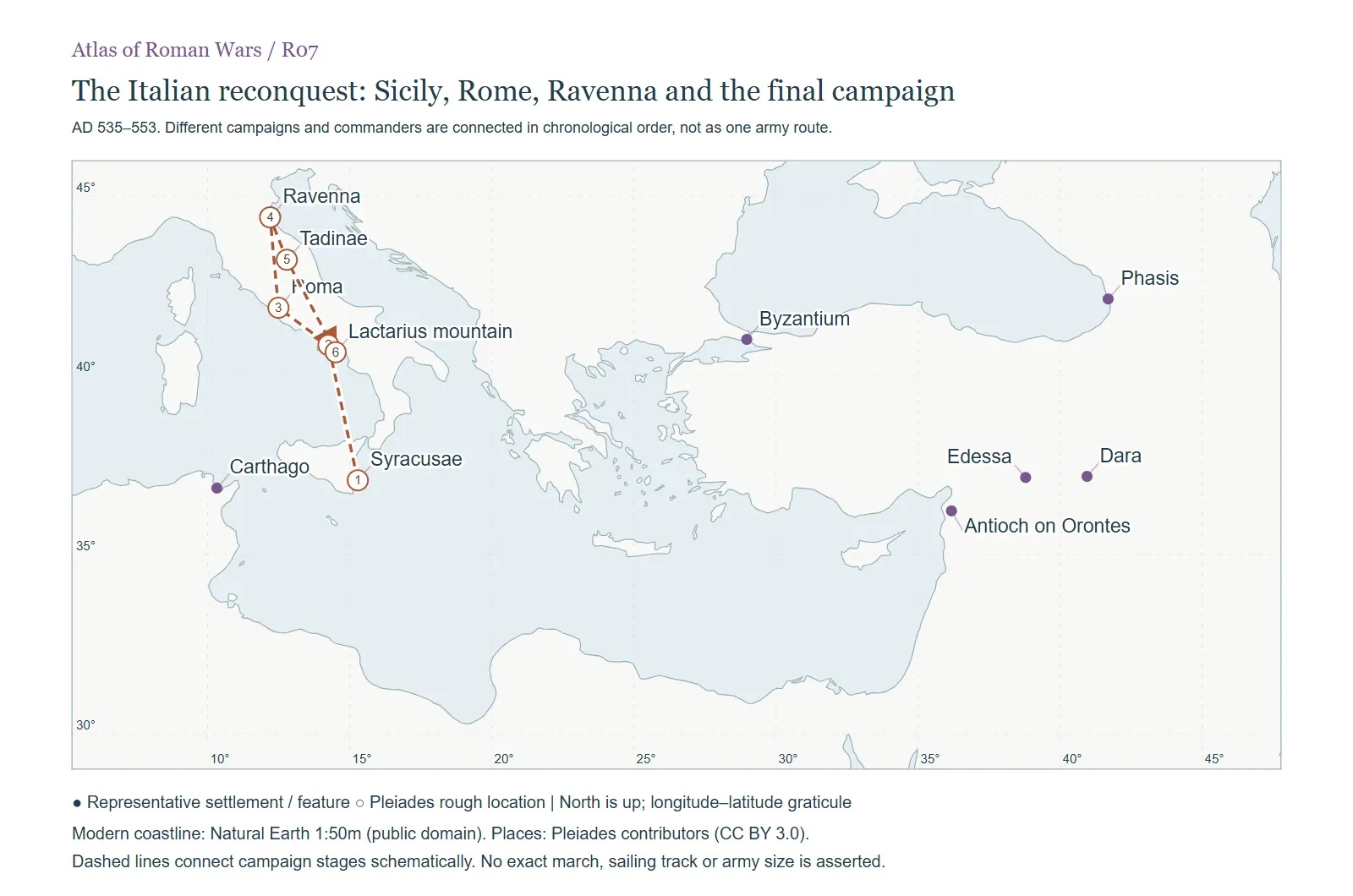 W091
The Gothic war for Italy
reconquest, civil and interstate war.
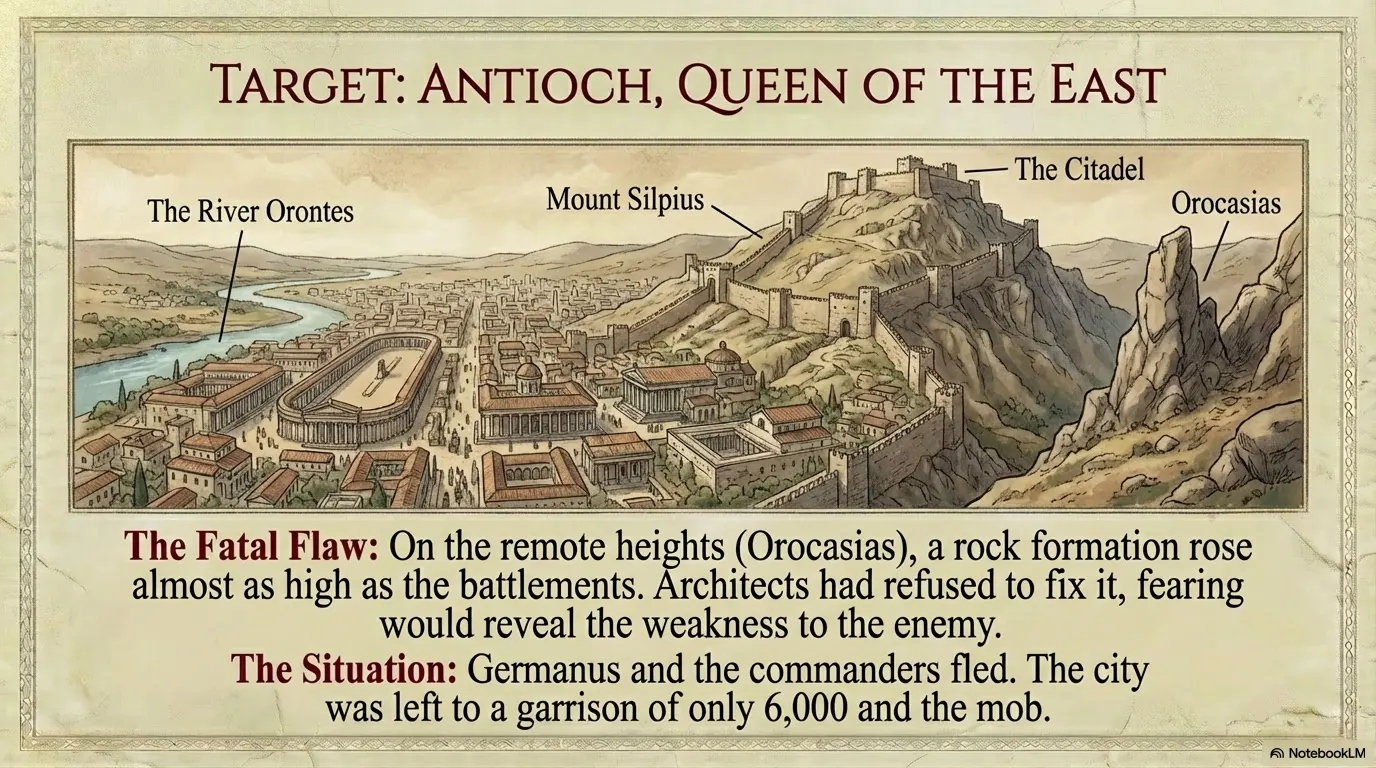 W089
Khusro's invasions and the Lazic war
Roman–Sasanian and regional coalition war.
- W100
The Kutrigur invasion and Belisarius' last defense
invasion and defensive operations.
Go further: the guides
The compendium's own chapters on how to read the entries, and the world around them.