Wars · III. Mediterranean hegemony and its resistance
W027 The Celtiberian wars and Numantia
Battles and sieges
Fall of Numantia 133 BCRoman demands, treaty disputes and resistance among Celtiberian communities produced repeated wars. Numantia's prominence should not obscure other towns, coalitions and earlier settlements. Roman commanders suffered serious reverses, including the surrender agreement associated with Mancinus in 137 BC, which became a political dispute at Rome.
Scipio Aemilianus imposed discipline and organized the final encirclement of Numantia. Blockade, fortified positions and the control of access replaced reliance on a single successful assault. The city's fall in 133 BC ended a celebrated center of resistance.
Command, forces and military problem
| Field | Dossier |
|---|---|
| Roman leadership | Successive governors; Mancinus and Scipio Aemilianus in the final phases |
| Opposing or rival parties | Celtiberian coalitions and the Numantine community |
| Forces and capabilities | Field armies, defended towns and an extensive final blockade system |
| Operational problem | End resilient resistance through isolation after earlier military and diplomatic failures. |
Campaign geography and operational plates
Iberia: river systems and the interior
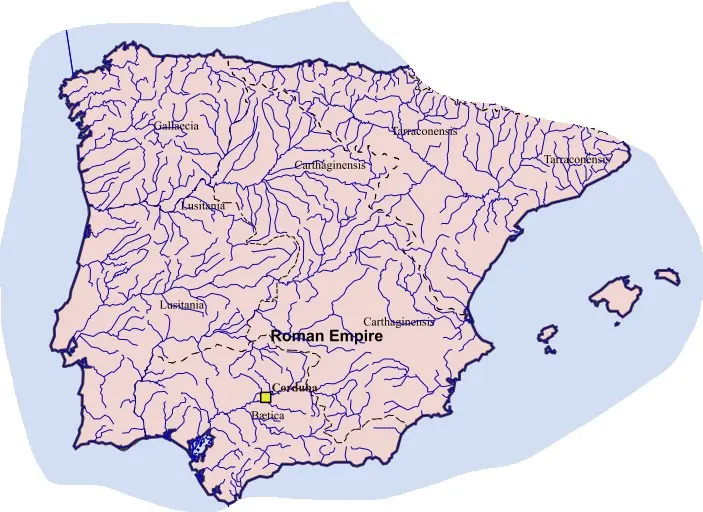
The river network supplies a useful complement to the atlas's settlement locators. Valleys offered access while uplands divided communities and complicated pursuit. Modern hydrographic detail is an orientation aid, not evidence that a particular ancient army followed every accessible valley or possessed reliable maps of the whole peninsula.
Extended campaign study
The account below develops the operations and their interpretation. Reported numbers and reconstructed tactical details retain the uncertainties described in the dossier.
The Numantine War (143–133 BC)
The Celtiberian portion of the Spanish wars — known to the Roman tradition as the Numantine War from the name of the principal Celtiberian city that constituted the strategic center of the resistance — was conducted in parallel with the Lusitanian war and continued for several years after Viriathus's assassination. Numantia was a fortified city of approximately 8,000 inhabitants located on a high plateau in the upper Duero valley (the modern Soria region of north-central Spain), with defensive works developed across two generations of Celtiberian political-military consolidation and with a strategic position that controlled the principal trans-peninsular communications of the central peninsula. The Celtiberian political-military leadership at Numantia had been involved in the Spanish wars from the original revolt of 154 BC but had operated with increasing strategic-political autonomy as the principal Celtiberian center across the subsequent decade and a half.
The Roman operational record against Numantia across the years 143 through 133 BC was, by Roman standards, an extended catalogue of strategic-political humiliation. The successive Roman commanders sent to reduce the city — Quintus Caecilius Metellus Macedonicus in 143 BC (who had distinguished himself in the suppression of the Macedonian revolt of 149 and was a senatorial figure of substantial reputation), Quintus Pompeius in 141, Marcus Popilius Laenas in 139, Gaius Hostilius Mancinus in 137, Marcus Aemilius Lepidus in 136, Lucius Furius Philus in 136, and Quintus Calpurnius Piso in 135 — produced no decisive operational results. The Numantine defense, conducted by a small population with limited military resources but with substantial geographic-tactical advantages and with the kind of operational determination that the Roman political tradition would record with both anger and unwilling respect, proved beyond the operational capacity of conventional consular-command engagement.
The most politically consequential episode of the early Numantine War was the surrender of Mancinus's army in 137 BC. The consul had advanced against Numantia with approximately 20,000 men, conducted operations of conspicuous incompetence across several months, and eventually found his army surrounded in a defensive position from which no escape was possible. The negotiated surrender that followed was conducted by Mancinus's quaestor, the young Tiberius Sempronius Gracchus (son of the consul of 177 BC who had served as proconsul in Spain in the 170s BC and had developed political-personal connections with the Celtiberian leadership during that earlier service). Tiberius Gracchus's personal-cultural connections with the Celtiberian leadership permitted him to negotiate surrender terms that preserved the Roman army from destruction — terms that the Celtiberian leadership accepted on the basis of Tiberius's personal credibility rather than on the basis of any institutional Roman guarantee. The Roman army was permitted to withdraw under arms in exchange for the surrender of substantial equipment and supplies and the implicit acknowledgment that the Numantine position would be permitted to remain undisturbed.
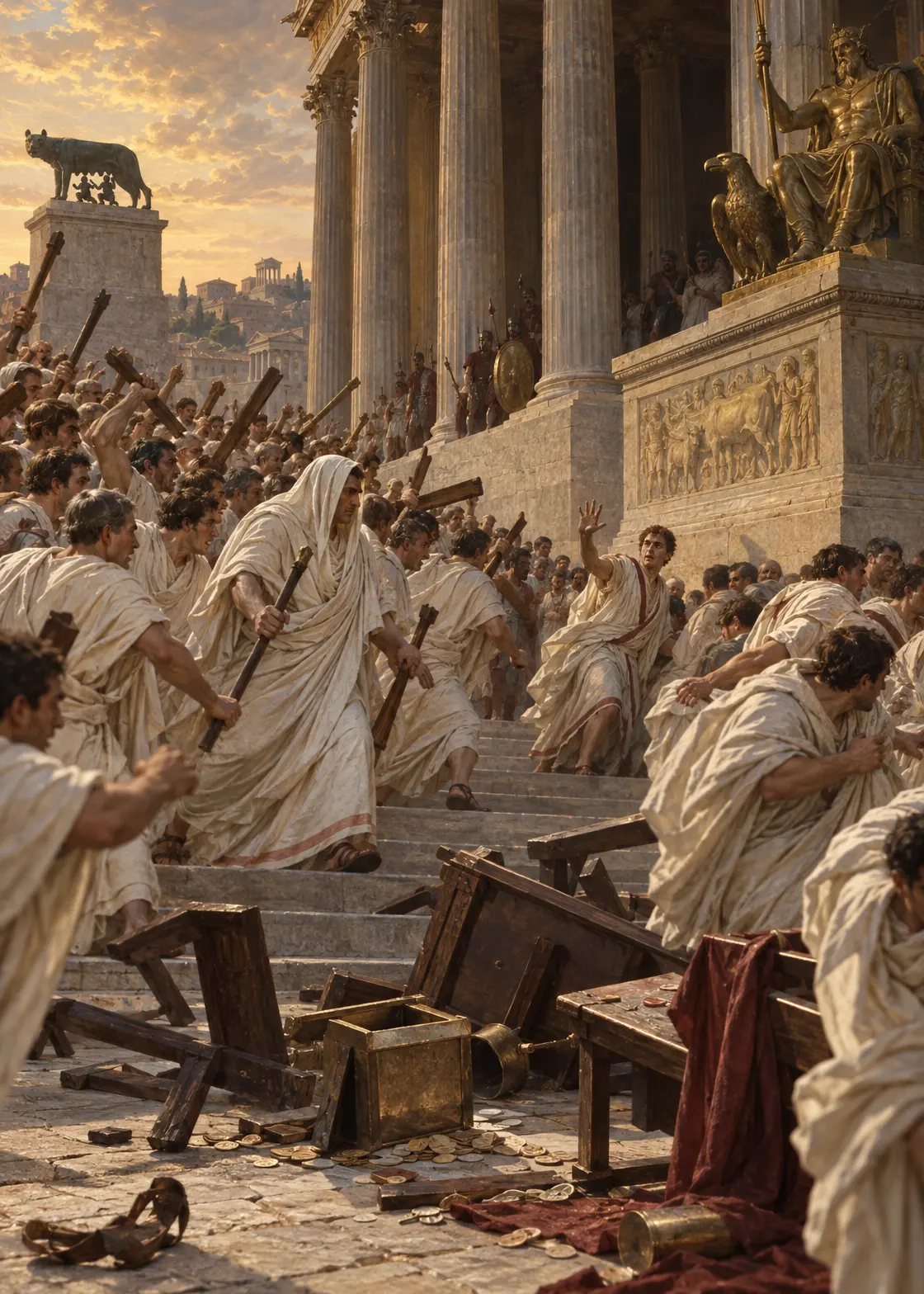
The senatorial reception of the Mancinian treaty at Rome, however, was hostile: the senatorial conservative faction (now under the leadership of figures like Scipio Aemilianus and Cato's son Cato Licinianus, with Cato himself having died in 149) refused to ratify the treaty on the grounds that no Roman official below consular rank could properly conclude binding agreements with foreign powers, and proposed that Mancinus himself be surrendered to the Numantines in nullification of the treaty's terms. Mancinus was accordingly delivered bound to the gates of Numantia in 136 BC by an embassy formally headed by the consul of that year; the Numantines, recognizing the political-symbolic content of the proceeding, refused to accept the surrender and returned Mancinus to the Roman embassy untouched (he would subsequently resume his political career, with the unusual cognomen Numantinus attaching to him from the episode, though with a damaged senatorial reputation). The political-constitutional crisis surrounding the Mancinian treaty, however, intensified the broader Roman political-cultural strain that the Spanish wars had been producing, with the senatorial conservative faction's institutional rigidity colliding with the practical-operational realities of conditions on the ground in the Iberian theater.
The Senate's decision to assign Scipio Aemilianus to the Numantine command for 134 BC was the institutional response to the accumulated operational failures of the previous decade. The Senate's selection required substantial constitutional manipulation, since Scipio had previously held the consulship in 147 BC (for the African command that would shortly be treated in Chapter 5) and was technically barred from a second consulship by the lex Villia annalis of 180 BC. The senatorial faction associated with Scipio's personal-political alliance system arranged the suspension of the relevant statute and the granting of a second consulship to Scipio specifically for the Spanish command — a constitutional adjustment that paralleled the earlier irregularities by which Scipio Africanus had received his extraordinary commands and that further intensified the institutional pattern of personal-strategic command exceeding the conventional Republican framework.
Scipio Aemilianus's preparations for the Numantine campaign were conducted with the systematic operational discipline that had characterized his earlier service. The Roman army in Spain was reorganized: the troops were retrained, the discipline was restored to standards that the previous commanders had allowed to deteriorate, the camp followers and luxury goods were systematically removed, the supply system was reorganized. The army that conducted the engagement was approximately 30,000 men, supplemented by various Spanish allied contingents (Numidian cavalry under King Jugurtha — the future enemy of Marius in the Jugurthine War, then a young prince serving with Scipio's army as a political-military auxiliary), and was operationally substantially superior to the forces the previous commanders had brought against Numantia.
Outcome and critical assessment
Result and caution: Roman dominance increased, with severe consequences for the population. The Numantine resistance was not one uninterrupted eleven-year siege. Neither the ancient narrative of collective self-destruction nor precise starvation and casualty totals should be treated as an independently measured record. The city locator does not establish each segment of the Roman siege works.
Historical record: Appian, Iberian Wars, especially the later Numantine narrative; IR-IV and IR-V, transition between the volumes; campaign tables.