The people of the Roman world
150 lives, from Romulus to Justinian: how each came to power, what they did with it, and how sure we can be.
About this compendium
An illustrated collection of 150 dossiers on the people who founded, governed, defended, contested, interpreted, and transformed the Roman world. The narrative runs from the traditions of the kings through the sixth-century eastern empire, with historians and other writers treated as historical actors in their own right.
The governing question is how each person exercised influence: through armies, office, law, land, money, marriage, religious authority, intellectual work, or the preservation of memory. A career becomes intelligible through these resources, the people connected with it, and the choices that changed its direction.
The dossiers are organized by historical setting. They can also be approached through the alphabetical register, the geographic guide, the thematic routes, and the chronology. Each includes identity and dates, career development, the operation and consequences of power, key landmarks, connected people, and material uncertainty.
Dates use BCE and CE. A date introduced by c. is approximate. Foundation-era dates are traditional, not contemporary documentation. Reigns, commands, offices, and lifespans are recorded separately. Names such as Caesar and Augustus can be personal identifiers or titles; the individual intended is specified here.
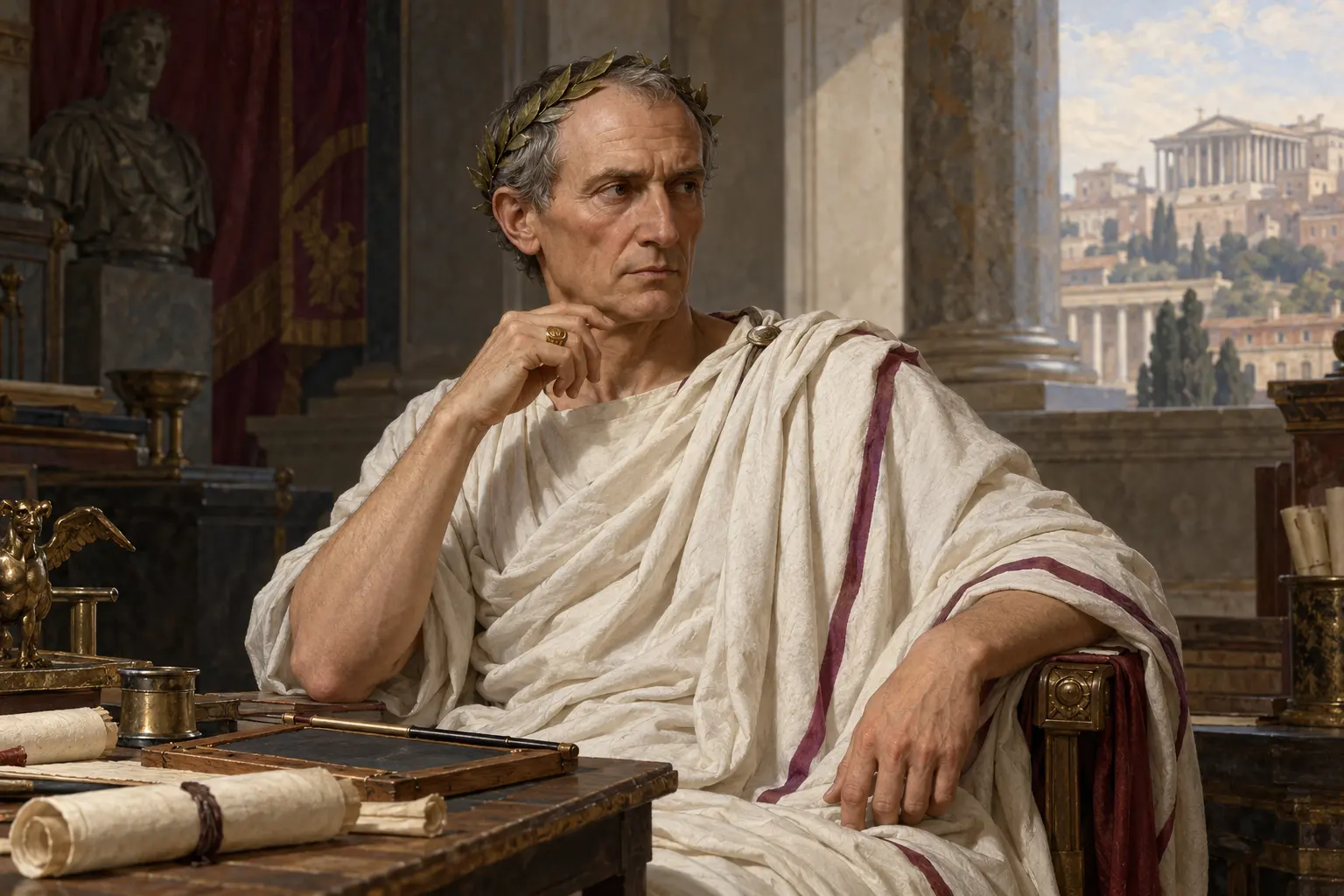
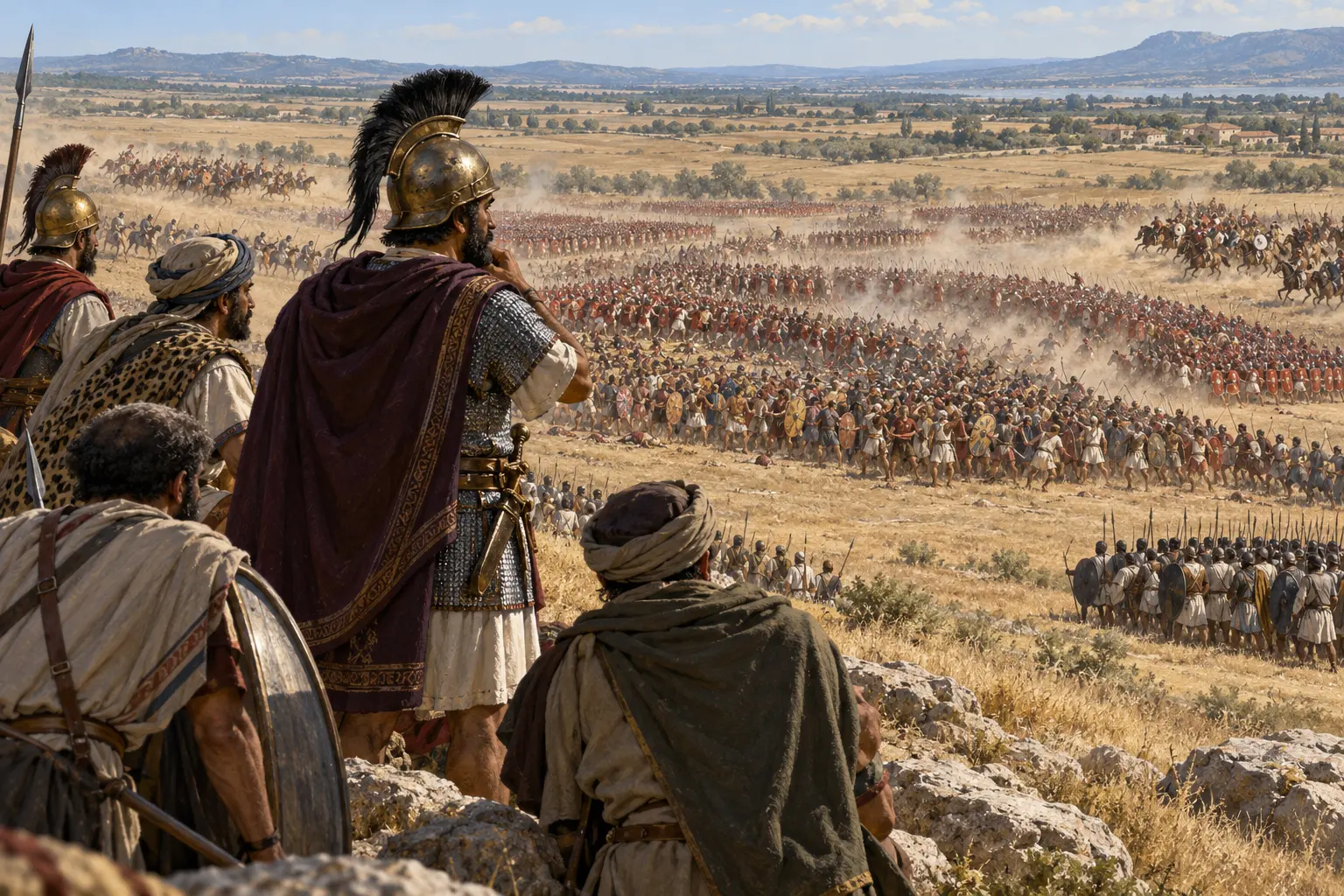
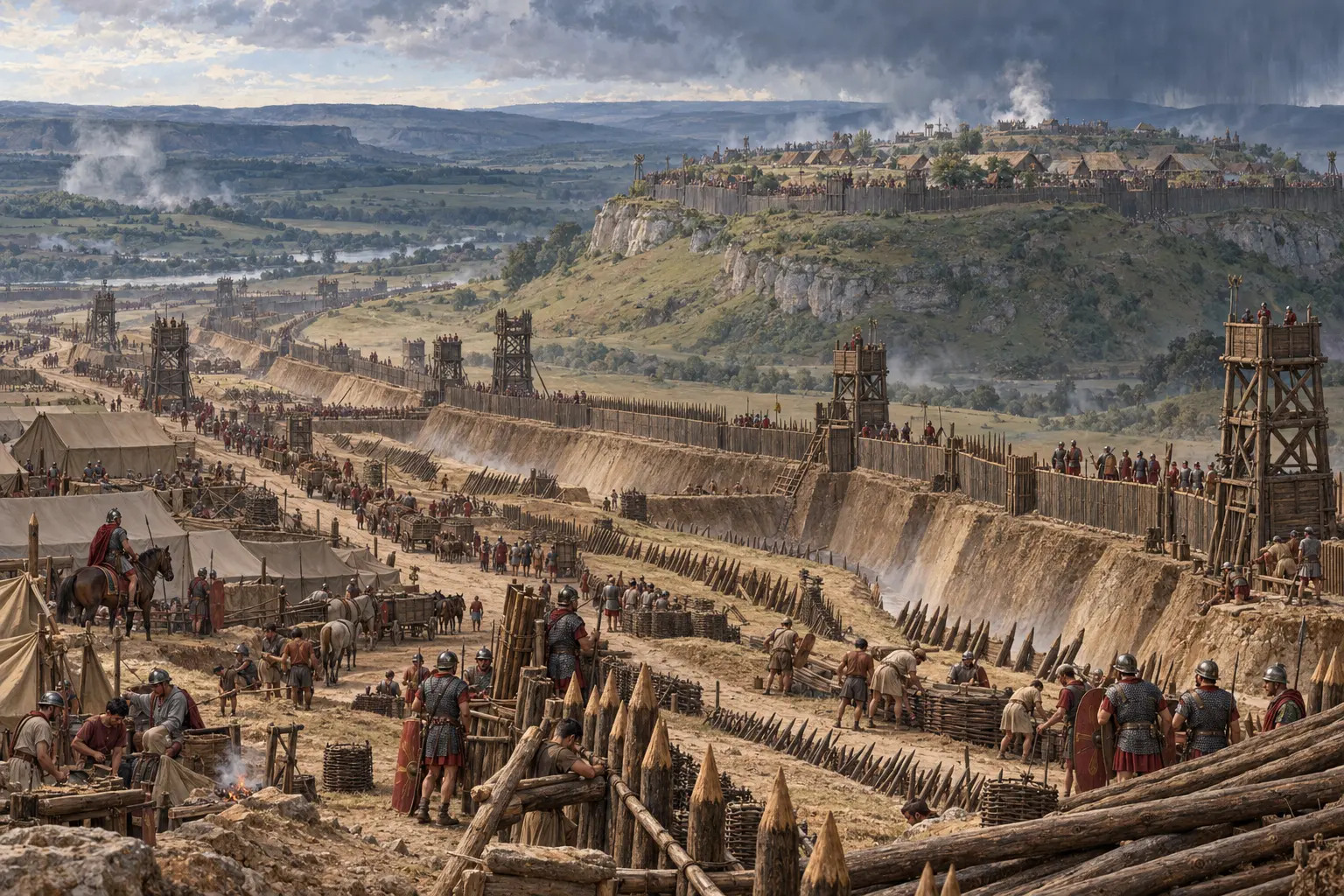
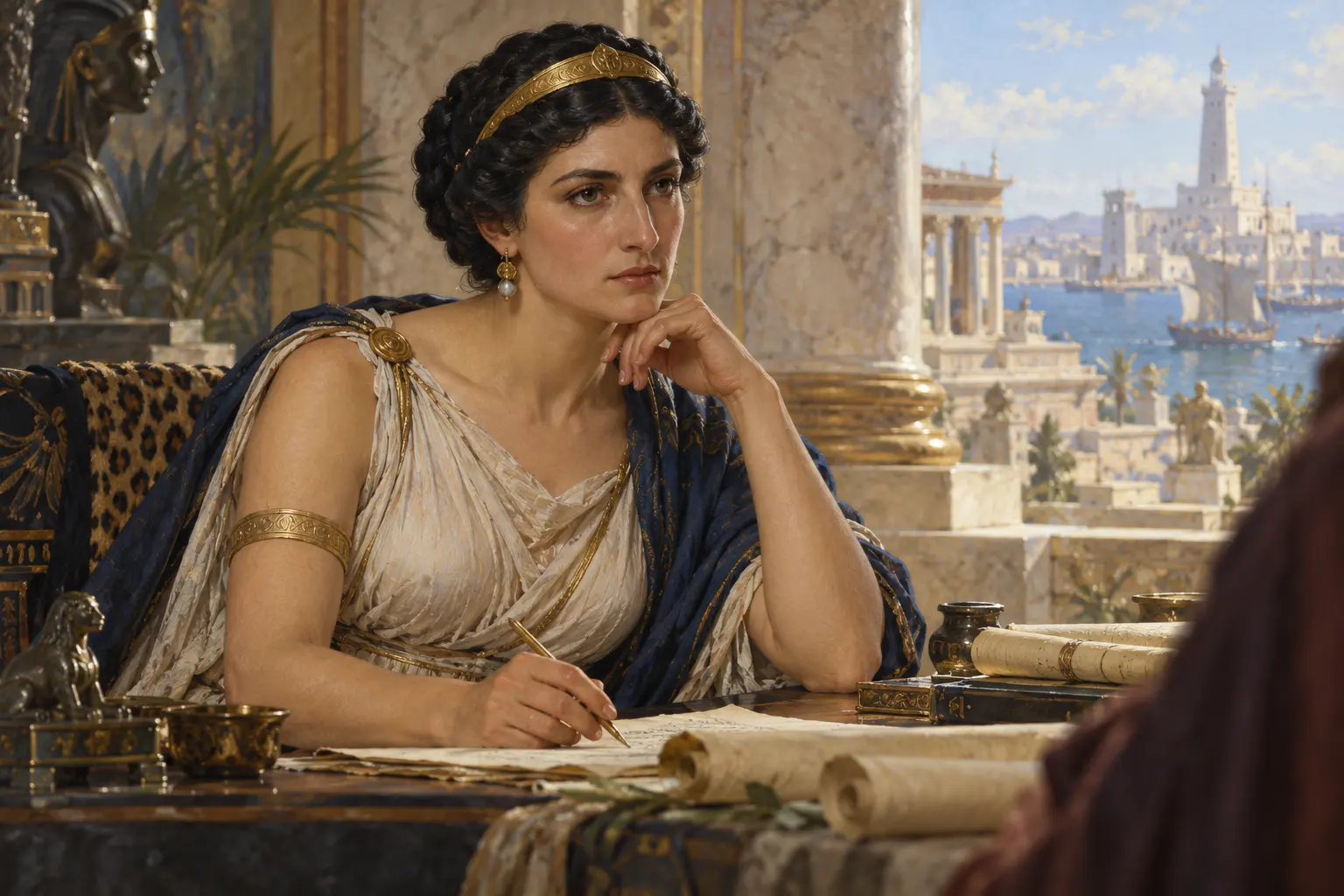
The illustrations are of two kinds. The eight newly created portraits and scenes are openly identified artistic reconstructions, intended to make material culture, scale, labor, and political settings easier to visualize. They do not authenticate facial likenesses or recover unrecorded conversations. The four regional maps are dated orientation plates whose different historical layers are explained in their captions.
This compendium is selective rather than a census of every ruler or officeholder. It gives substantial coverage to the principal political and military narratives of the Republic, principate, third-century crises, later empire, and Justinianic world. It does not attempt the complete medieval history of Byzantium after the sixth century.
Also: Wars · Legions · Provinces · The guides ↓
Founders kings and the early Republic 6
Rome's remembered beginnings explain institutions through exceptional people. Kings establish boundaries, religion, and public works; early Republican heroes define resistance to arbitrary rule and the proper limits of command. These are traditions of civic identity as well as accounts of supposed events. Their dates and personal detail require a different level of confidence from later documented careers.
In this section: Romulus, Numa Pompilius, Tarquinius Superbus, Lucius Junius Brutus, Lucius Quinctius Cincinnatus, Marcus Furius Camillus.
- ROMVLVSRF-001RF-001
Romulus
Founder king in Roman tradition.
- POMPILIVSRF-002RF-002
Numa Pompilius
King and religious lawgiver in Roman tradition.
- SVPERBVSRF-003RF-003
Tarquinius Superbus
Last king of Rome in the received narrative.
- BRVTVSRF-004RF-004
Lucius Junius Brutus
Leader of the expulsion of the kings and early consul.
- CINCINNATVSRF-005RF-005
Lucius Quinctius Cincinnatus
Consul and dictator in Republican tradition.
- CAMILLVSRF-006RF-006
Marcus Furius Camillus
General and repeated dictator.
Conquest and transformation of the Republic 14
Expansion brought Rome into sustained competition with Mediterranean monarchies, rival cities, and regional powers. Successful generals acquired prestige and wealth, while conquest intensified disputes about land, labor, citizenship, and accountability. Allied and opposing rulers belong inside this history because Roman success depended on their choices as well as on Roman armies.
In this section: Pyrrhus of Epirus, Quintus Fabius Maximus, Marcus Claudius Marcellus, Hannibal Barca, Publius Cornelius Scipio Africanus, Masinissa, Marcus Porcius Cato the Elder, Titus Quinctius Flamininus, Lucius Aemilius Paullus, Publius Cornelius Scipio Aemilianus, Viriathus, Tiberius Sempronius Gracchus, Gaius Sempronius Gracchus, Jugurtha.
- EPIRVSRF-007RF-007
Pyrrhus of Epirus
King of Epirus and expeditionary commander.
- MAXIMVSRF-008RF-008
Quintus Fabius Maximus
Consul and dictator.
- MARCELLVSRF-009RF-009
Marcus Claudius Marcellus
Consul and general.
 RF-010
Hannibal Barca
Carthaginian commander and later suffete.
- AFRICANVSRF-011RF-011
Publius Cornelius Scipio Africanus
General and consul.
- MASINISSARF-012RF-012
Masinissa
Numidian king and decisive Roman ally.
- ELDERRF-013RF-013
Marcus Porcius Cato the Elder
Consul, censor, soldier, and author.
- FLAMININVSRF-014RF-014
Titus Quinctius Flamininus
Consul general and diplomatic agent.
- PAVLLVSRF-015RF-015
Lucius Aemilius Paullus
Consul and conqueror of the Macedonian monarchy.
- AEMILIANVSRF-016RF-016
Publius Cornelius Scipio Aemilianus
Consul and siege commander.
- VIRIATHVSRF-017RF-017
Viriathus
Lusitanian resistance leader.
- GRACCHVSRF-018RF-018
Tiberius Sempronius Gracchus
Tribune and agrarian reformer.
- GRACCHVSRF-019RF-019
Gaius Sempronius Gracchus
Tribune and legislative reformer.
- JVGVRTHARF-020RF-020
Jugurtha
Numidian king and opponent of Rome.
Reform rivalry and the Republic in civil war 22
The governing elite struggled to accommodate exceptional commands, the demands of soldiers, and expanding provincial resources. Reform, repression, and civil war did not follow a single inevitable script. Individuals repeatedly made bargains that solved an immediate problem while creating new concentrations of power. Marriage, money, fleets, law, and rhetoric were instruments of the same contest.
In this section: Gaius Marius, Lucius Cornelius Sulla, Quintus Sertorius, Lucius Licinius Lucullus, Mithridates VI Eupator, Spartacus, Marcus Licinius Crassus, Gnaeus Pompeius Magnus, Marcus Tullius Cicero, Lucius Sergius Catilina, Marcus Porcius Cato the Younger, Gaius Julius Caesar, Titus Labienus, Vercingetorix, Marcus Junius Brutus, Gaius Cassius Longinus, Marcus Antonius, Marcus Aemilius Lepidus, Sextus Pompey, Octavia Minor, Cleopatra VII, Marcus Vipsanius Agrippa.
- MARIVSRF-021RF-021
Gaius Marius
General and seven-time consul.
- SVLLARF-022RF-022
Lucius Cornelius Sulla
General, consul, and dictator.
- SERTORIVSRF-023RF-023
Quintus Sertorius
Roman commander opposing the Sullan settlement.
- LVCVLLVSRF-024RF-024
Lucius Licinius Lucullus
Consul and eastern commander.
- EVPATORRF-025RF-025
Mithridates VI Eupator
King and major opponent of Roman expansion.
- SPARTACVSRF-026RF-026
Spartacus
Leader in the major Italian slave uprising.
- CRASSVSRF-027RF-027
Marcus Licinius Crassus
General, financier, consul, and political broker.
- MAGNVSRF-028RF-028
Gnaeus Pompeius Magnus
General, consul, and extraordinary commander.
- CICERORF-029RF-029
Marcus Tullius Cicero
Consul, advocate, political thinker, and correspondent.
- CATILINARF-030RF-030
Lucius Sergius Catilina
Senator and leader of an armed conspiracy.
- YOVNGERRF-031RF-031
Marcus Porcius Cato the Younger
Senator tribune and opponent of Caesar.
- RF-032
Gaius Julius Caesar
Consul, general, author, and dictator.
- LABIENVSRF-033RF-033
Titus Labienus
Tribune and field commander.
 RF-034
Vercingetorix
Gallic coalition leader.
- BRVTVSRF-035RF-035
Marcus Junius Brutus
Senator praetor and leader of the Liberators.
- LONGINVSRF-036RF-036
Gaius Cassius Longinus
Senator commander and conspirator.
- ANTONIVSRF-037RF-037
Marcus Antonius
General consul and triumvir.
- LEPIDVSRF-038RF-038
Marcus Aemilius Lepidus
Consul triumvir and pontifex maximus.
- POMPEYRF-039RF-039
Sextus Pompey
Naval commander and opponent of the triumvirs.
- MINORRF-040RF-040
Octavia Minor
Aristocratic patron and dynastic intermediary.
 RF-041
Cleopatra VII
Ptolemaic queen of Egypt.
- AGRIPPARF-042RF-042
Marcus Vipsanius Agrippa
General, admiral, consul, and imperial deputy.
The Augustan settlement and the Julio Claudian world 17
Augustus established a durable supremacy whose transfer depended on a household as well as institutions. Provincial commanders acted in the emperor's name while acquiring reputations that could make them threatening. Women managed dynastic connections without possessing the same formal powers as emperors. The frontier and the palace therefore belong in one connected account of early imperial rule.
In this section: Augustus, Livia Drusilla, Nero Claudius Drusus, Tiberius, Publius Quinctilius Varus, Arminius, Germanicus, Lucius Aelius Sejanus, Caligula, Claudius, Agrippina the Younger, Lucius Annaeus Seneca, Nero, Gnaeus Domitius Corbulo, Gaius Suetonius Paulinus, Boudica, Gnaeus Julius Agricola.
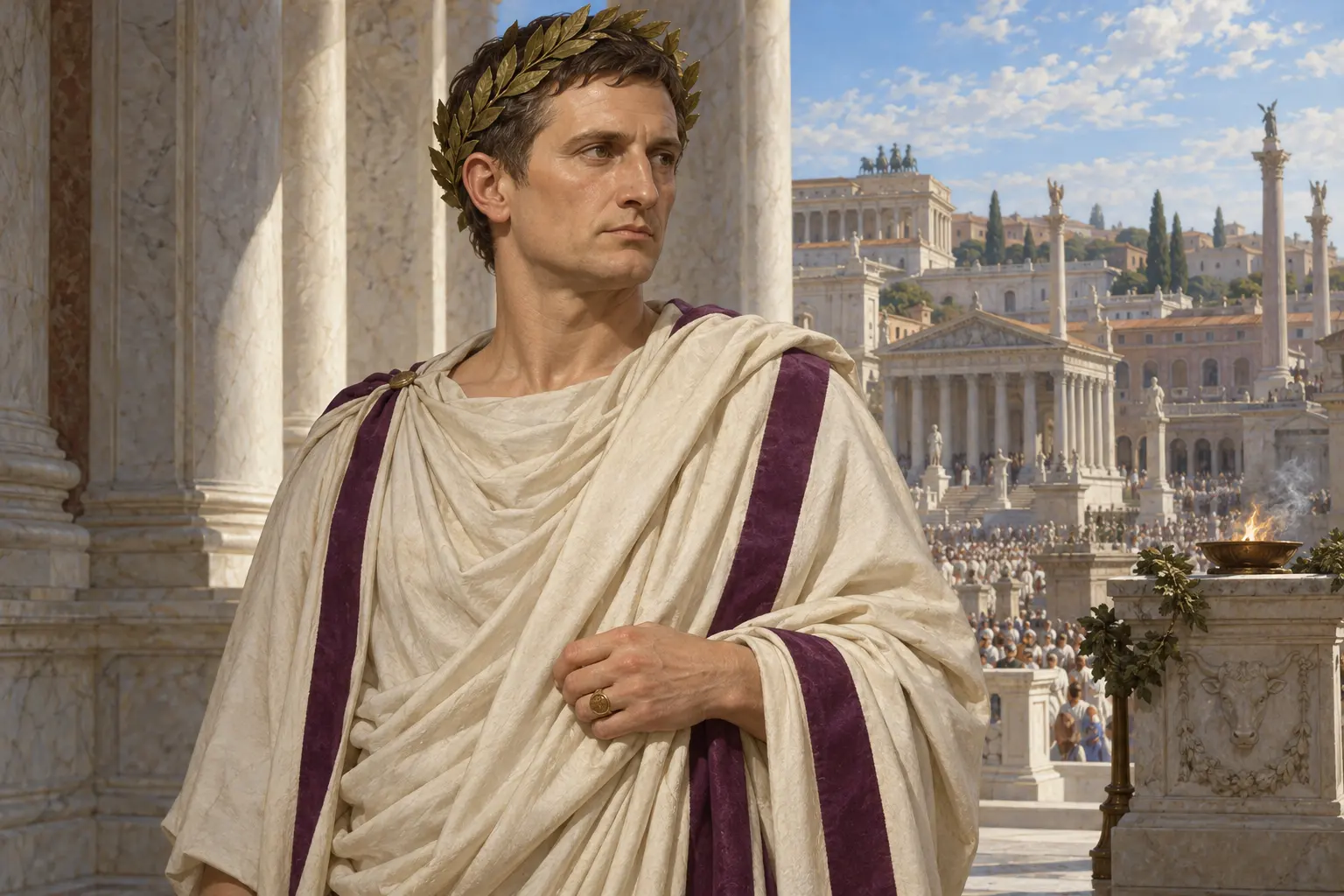 RF-043
Augustus
First Roman princeps.
- DRVSILLARF-044RF-044
Livia Drusilla
Imperial consort and dynastic intermediary.
- DRVSVSRF-045RF-045
Nero Claudius Drusus
Imperial prince and frontier commander.
- TIBERIVSRF-046RF-046
Tiberius
Emperor and earlier frontier commander.
- VARVSRF-047RF-047
Publius Quinctilius Varus
Consul governor and army commander.
- ARMINIVSRF-048RF-048
Arminius
Cheruscan leader and former Roman auxiliary officer.
- GERMANICVSRF-049RF-049
Germanicus
Imperial prince and commander.
- SEJANVSRF-050RF-050
Lucius Aelius Sejanus
Praetorian prefect and imperial favorite.
- CALIGVLARF-051RF-051
Caligula
Emperor.
- CLAVDIVSRF-052RF-052
Claudius
Emperor.
- YOVNGERRF-053RF-053
Agrippina the Younger
Imperial consort and mother of Nero.
- SENECARF-054RF-054
Lucius Annaeus Seneca
Philosopher, dramatist, senator, and imperial adviser.
- NERORF-055RF-055
Nero
Emperor.
- CORBVLORF-056RF-056
Gnaeus Domitius Corbulo
General and eastern commander.
- PAVLINVSRF-057RF-057
Gaius Suetonius Paulinus
General governor and civil-war commander.
- BOVDICARF-058RF-058
Boudica
Leader of a major revolt in Roman Britain.
- AGRICOLARF-059RF-059
Gnaeus Julius Agricola
Consul, governor, and commander in Britain.
Civil war the Flavians and the Antonine empire 15
The crisis of 69 revealed that imperial succession could be decided by armies far from Rome. The Flavian and Antonine settlements restored continuity through family, adoption, patronage, military success, and administrative confidence. Expansion and consolidation were different uses of the same imperial resources, while the prosperity of the center remained connected to coercion and taxation elsewhere.
In this section: Galba, Otho, Aulus Vitellius, Vespasian, Titus, Pliny the Elder, Domitian, Nerva, Trajan, Decebalus, Hadrian, Antoninus Pius, Marcus Aurelius, Lucius Verus, Commodus.
- GALBARF-060RF-060
Galba
Emperor and former provincial governor.
- OTHORF-061RF-061
Otho
Emperor.
- VITELLIVSRF-062RF-062
Aulus Vitellius
Emperor proclaimed by the Rhine armies.
- VESPASIANRF-063RF-063
Vespasian
Emperor and founder of the Flavian dynasty.
- TITVSRF-064RF-064
Titus
Emperor and commander at Jerusalem.
- ELDERRF-065RF-065
Pliny the Elder
Officer, administrator, fleet commander, and encyclopedist.
- DOMITIANRF-066RF-066
Domitian
Emperor.
- NERVARF-067RF-067
Nerva
Emperor.
- TRAJANRF-068RF-068
Trajan
Emperor and conqueror.
- DECEBALVSRF-069RF-069
Decebalus
Dacian king and opponent of Rome.
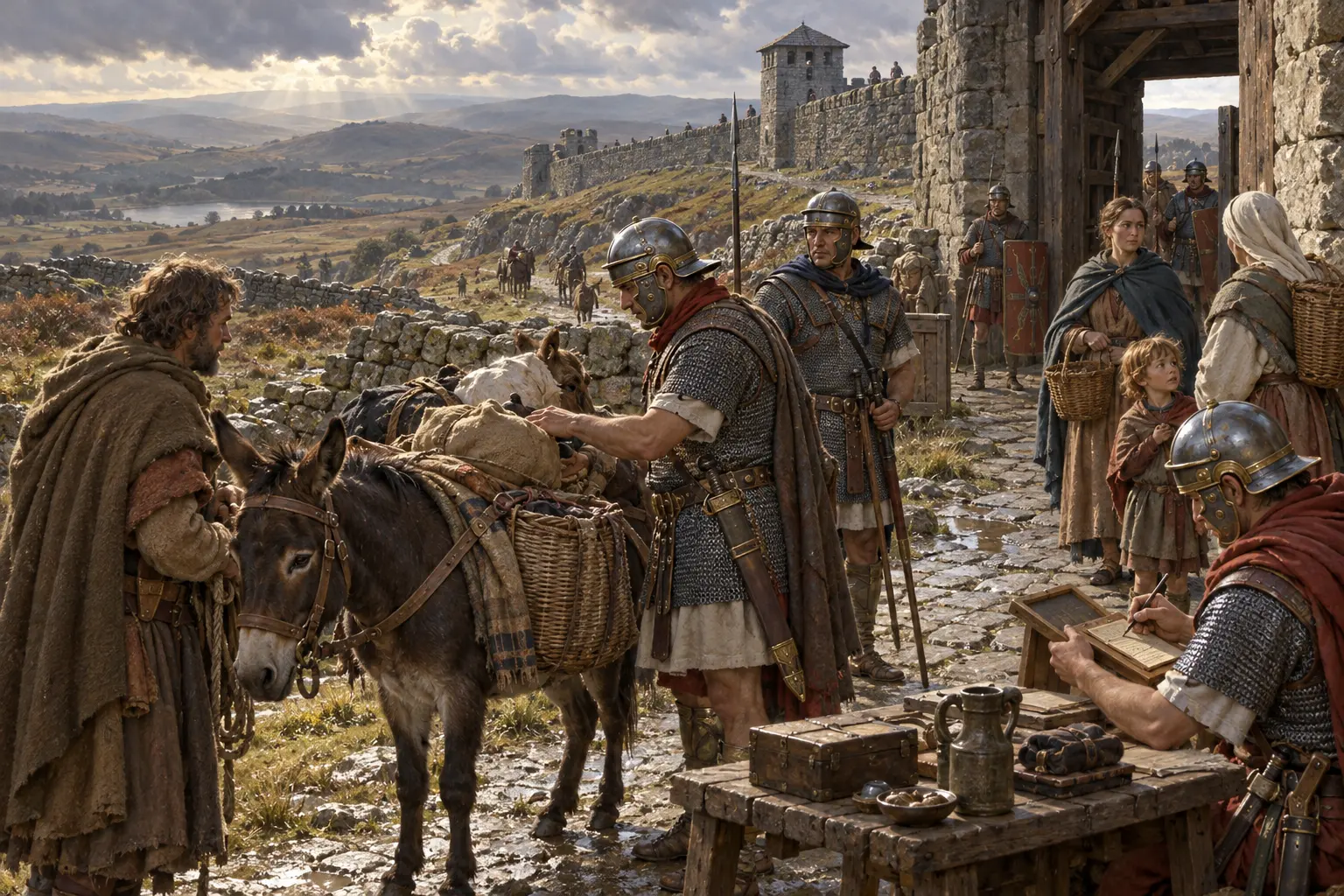 RF-070
Hadrian
Emperor.
- PIVSRF-071RF-071
Antoninus Pius
Emperor.
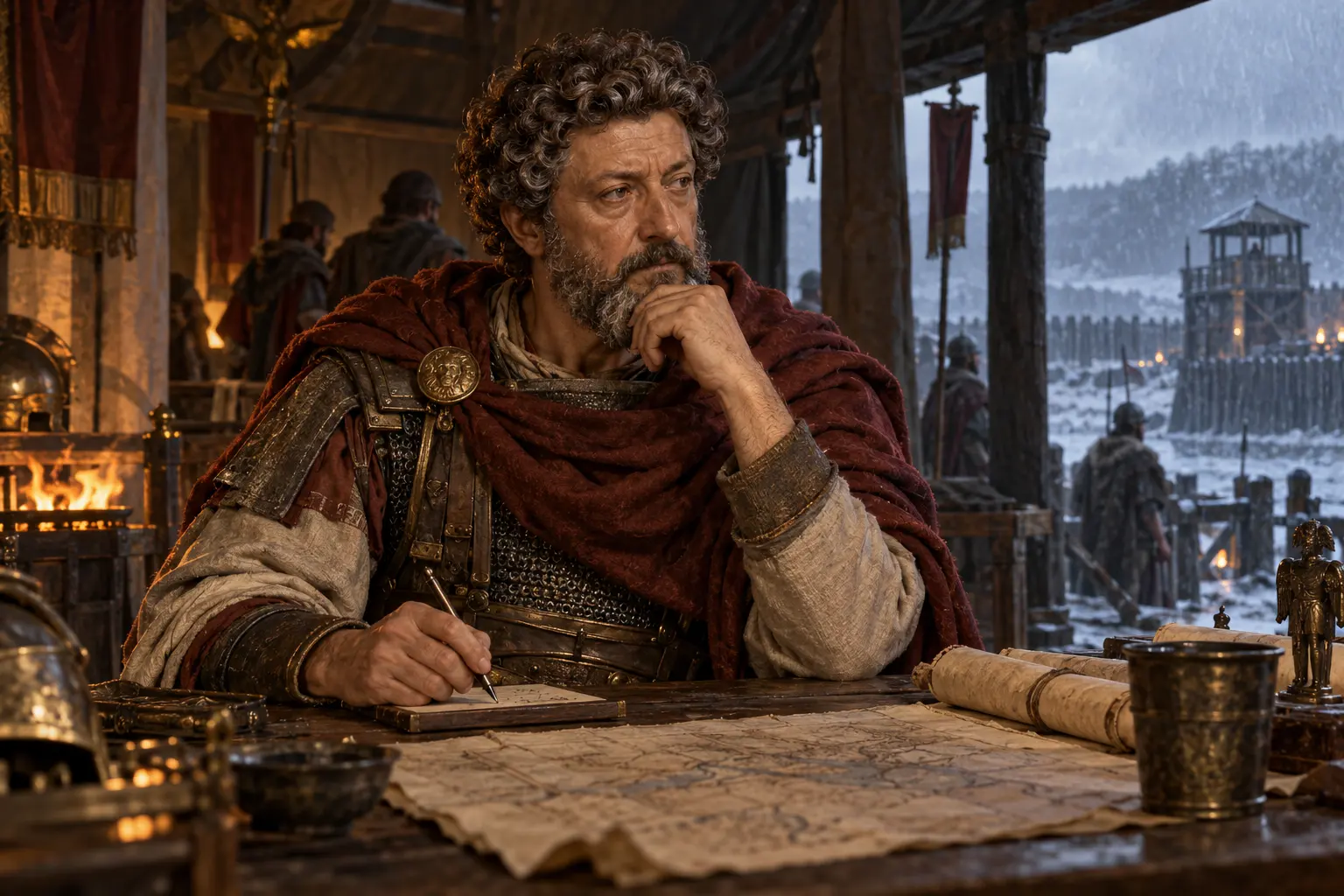 RF-072
Marcus Aurelius
Emperor and Stoic writer.
- VERVSRF-073RF-073
Lucius Verus
Co-emperor.
- COMMODVSRF-074RF-074
Commodus
Emperor.
The Severans and the struggle to preserve the empire 15
Civil war after Commodus brought a new dynasty, stronger military rewards, and renewed campaigns. The third century then exposed the difficulty of confronting invasion, epidemic, rivalry, and simultaneous demands across the empire. Regional rulers sometimes preserved Roman institutions while denying the central emperor exclusive authority. Recovery required the defeat or incorporation of these competing centers, not merely victory against external enemies.
In this section: Septimius Severus, Julia Domna, Caracalla, Geta, Elagabalus, Severus Alexander, Decius, Valerian, Gallienus, Shapur I, Odaenathus, Postumus, Claudius II Gothicus, Aurelian, Zenobia.
- SEVERVSRF-075RF-075
Septimius Severus
Emperor and founder of the Severan dynasty.
- DOMNARF-076RF-076
Julia Domna
Imperial consort and dynastic patron.
- CARACALLARF-077RF-077
Caracalla
Emperor.
- GETARF-078RF-078
Geta
Co-emperor and murdered Severan heir.
- ELAGABALVSRF-079RF-079
Elagabalus
Emperor and priest of the Emesene solar god.
- ALEXANDERRF-080RF-080
Severus Alexander
Emperor.
- DECIVSRF-081RF-081
Decius
Emperor.
- VALERIANRF-082RF-082
Valerian
Emperor and eastern commander.
- GALLIENVSRF-083RF-083
Gallienus
Emperor.
- SHAPVR IRF-084RF-084
Shapur I
Sasanian king of kings.
- ODAENATHVSRF-085RF-085
Odaenathus
Palmyrene ruler and Roman eastern commander.
- POSTVMVSRF-086RF-086
Postumus
Emperor of the Gallic imperial regime.
- GOTHICVSRF-087RF-087
Claudius II Gothicus
Emperor and commander against the Goths.
- AVRELIANRF-088RF-088
Aurelian
Emperor and reunifier.
- ZENOBIARF-089RF-089
Zenobia
Palmyrene ruler and regent for Vaballathus.
Collegial emperors Constantine and his successors 10
The tetrarchy distributed command among several rulers and attempted to organize succession through rank and appointment. Family loyalties and army acclamation repeatedly disrupted the design. Constantine's victory and Christian patronage transformed the political and religious landscape without removing dynastic violence or the need to share geographical responsibilities. Julian and Jovian reveal sharply different ambitions within the institutions they inherited.
In this section: Diocletian, Maximian, Constantius I, Galerius, Constantine I, Maxentius, Licinius, Constantius II, Julian, Jovian.
- DIOCLETIANRF-090RF-090
Diocletian
Emperor and architect of tetrarchic government.
- MAXIMIANRF-091RF-091
Maximian
Emperor and western tetrarch.
- CONSTANTIVS IRF-092RF-092
Constantius I
Caesar and emperor.
- GALERIVSRF-093RF-093
Galerius
Tetrarch and eastern emperor.
- CONSTANTINE IRF-094RF-094
Constantine I
Emperor and patron of Christianity.
- MAXENTIVSRF-095RF-095
Maxentius
Emperor based at Rome.
- LICINIVSRF-096RF-096
Licinius
Emperor and rival of Constantine.
- CONSTANTIVS IIRF-097RF-097
Constantius II
Emperor.
- JVLIANRF-098RF-098
Julian
Emperor, general, and philosophical writer.
- JOVIANRF-099RF-099
Jovian
Emperor and successor to Julian.
The Valentinian and Theodosian settlements 6
Military households and shared imperial authority remained essential to governing the frontiers. The movement of Gothic groups across the Danube, the disaster of Adrianople, and the settlement under Theodosius exposed the interaction of war, provisioning, negotiation, and recruitment. Bishops became increasingly prominent political interlocutors while remaining embedded in a Roman world of cities, patrons, courts, and competing religious communities.
In this section: Valentinian I, Valens, Gratian, Count Theodosius, Theodosius I, Ambrose of Milan.
- VALENTINIAN IRF-100RF-100
Valentinian I
Emperor of the western imperial sphere.
- VALENSRF-101RF-101
Valens
Emperor of the eastern imperial sphere.
- GRATIANRF-102RF-102
Gratian
Emperor of the western imperial sphere.
- THEODOSIVSRF-103RF-103
Count Theodosius
Senior general and restorer of provincial control.
- THEODOSIVS IRF-104RF-104
Theodosius I
Emperor.
- MILANRF-105RF-105
Ambrose of Milan
Bishop former governor and ecclesiastical statesman.
Command dynastic survival and western fragmentation 17
Western authority contracted unevenly through lost revenues, rival emperors, military bargaining, and the creation of durable successor powers. It did not vanish everywhere on one date. The eastern court remained an active participant in dynastic politics, while Roman identity, institutions, and command continued in regions beyond effective coordination from Italy. These dossiers follow the people through whom that changing distribution of power operated.
In this section: Honorius, Stilicho, Alaric I, Galla Placidia, Constantine III, Theodosius II, Pulcheria, Valentinian III, Bonifatius, Flavius Aetius, Attila, Gaiseric, Majorian, Ricimer, Aegidius, Romulus Augustulus, Odoacer.
- HONORIVSRF-106RF-106
Honorius
Western emperor.
- STILICHORF-107RF-107
Stilicho
Senior western commander and political guardian.
- ALARIC IRF-108RF-108
Alaric I
Gothic leader and Roman military negotiator.
- PLACIDIARF-109RF-109
Galla Placidia
Imperial daughter, queen consort, and Augusta.
- CONSTANTINE IIIRF-110RF-110
Constantine III
Rival western emperor.
- THEODOSIVS IIRF-111RF-111
Theodosius II
Eastern Roman emperor.
- PVLCHERIARF-112RF-112
Pulcheria
Augusta and eastern dynastic power broker.
- VALENTINIAN IIIRF-113RF-113
Valentinian III
Western emperor.
- BONIFATIVSRF-114RF-114
Bonifatius
African commander and rival of Aetius.
- AETIVSRF-115RF-115
Flavius Aetius
Senior western general and political broker.
- ATTILARF-116RF-116
Attila
Ruler of a Hunnic confederation.
- GAISERICRF-117RF-117
Gaiseric
Vandal and Alan king.
- MAJORIANRF-118RF-118
Majorian
Western emperor and campaigning ruler.
- RICIMERRF-119RF-119
Ricimer
Western military commander and kingmaker.
- AEGIDIVSRF-120RF-120
Aegidius
Roman commander maintaining power in northern Gaul.
- AVGVSTVLVSRF-121RF-121
Romulus Augustulus
Young western emperor installed by Orestes.
- ODOACERRF-122RF-122
Odoacer
Ruler of Italy and military king.
Gothic Italy and the eastern Roman imperial system 12
Theodoric's Italy joined Gothic kingship to Roman administration. Eastern rulers managed palace rivalry, religious conflict, and frontier war while retaining the resources for major intervention. Justinian's campaigns reunited some former western territories with imperial government, but protracted warfare also destroyed communities and exposed continuing limits. Court officials, imperial women, jurists, and generals shaped the same governing system.
In this section: Leo I, Zeno, Theodoric the Great, Anastasius I, Justin I, Amalasuntha, Justinian I, Theodora, Belisarius, Narses, Totila, Khosrow I.
- LEO IRF-123RF-123
Leo I
Eastern Roman emperor.
- ZENORF-124RF-124
Zeno
Eastern Roman emperor.
- GREATRF-125RF-125
Theodoric the Great
Gothic king, ruler of Italy, and holder of Roman honors.
- ANASTASIVS IRF-126RF-126
Anastasius I
Eastern Roman emperor.
- JVSTIN IRF-127RF-127
Justin I
Soldier emperor and founder of Justinian's ruling house.
- AMALASVNTHARF-128RF-128
Amalasuntha
Gothic regent and queen in Italy.
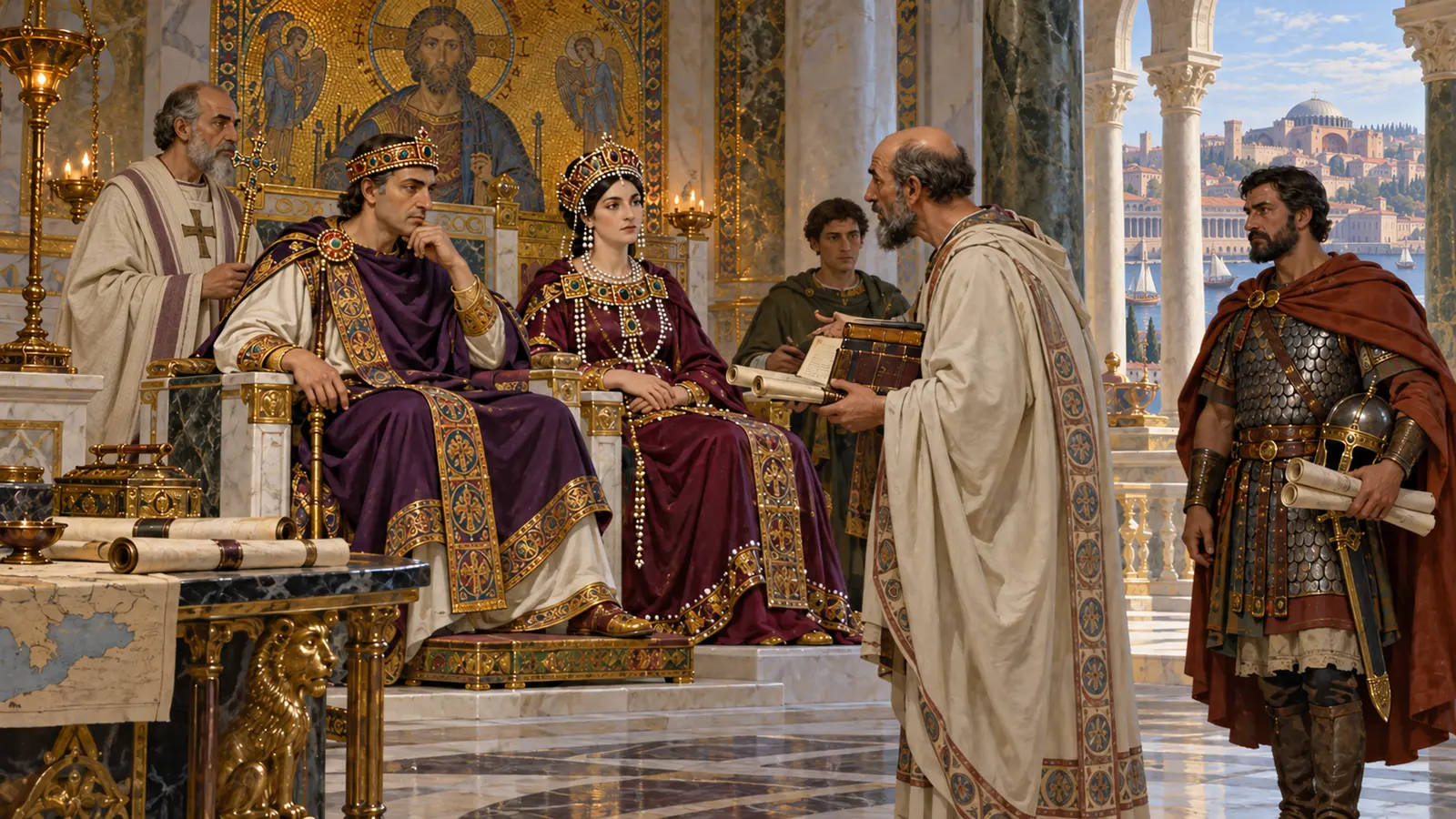 RF-129
Justinian I
Eastern Roman emperor.
- THEODORARF-130RF-130
Theodora
Empress and influential imperial partner.
- BELISARIVSRF-131RF-131
Belisarius
Eastern Roman general.
- NARSESRF-132RF-132
Narses
Court official and general.
- TOTILARF-133RF-133
Totila
Gothic king and commander in Italy.
- KHOSROW IRF-134RF-134
Khosrow I
Sasanian king of kings.
Historians writers and custodians of Roman memory 16
The preservation of Roman history depended on people who selected, argued, remembered, praised, condemned, and compiled. Their careers matter because the position of an author helps explain what becomes visible or remains silent. These dossiers treat historical writing as an activity within Roman society, alongside government, diplomacy, military service, religious leadership, and the custody of knowledge.
In this section: Polybius, Gaius Sallustius Crispus, Titus Livius, Plutarch of Chaeronea, Flavius Josephus, Publius Cornelius Tacitus, Gaius Suetonius Tranquillus, Cassius Dio, Ammianus Marcellinus, Claudian, Procopius of Caesarea, Cassiodorus, Augustine of Hippo, Priscus of Panium, Eutropius, Jordanes.
- POLYBIVSRF-135RF-135
Polybius
Greek statesman, historian, and Roman hostage.
- CRISPVSRF-136RF-136
Gaius Sallustius Crispus
Senator, provincial governor, and historian.
- LIVIVSRF-137RF-137
Titus Livius
Historian of Rome.
- CHAERONEARF-138RF-138
Plutarch of Chaeronea
Greek biographer, philosopher, and priest.
- JOSEPHVSRF-139RF-139
Flavius Josephus
Judaean commander, historian, and Flavian client.
- TACITVSRF-140RF-140
Publius Cornelius Tacitus
Senator, consul, and historian.
- TRANQVILLVSRF-141RF-141
Gaius Suetonius Tranquillus
Imperial secretary and biographer.
- DIORF-142RF-142
Cassius Dio
Senator, consul, provincial administrator, and historian.
- MARCELLINVSRF-143RF-143
Ammianus Marcellinus
Soldier and historian.
- CLAVDIANRF-144RF-144
Claudian
Court poet, panegyrist, and political advocate.
- CAESAREARF-145RF-145
Procopius of Caesarea
Legal adviser, eyewitness historian, and author.
- CASSIODORVSRF-146RF-146
Cassiodorus
Roman administrator, compiler, and monastic founder.
- HIPPORF-147RF-147
Augustine of Hippo
Bishop, theologian, and author.
- PANIVMRF-148RF-148
Priscus of Panium
Diplomat and historian.
- EVTROPIVSRF-149RF-149
Eutropius
Imperial official and epitomator.
- JORDANESRF-150RF-150
Jordanes
Compiler and historian of Roman and Gothic history.
Go further: the guides
The compendium's own chapters on how to read the entries, and the world around them.