Figures · Command dynastic survival and western fragmentation
RF-115 Flavius Aetius
Life and career
Periods as a hostage among Gothic and Hunnic elites helped create connections later useful in Roman power struggles. His command rested on relationships that crossed the frontier and on the ability to persuade the western court that those relationships served imperial survival. Such ties could be a resource and an accusation simultaneously.
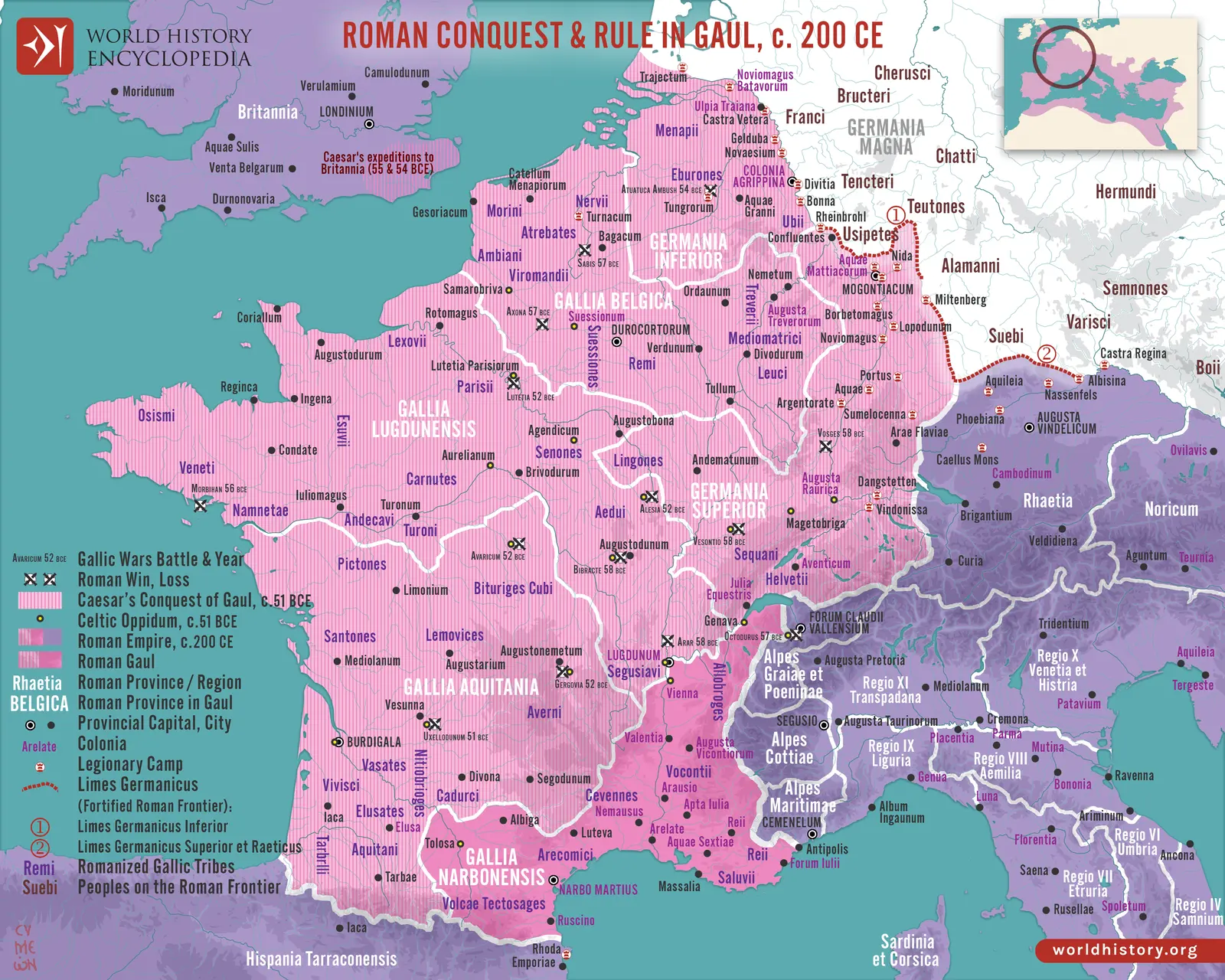
Aetius maintained western power through campaigns, court bargaining, and alliances with groups including the Huns. His leadership of the coalition against Attila in Gaul in 451 CE became the best-known episode of a much longer career. Relations with Valentinian III remained dangerous, and the emperor personally killed him in 454 CE. His dossier is central to the dependence of imperial government on commanders whose military networks could rival the throne.
Leadership and historical significance
In Gaul he confronted different political and military problems rather than one permanent alliance of all external peoples. The coalition of 451 depended on interests that overlapped for a campaign without disappearing into a single Roman army. His later killing by Valentinian III exposed the fear that a successful general might overshadow his sovereign. The aftermath suggests how difficult it was to replace an individual's network once government had become dependent on it.
Landmarks
- 430s CE — consolidation of western command.
- 451 CE — coalition battle against Attila in Gaul.
- 454 CE — killing at court.
Historical uncertainty
The battle is variously called the Catalaunian Plains or Chalons. Its location and the scale of casualties are uncertain; it did not immediately destroy Hunnic power.
Connected dossiers: Attila, Galla Placidia, Gaiseric, Ricimer.