Figures · Command dynastic survival and western fragmentation
RF-114 Bonifatius
Life and career
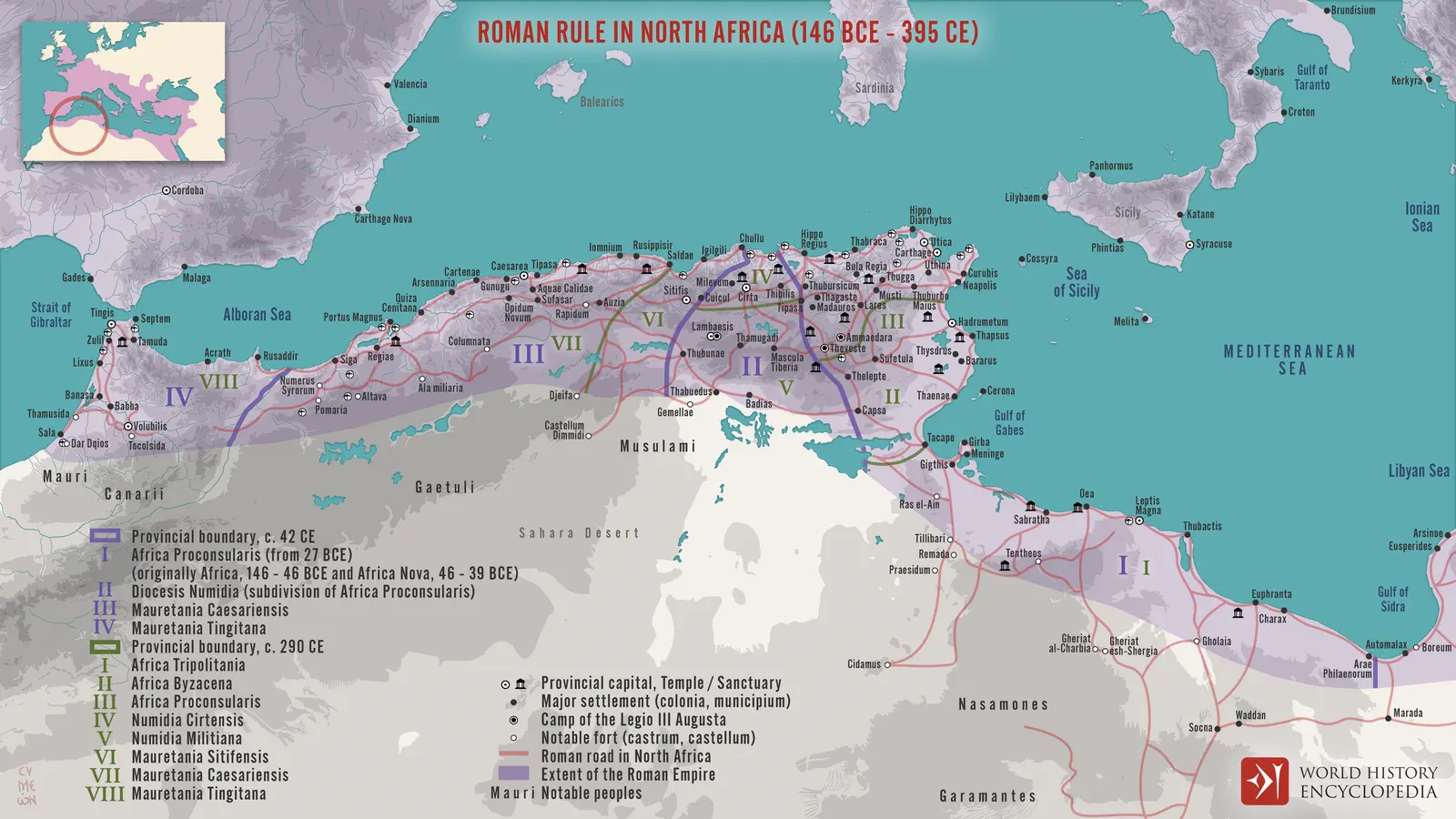
Bonifatius's military and political role in Africa placed him near the resources on which western government depended. Conflict with the court became entangled with rivalry among commanders and allegations of disloyalty. The Vandal crossing and expansion turned those struggles into a much greater crisis, while resistance and negotiation continued under worsening conditions. Reconciliation with the court and a senior command in Italy brought him into direct conflict with Aetius.
Leadership and historical significance
Wounded after their battle near Ariminum, he died soon afterward. His dossier illustrates how internal contests over office could weaken cooperation at the moment external forces altered the regional balance. It also requires particular caution because the memorable story that he invited the Vandals as a weapon against rivals provides a neat moral explanation for a complex sequence that is not securely recoverable in that form.
Landmarks
- 420s CE — leading African command.
- 429 CE — Vandal crossing.
- 430–431 CE — African crisis.
- 432 CE — conflict with Aetius and death.
Historical uncertainty
The invitation story is disputed. He is not the much later Saint Boniface associated with missionary activity in Germany.
Connected dossiers: Galla Placidia, Flavius Aetius, Gaiseric, Augustine of Hippo.