Figures · Historians writers and custodians of Roman memory
RF-147 Augustine of Hippo
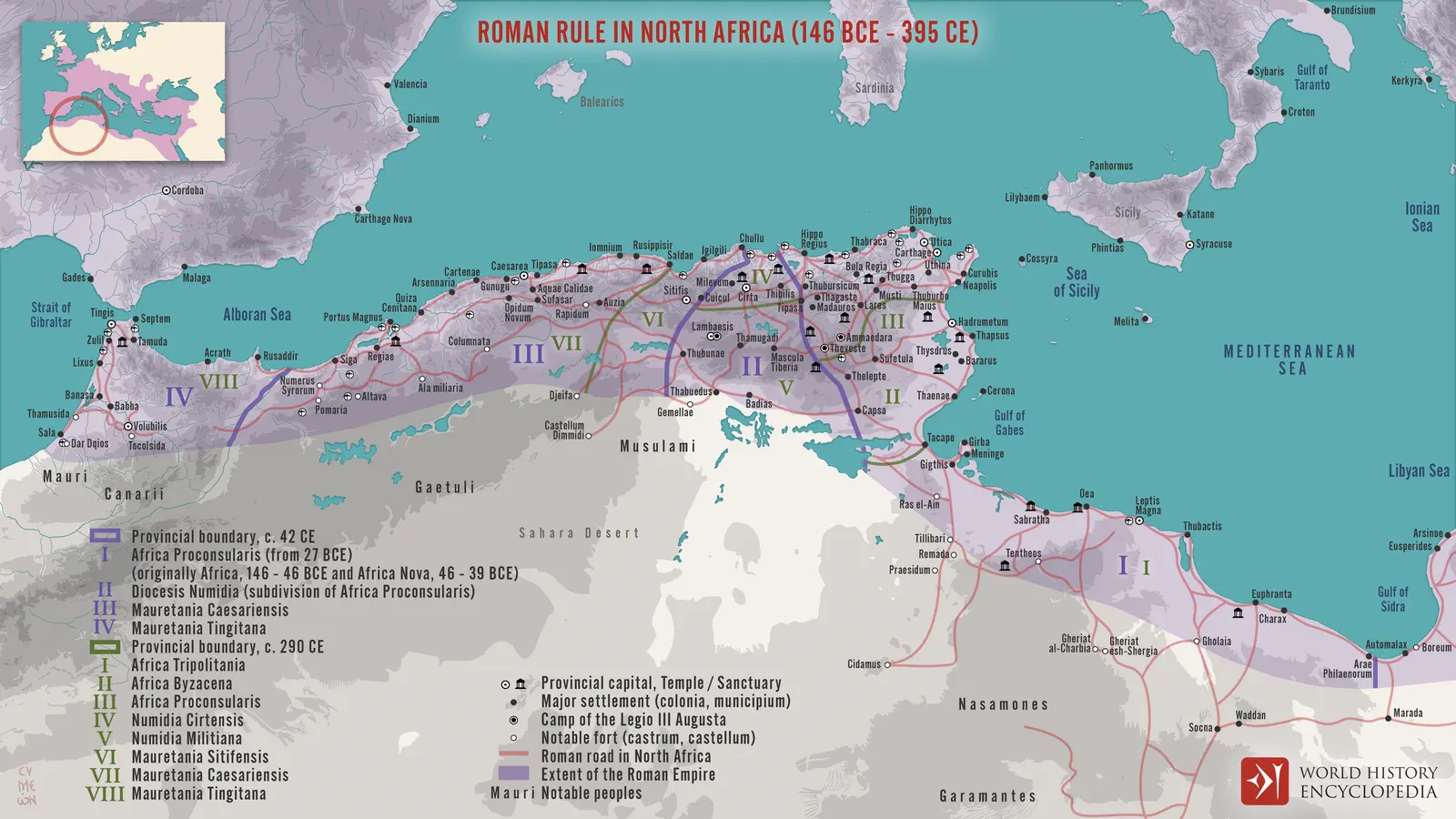
Life and career
His upbringing, education, teaching career, family relationships, and earlier religious commitments gave his later writing a rich vocabulary of desire and memory. Conversion did not remove him from civic life: episcopal responsibilities involved litigation, patronage, poverty, violence, and conflicts within Christianity as well as argument with non-Christians.
Augustine's writings connect late Roman social life, religious conflict, education, and the interpretation of imperial history. City of God responds in part to arguments generated by the sack of Rome, challenging claims that Christianity caused the disaster and refusing to equate the earthly empire with ultimate salvation. His letters and Confessions supply different kinds of evidence for individual experience and community leadership. He died while Vandal forces besieged Hippo.
Contribution and historical significance
The distinction between the earthly and heavenly cities resists a simple identification of imperial success with divine approval. That argument mattered after 410, when Rome's symbolic standing made its sack an accusation against the new religious order. His letters show the compromises of governing a community in a coercive society, while his theology gave later readers conceptual tools whose uses often extended far beyond the problems of Roman North Africa.
Landmarks
- 386 CE — conversion in Milan.
- 395/396 CE — episcopate.
- After 410 CE — composition of City of God.
- 430 CE — death during siege.
Historical uncertainty
City of God is theological argument, not a chronicle of the western collapse. Confessions is a crafted account of memory and conversion, not an unmediated diary.
Connected dossiers: Ambrose of Milan, Honorius, Alaric I, Gaiseric.