Who wrote what, and when: the texts behind the grades.
Historical authors and works 57
Ammianus Marcellinus Res Gestae
Late fourth century CE; surviving books 14–31 cover 353–378 CE · Roman frontiers and imperial courts
Military-connected historian combines personal experience, ethnography and moral narrative; hostile labels and reported speeches remain authored evidence.
Twelfth century CE; Alexios I 1081–1118 CE · Constantinople Balkans and eastern Mediterranean
Dynastic history by an imperial daughter, valuable for politics and crusading encounters while structured by family defense and classical literary models.
Second century CE · Mediterranean provincial theaters
Arranges Roman expansion largely by peoples and theaters, with Civil Wars tracing internal conflict; later chronology and speeches need comparison with other traditions.
Confessions c.397–400 CE; City of God 413–426/427 CE · North Africa and Roman intellectual world
Autobiographical theology and an extensive argument about earthly and divine communities; critiques of Roman religion often transmit earlier authors through an opponent’s framing.
Finalized by 14 CE; imperial career retrospective · Rome and provincial inscription copies
Official account listing Augustus’ actions, honors and expenditure; epigraphic transmission is strong, while omissions and framing belong to an autobiographical political monument.
Poetry preserves education, landscapes, commemoration and status; the Moselle and civic catalogues are authored representations rather than transparent gazetteers.
Compiled sixth century CE from official letters · Italy and successor government
Official correspondence constructs royal administration and civility; Hodgkin’s condensed edition and its introduction must be distinguished from full letter translations.
First century BCE correspondence · Rome Italy and eastern Mediterranean
Letters expose elite relationships, uncertainty, provincial interests and civil-war decisions; survival and editorial selection produce an uneven archive rather than a representative social survey.
Cicero On the Nature of the Gods and On Divination
45–44 BCE · Roman elite intellectual debate
Dialogues compare philosophical theology and divination through contrasting speakers; an argument uttered by one participant is not automatically Cicero’s final position.
Speeches attacking Mark Antony during the post-Caesar crisis; their immediate political aim makes them evidence for rhetoric and conflict rather than impartial biography.
First century CE · Greek philosophical teaching in Roman world
Stoic interpretation of divine names and myths; competing etymologies and allegory document an intellectual method rather than a universal ancient creed.
Imperial-era textual tradition; Latin version late antiquity · Trojan legendary world
Purported eyewitness narrative framed through discovery and translation; important for Trojan reception and literary authority, not a contemporary Bronze Age war report.
Dionysius of Halicarnassus Roman Antiquities
Late first century BCE; early Rome to 264 BCE in original design · Rome Italy and Greek readership
Greek account explaining Roman origins and institutions through comparisons and speeches; early kingly religion is reported retrospectively, not preserved as contemporary documentation.
Early fourth century CE · Roman Christian networks and comparative chronology
Church history selects documents and martyr narratives; the Chronicle synchronizes traditions through complex transmission, with openly theological purposes and chronological limits.
Florus Epitome and Justin Epitome of Pompeius Trogus
Imperial period; exact dating debated for Justin · Roman and wider Mediterranean history
Compressed histories preserve larger narrative traditions selectively; moral organization and abbreviation can obscure chronology, sources and causal complexity.
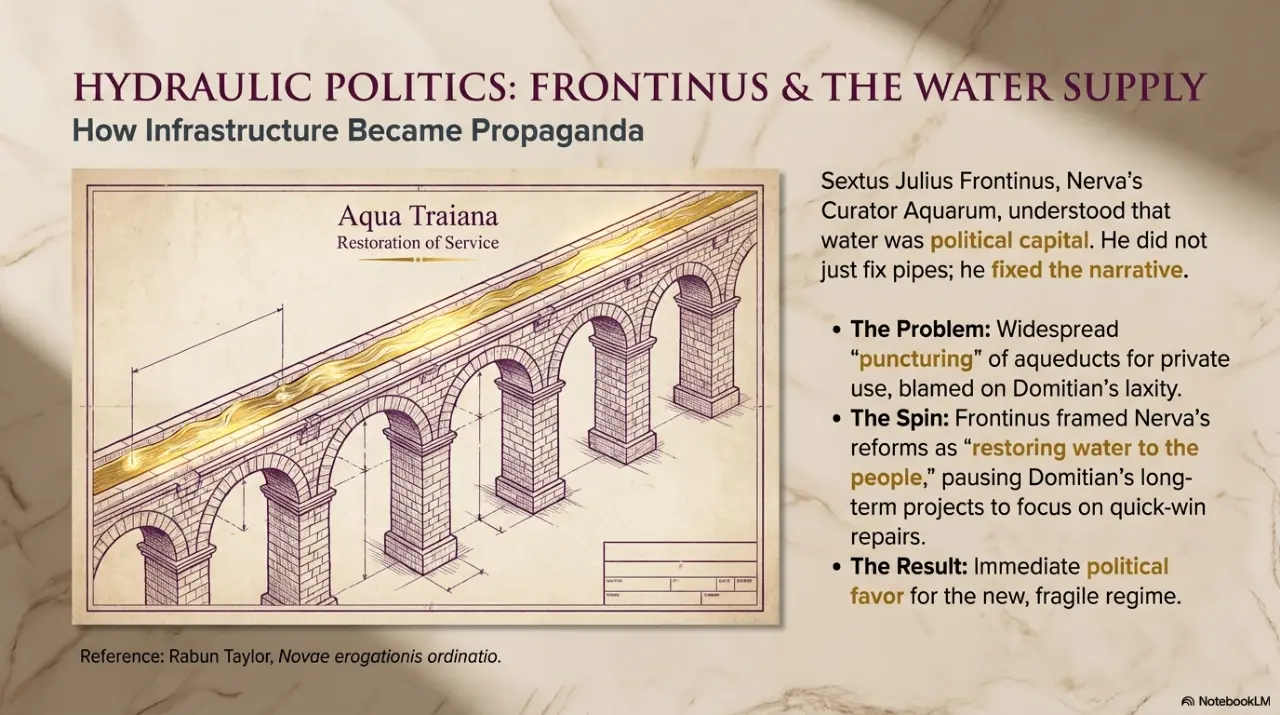
Frontinus Stratagems and On the Water Supply of Rome
Late first century CE · Military exempla and Rome
Two different works: organized military examples and an administrator’s water inquiry; separate their purposes and locate quotations within the correct text.
Letters of an imperial tutor and associates preserve education, rhetorical ideals and personal relationships, with fragmentary transmission and editorial reconstruction.
Probably late fourth century CE; purports earlier authorship · Imperial biography
Problematic biographical collection containing invented documents, authorities and anecdotes; individual claims need exceptional corroboration rather than blanket acceptance or dismissal.
Late fourth–early fifth century CE · Rome Bethlehem and Christian networks
Letters illuminate ascetic ideals, education, patronage and upheaval; rhetoric and authorial priorities must be retained when using their vivid social portraits.
Compressed histories shape Gothic origins and Roman chronology; dependence, selection and legendary genealogies complicate use as straightforward ethnic history.
Retells Jewish history from origins toward the first century CE; scriptural rewriting, apologetic aims and source changes require attention by narrative period.
c.70s CE; war 66–73/74 CE with earlier background · Judaea and eastern Mediterranean
Account by a former rebel commander writing under Flavian patronage; indispensable testimony combines experience, apology and a theological explanation of catastrophe.
First century BCE; conflict of 49–48 BCE · Italy Spain Greece and Egypt
Narrates Caesar’s conflict with Pompey and senatorial opponents; apologetic choices and unfinished scope require separation from later continuations by other authors.
50s BCE; campaigns 58–52 BCE plus continuation for 51–50 BCE · Gaul Britain and Rhine
Command narrative presenting Caesar’s campaigns and decisions; ethnic classifications, casualty figures and justifications belong to the conqueror’s self-presentation.
529–534 CE core codification; later Novels · Eastern Roman law with wider later reception
Code, Digest, Institutes and later constitutions preserve different legal genres and periods; later influence must be separated from sixth-century implementation.
Early fourth century CE · Tetrarchic and Constantinian Empire
Polemical account interprets persecutors’ deaths as divine justice while preserving important policy texts; providential interpretation is not independently proven causation.
Late first century BCE–early first century CE; narrative from foundation to 9 BCE · Rome and Italy
Large annalistic history blending inherited traditions, moral exempla and political narrative; only parts survive continuously, so an author-level heading never implies complete coverage.
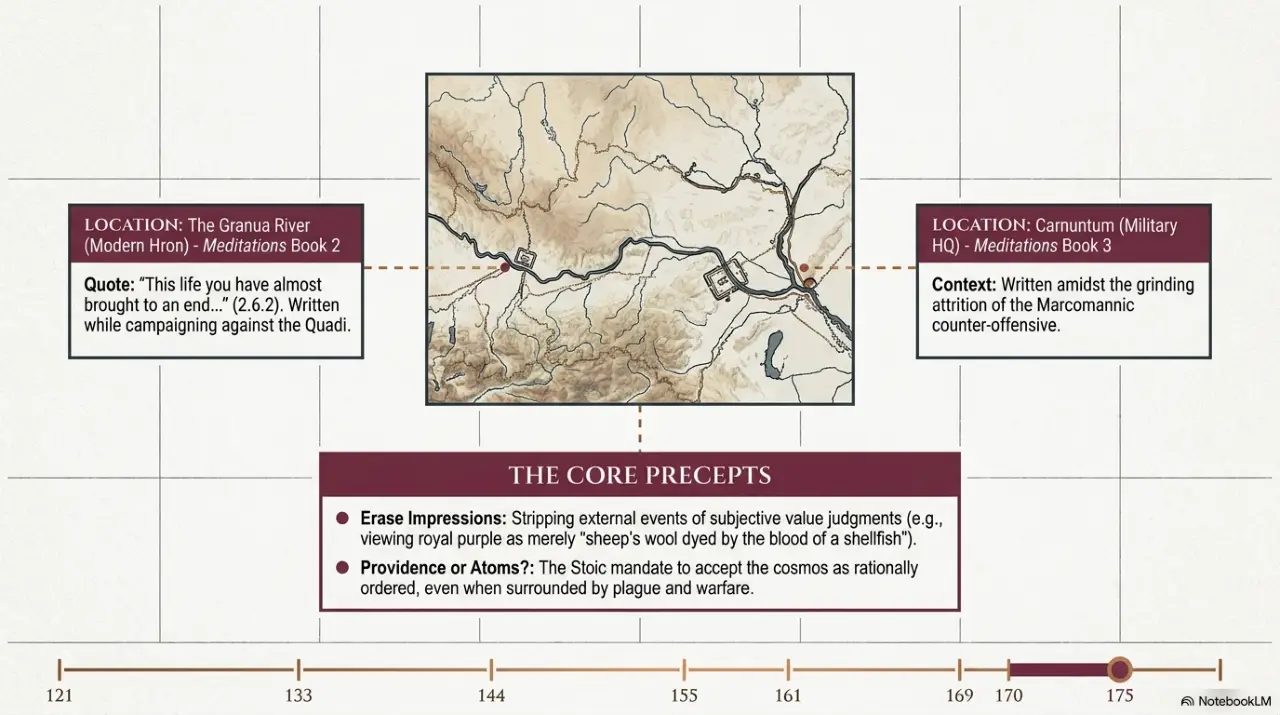
Second century CE · Imperial philosophical practice
Personal philosophical exercises in Greek associated with Stoic discipline; they illuminate ethical self-address rather than an official program of imperial government.
Plautus third–second centuries BCE; Martial first century CE · Rome and urban literary worlds
Satire and comedy offer social types, status tensions and performance; literary jokes must not become statistical descriptions of every household or trade.
Imperial period; precise dating debated · Literary Rome and Ostia
Christian apologetic dialogue embeds religious debate within friendship and leisure; the represented disputants are literary voices rather than a recorded conversation.
Late fourth–early fifth century CE with uneven updating · Eastern and western administrative systems
List of offices and units preserves different chronological layers; it is not one simultaneous verified order of battle or proof every listed unit remained effective.
Early first century CE; surviving poem January–June · Rome and Italy
Calendar poetry offering divine conversations and competing explanations for rites; it preserves Roman interpretation while exposing uncertainty and literary invention.
Core associated with fourth century BCE; later transmission · Greek mythic geography
Rationalizes fabulous tales as distorted human events; the explanatory stories are not independent proof of the historical origin of those myths.
Pliny the Elder Natural History
Completed c.77 CE · Mediterranean and reported wider world
Encyclopedic compilation of geography, natural knowledge, peoples and arts; reported marvels and inherited claims are not modern scientific conclusions.
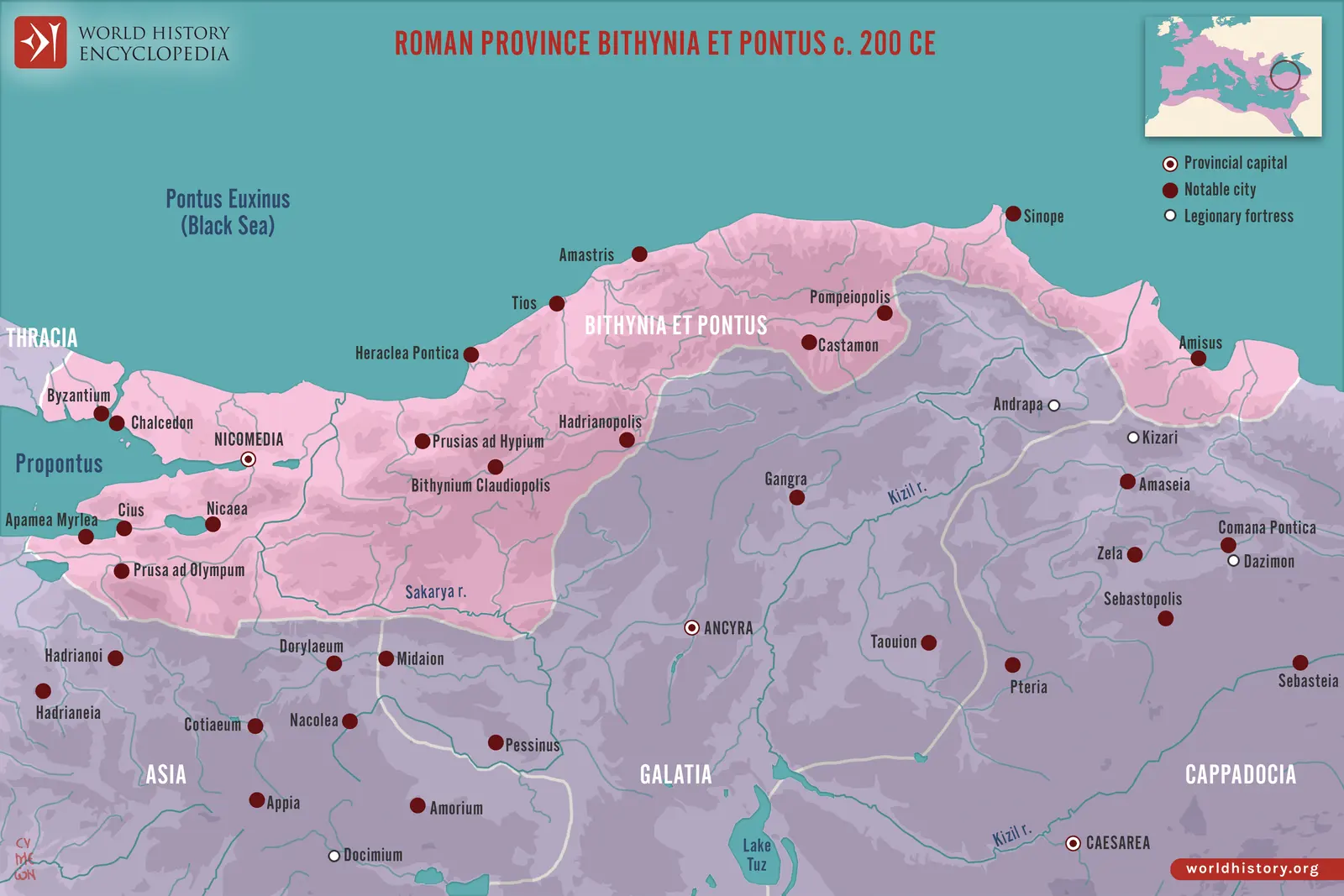
Pliny the Younger Letters and Panegyric
Late first–early second century CE · Italy and Bithynia-Pontus
Literary correspondence and official exchange illuminate elite life and provincial administration; imperial praise and edited self-presentation remain distinct genres.
Late first–early second century CE · Greek and Roman elite history
Moral biography compares character and action across cultures; the Moralia includes varied essays and sayings, whose attribution and genre need separate treatment.
Second century BCE; principal narrative 264–146 BCE · Greek Mediterranean
Explains Rome’s rise through connected political and military history; its constitutional analysis and elite participant perspective require attention alongside its exceptional contemporary value.
Three works deploy markedly different rhetorical purposes; comparing them reveals representation and criticism, without making the hostile work automatically the hidden truth.
40s BCE; events 63 BCE and 111–105 BCE · Rome and Numidia
Moralizing monographs connect ambition, corruption and conflict; speeches and compressed characterization help construct their interpretation of Republican breakdown.
Ethical prose addresses anger, clemency, providence and conduct; philosophical ideals and crafted letters are not transparent records of ordinary practice.
Fifth century CE · Gaul and western imperial networks
Elite literary testimony to officeholding, friendship, cities and changing authority; polished classical performance shapes descriptions of Roman and Gothic society.
Biographies from Julius Caesar to Domitian organized around ancestry, habits, rule and death; anecdotes and thematic organization differ from annalistic chronology.
Late second–early third century CE · Roman North Africa
Christian arguments challenge prosecution and participation in public entertainments; adversarial rhetoric reveals contested belonging rather than an impartial survey of all Romans.
Promulgated 438 CE; laws chiefly from Constantine onward · Roman imperial law
Dated constitutions preserve legal categories and policy demands; prohibition does not establish universal practice, compliance or an immediate social outcome.
First century BCE; survives in fragments and quotations · Rome
Lost antiquarian work especially important for Roman religion; recovery through later authors, often opponents, requires distinguishing Varro’s propositions from their reframing.
Antiquarian linguistic work preserving Roman terms and explanations; etymologies document ancient interpretation and cannot be adopted indiscriminately as modern linguistic fact.
Velleius Paterculus Roman History
c.30 CE · Rome and Empire
Compressed history ending under Tiberius, written by a former soldier; its praise of the ruling house and uneven compression shape its usefulness.
Technical and literary treatise on architecture, materials, machines and expertise; prescriptions and inherited theories do not prove uniform construction practice.