Traditional foundation of Rome traditional
A conventional literary foundation date, not the archaeological beginning of settlement.
See also Romulus
From the kings to the Arab conquests, in order.
A conventional literary foundation date, not the archaeological beginning of settlement.
See also Romulus
Republican origin narratives place the monarchy's end here; early chronology remains reconstructed.
See also Tarquinius Superbus
Later tradition associates withdrawal with creation of the plebeian tribunate.
See also Tribunes of the plebs
Traditional date for the early written legal collection, surviving through later quotations.
See also Twelve Tables
Chronological systems differ; the event became a powerful memory of vulnerability.
Traditionally associated with access to the consulship and economic disputes; details of early legislation are debated.
Conventional chronology of the opening Roman-Samnite war, with early narrative details contested.
See also Samnites
Rome defeated its Latin opponents and reorganized their relationships through differentiated settlements.
See also Latins
Extended conflict including the Caudine disaster and eventual Roman recovery.
See also Caudine Forks
Appius Claudius's censorship is associated with major infrastructural initiatives.
See also Via Appia
Coalition warfare culminated in Rome's advantage in central Italy.
See also Sentinum
Plebiscites became binding on all Roman citizens, conventionally concluding the Conflict of the Orders.
See also Concilium plebis
Pyrrhus's victories proved costly; Rome ultimately secured its position in southern Italy.
Rome and Carthage fought chiefly over Sicily and maritime power.
See also First Punic War
Rome acquired its first major overseas territorial responsibility after Carthage's defeat; administrative development followed.
See also Sicilia
Rome seized the islands during Carthage's postwar weakness, creating a new strategic grievance.
See also Sardinia et Corsica
Roman intervention established new Adriatic relationships without instantly creating a later provincial system.
Hannibal's Italian campaign formed one theater of a wider war across Spain Sicily and Africa.
See also Hannibal
Hannibal's victory inflicted a severe Roman defeat, but did not determine the war's final outcome.
See also Cannae
Scipio seized the Punic Iberian base, changing the strategic balance in Spain.
See also Scipio Africanus
Hasdrubal's defeat prevented reinforcement of Hannibal in Italy.
See also Metaurus
Scipio's victory preceded Carthage's peace settlement the next year.
See also Zama
Rome defeated Philip V; subsequent declarations of Greek freedom coexisted with growing intervention.
See also Cynoscephalae
Roman and allied victories led to the settlement at Apamea and major Seleucid territorial losses.
See also Magnesia
Perseus's defeat at Pydna ended the Antigonid monarchy.
See also Pydna
Rome besieged and destroyed Carthage, then reorganized African territory.
See also Carthage
The Achaean defeat accompanied tighter Roman domination in Greece, though provincial arrangements developed in stages.
Iberian conquest and Roman agrarian conflict mark different fronts of the Republic's expansion and crisis.
Tribunician legislation addressed courts grain citizenship and colonization amid violent political conflict.
Rome's Numidian war exposed elite competition and brought Marius to prominence.
See also Jugurtha
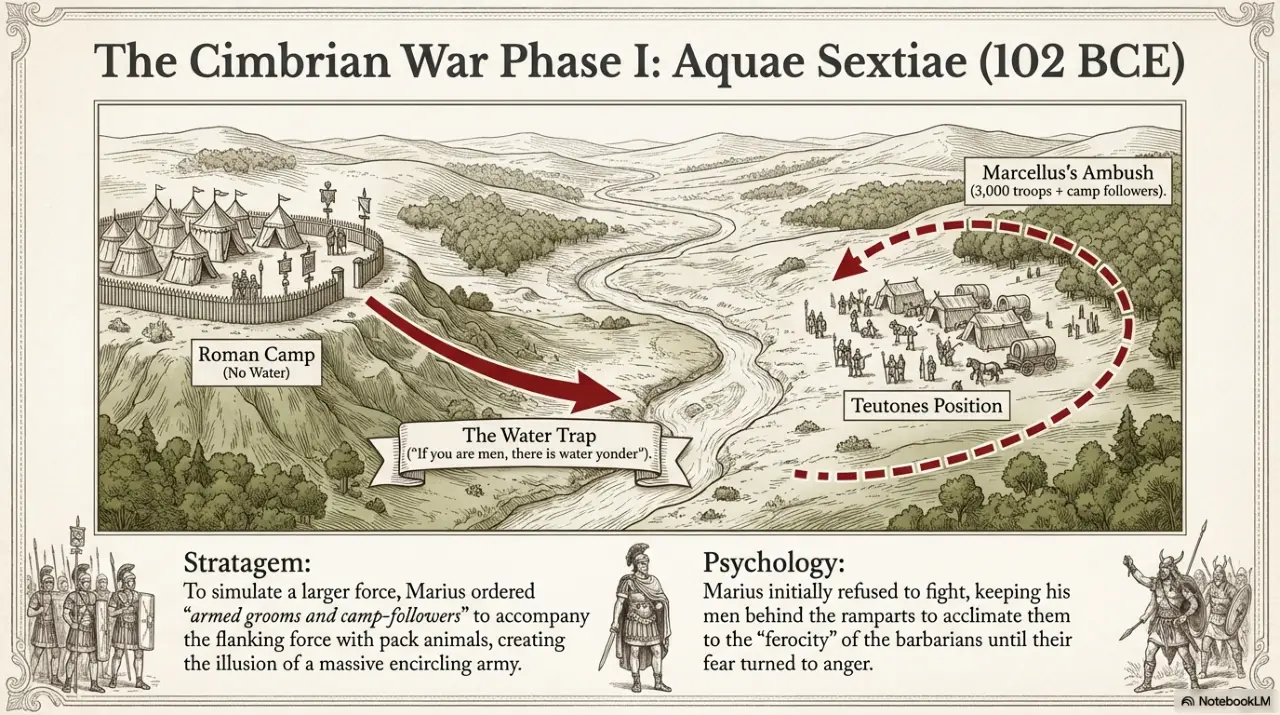
Roman victories ended the immediate Cimbrian-Teutonic threat.
See also Marius
Italian allies fought Rome; citizenship legislation transformed Italy's relationship with the Roman state.
See also Roman citizenship
Three wars and changing alliances expanded Roman power in Anatolia and the eastern Mediterranean.
A dispute over eastern command escalated into military seizure of the city.
See also Sulla
Proscriptions constitutional reorganization and settlements attempted to remake Republican politics. The date of Sulla's abdication is disputed.
See also Proscription
Read further Vervaet: chronology of Sulla's dictatorship
An escaped-gladiator rising expanded into a major servile war before suppression.
See also Spartacus
Eastern reorganization and an internal conspiracy display the Republic's intertwined external and domestic pressures.
Caesar Pompey and Crassus formed an informal political alliance, unlike the later legally constituted triumvirate.
Conquest changed Gaul and supplied resources and military authority for Roman civil conflict.
See also Julius Caesar, Gauls
Crassus's defeat by Parthian forces exposed the limits of Roman military power in the east.
See also Carrhae
Caesar defeated Vercingetorix after siege and relief operations; resistance in Gaul did not cease immediately.
See also Alesia
Caesar crossed into Italy with troops, beginning war with Pompey's senatorial coalition.
Caesar defeated Pompey's main army; subsequent fighting continued elsewhere.
See also Pharsalus
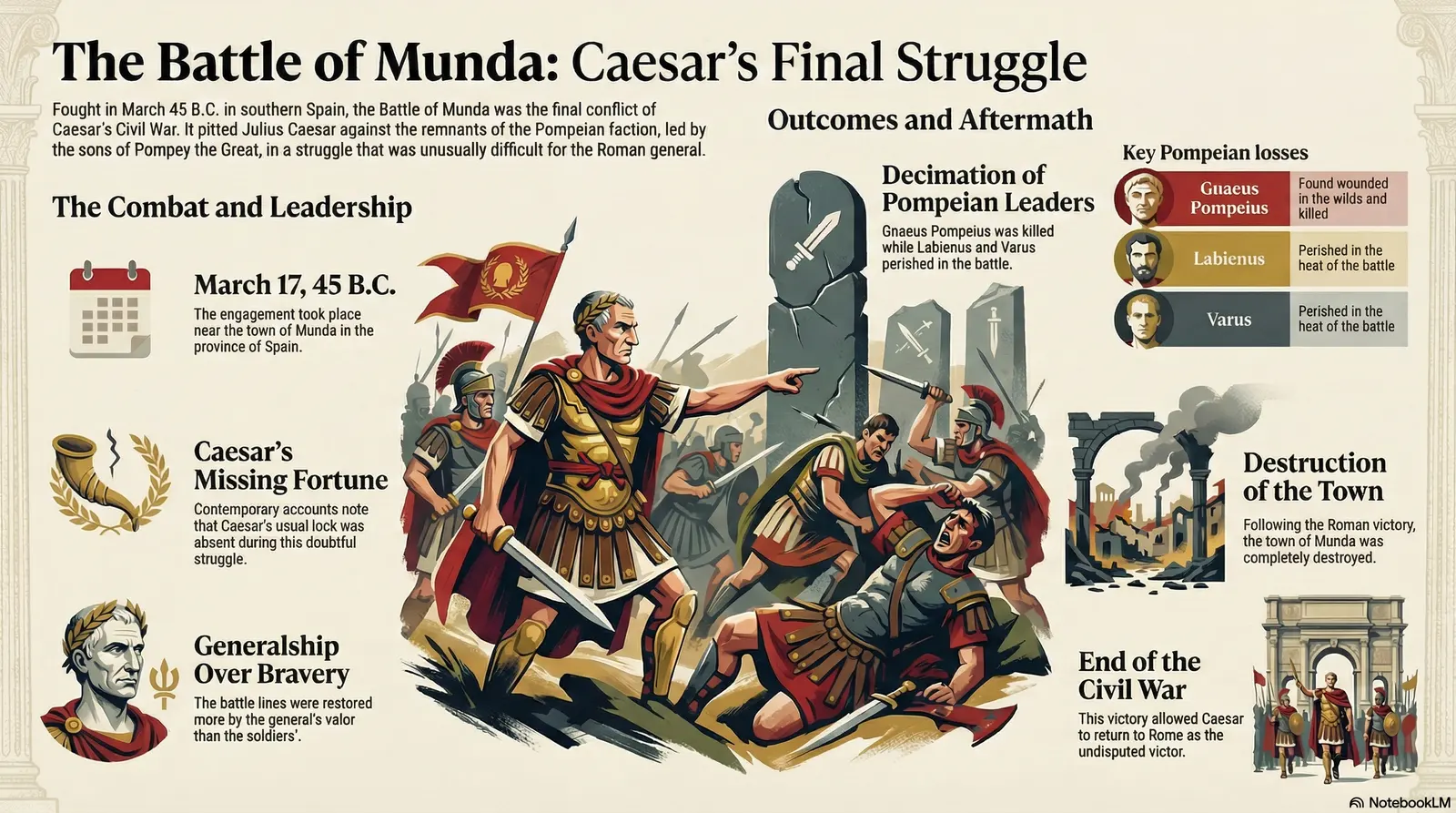
Thapsus and Munda ended major resistance to Caesar without solving the political settlement.
The Ides of March killing reopened rather than resolved struggles over command legitimacy and government.
See also Julius Caesar
Octavian Antony and Lepidus received extraordinary statutory powers; proscriptions accompanied their consolidation.
The triumvirs defeated Brutus and Cassius, ending the leading assassins' armed coalition.
Octavian's forces defeated Antony and Cleopatra's fleet; the conquest of Egypt followed in 30 BCE.
See also Actium
The Senate conferred Augustus's title; a conventional beginning of the Principate within an already extensive Roman empire.
See also Augustus
Adjustments to command and tribunician authority stabilized imperial precedence without one fully codified constitution.
See also Tribunician power
Three legions were destroyed in Germanic conflict; Roman strategy east of the Rhine was reassessed.
See also Teutoburg Forest
Tiberius's accession demonstrated succession beyond the Principate's founder.
See also Tiberius
Claudius's armies began sustained provincial conquest, distinct from Caesar's earlier expeditions.
See also Britannia
A major uprising destroyed several British urban centers before Roman victory.
See also Boudica
Disaster and reconstruction intersected with Nero's political image and the earliest Roman persecution traditions.
See also Nero
War culminated in Jerusalem's fall in 70 and continued resistance elsewhere.
See also Jerusalem
Nero's fall led through Galba Otho and Vitellius to Vespasian's victory.
See also Year of the Four Emperors
Pompeii Herculaneum and neighboring settlements were devastated; the precise calendar date is debated.
See also Pompeii, Herculaneum
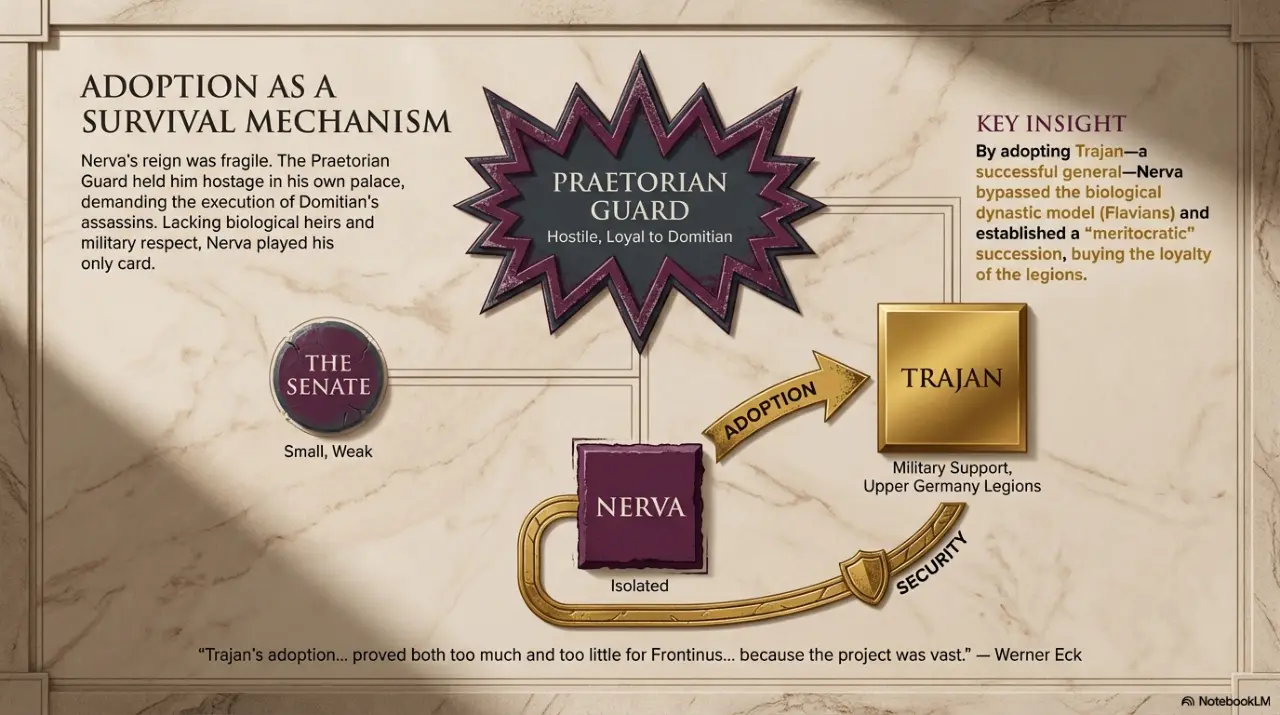
Adoption joined senatorial compromise to military authority after Domitian's assassination.
Trajan defeated Decebalus; provincial organization followed conquest.
The Nabataean kingdom entered Roman provincial government, with changing local economic and military relationships.
See also Arabia Petraea
Eastern conquest and short-lived annexations were followed by revolt and Hadrianic withdrawal.
A monumental frontier system developed in northern Britain, with garrisons roads settlements and controlled crossings.
A major Judean uprising was suppressed with severe demographic and institutional consequences.
War under Marcus Aurelius and Lucius Verus ended with Roman victory in 166; the Antonine epidemic spread during and after the returning campaigns.
See also Lucius Verus
Read further ANU Classics Museum: denarius of Lucius Verus
Repeated Danubian conflicts tested Marcus Aurelius's government and military resources.
See also Marcomanni, Marcus Aurelius
Commodus's murder led to rapid rulers and rival armies before Severan consolidation.
See also Septimius Severus
Caracalla extended citizenship to most free imperial inhabitants, without abolishing legal and social inequalities.
See also Constitutio Antoniniana
Ardashir's victories displaced Arsacid rule, establishing Rome's major eastern rival for the next four centuries.
See also Sasanians
Frequent military succession invasion epidemic and regional regimes combined with persistent local institutional continuity.
Maximinus the Gordians Pupienus Balbinus and Gordian III illustrate unstable succession and competing constituencies.
See also Gordian III
Sacrificial certification and frontier conflict culminated in Decius's death at Abritus.
See also Decius
Persian victory and imperial fragmentation produced opportunities for Gallic and Palmyrene power.
Palmyrene and Gallic regimes were defeated while Rome received major fortifications.
See also Aurelian
Administrative fiscal military and succession arrangements evolved into the tetrarchic order.
See also Diocletian
Two Augusti were joined by two Caesars in an attempt to manage command and succession.
See also Tetrarchy
The imperial price and wage ceilings survive epigraphically but do not prove uniform real-market enforcement.
See also Edict on Maximum Prices
Diocletianic persecution developed unevenly; Galerius granted toleration in 311, while persecution under Maximinus continued until 313.
See also Diocletian, Galerius
Read further Lactantius On the Deaths of the Persecutors
Planned succession soon collided with dynastic acclamations and rival imperial claims.
See also Constantius I Chlorus, Galerius
Constantine defeated Maxentius and secured Italy; subsequent Christian patronage reshaped imperial religious politics.
See also Constantine I
Constantine and Licinius's settlement supported toleration and restoration of Christian property; not the first or only toleration measure.
See also Licinius
Read further Lactantius On the Deaths of the Persecutors
Civil war ended with a single senior emperor controlling the Roman world.
See also Chrysopolis
Imperial patronage brought bishops together over doctrine and discipline; disputes continued afterward.
Read further First Council of Nicaea creed and canons
The refounded city became a great imperial center, without instantly emptying Rome or creating an entirely new people.
See also Constantinople
Dynastic succession divided responsibilities among his sons and was accompanied by violence.
See also Constantius II
Julian's victory in Gaul strengthened his military reputation and political position.
See also Julian
Julian died on campaign; Jovian surrendered Nisibis and other positions to secure withdrawal.
Admission of displaced groups was followed by exploitation mistrust and revolt in Roman territory.
Valens's defeat and death transformed eastern military and political conditions without ending the empire.
See also Adrianople
Imperial legislation and episcopal decisions strengthened a particular Christian settlement while dissent and local diversity persisted.
See also Theodosius I
Agreement placed Gothic groups within imperial territory; exact terms and later constitutional readings remain disputed.
See also Goths
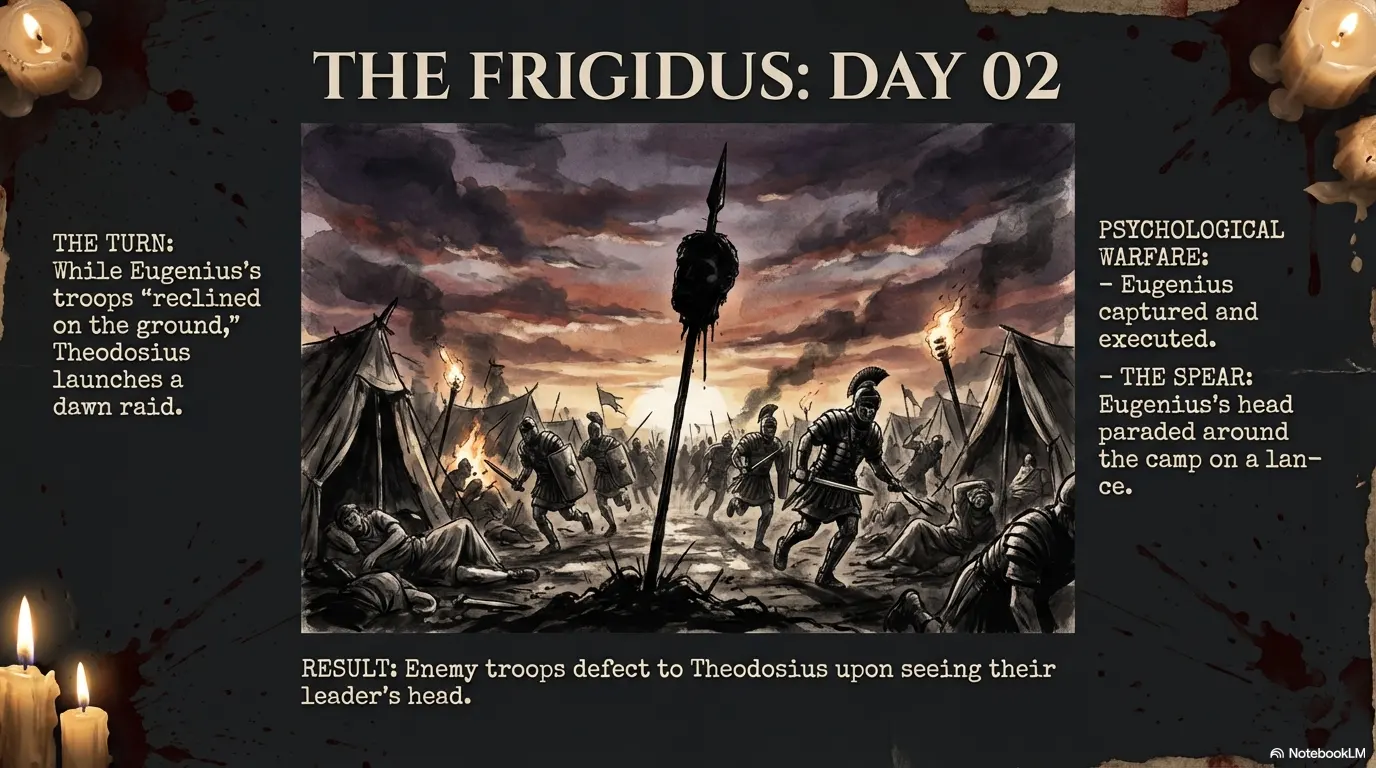
Theodosius defeated Eugenius; separate eastern and western courts continued under his sons.
Vandal Alan and Suevic groups entered Gaul; the exact chronology and narrative reconstruction have been debated.
A major symbolic and material shock within continuing western government, not the destruction of all Roman civilization.
The settlement created a durable regional power within changing imperial arrangements; mechanisms and fiscal implications are debated.
See also Visigoths
Gaiseric's forces crossed into Africa and captured Carthage, removing a major western revenue and supply region.
Compilation of imperial constitutions supplied a legal archive while preserving differing dates and contexts.
Hunnic war in Gaul and a major church council in the east were contemporaneous but distinct historical processes.
Gaiseric's forces plundered the city amid another western succession crisis.
See also Gaiseric, Petronius Maximus
A joint imperial attempt to defeat the Vandals ended disastrously near Cape Bon.
See also Anthemius, Leo I, Basiliscus
Odoacer removed the Italian emperor while Julius Nepos retained a recognized western claim until 480.
See also Romulus Augustulus, Julius Nepos
Ostrogothic royal rule in Italy preserved and redirected many Roman institutions under a new ruling arrangement.
Abolition of the chrysargyron and copper-coin reform illustrate active eastern administrative adaptation.
See also Anastasius I
Sieges and negotiations preceded the strengthening of Dara as a frontier position.
See also Amida
Legal codification major construction reconquests religious policy and plague intersected in a heavily committed imperial state.
See also Justinian I
Successive Code editions Digest and Institutes assembled and revised legal traditions; later Novels continued legislation.
See also Corpus iuris civilis
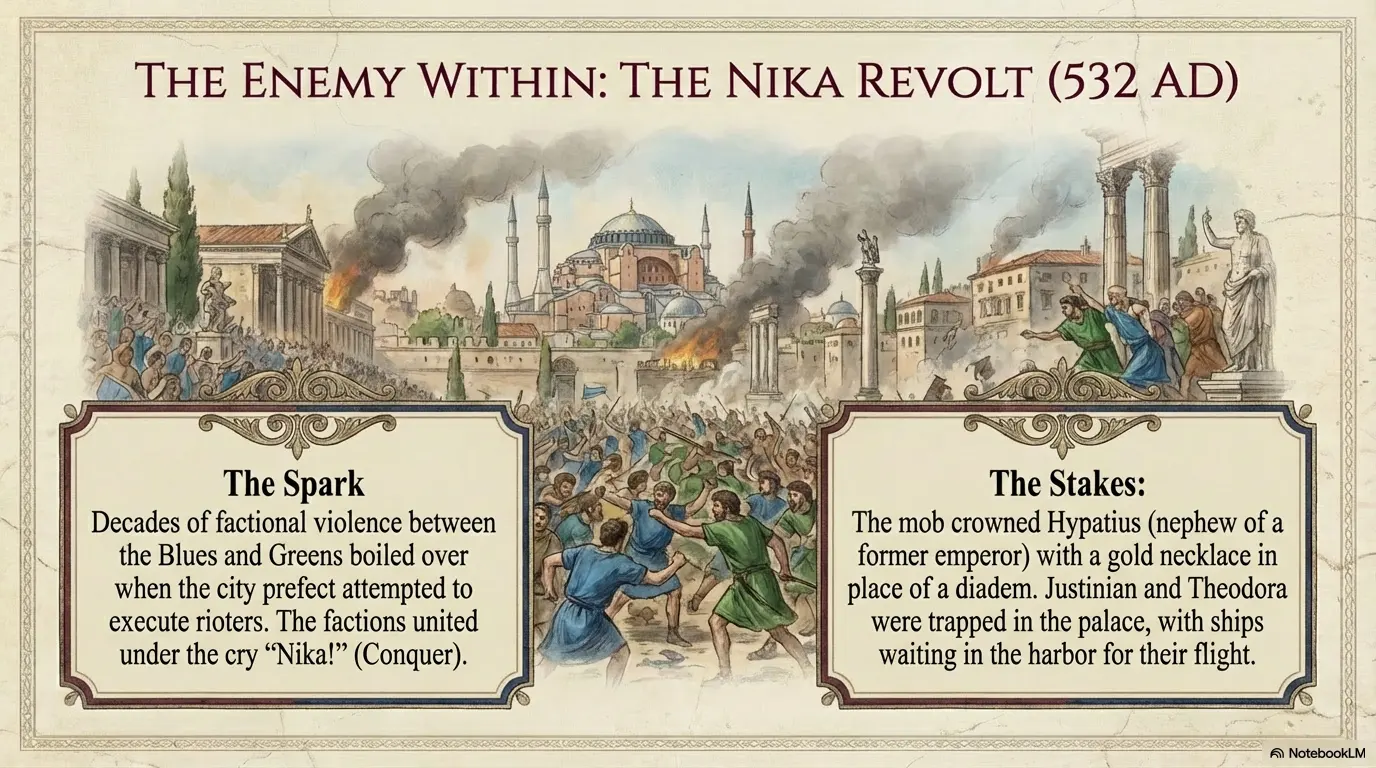
Violence at Constantinople and a Persian settlement created the setting for Justinian's subsequent western wars.
Belisarius's expedition restored imperial government in Africa, followed by difficult military consolidation.
See also Ad Decimum, Tricamarum
Successive campaigns under Belisarius and Narses ended Ostrogothic rule but devastated many Italian communities.
See also Narses
An epidemic first securely described in Justinian's reign recurred; its overall mortality and economic effects remain actively debated.
New kingdoms and duchies fragmented imperial control, while eastern Roman territories persisted in parts of Italy.
Read further DIR Phocas essay
Long conflict ended with Maurice supporting Khosrow II and obtaining a favorable settlement.
See also Maurice, Khosrow II
Read further DIR Phocas essay
Phocas's coup was followed by Sasanian conquests and Heraclius's counteroffensives, exhausting both powers.
See also Heraclius, Khosrow II
Read further DIR Phocas essay
Sasanian occupation disrupted a major Christian center; the Cross's later recovery became an imperial religious symbol.
Read further DIR: Heraclius
Avar-Slav attack and Persian pressure failed to take the capital, while imperial campaigning continued elsewhere.
See also Avars, Constantinople
Read further DIR: Heraclius
Campaigns including Nineveh preceded Khosrow II's overthrow and restoration of occupied territories.
Read further DIR: Heraclius
Arab Muslim victory accelerated the loss of Roman Syria; it formed part of a wider sequence of conquest.
Read further DIR: Heraclius
Arab armies displaced eastern Roman government from Egypt, transforming the eastern Mediterranean's fiscal and strategic balance.
See also Alexandria, Aegyptus
Read further DIR: Heraclius
A contested dynastic transition brought Constantine III Heraclonas and ultimately Constans II to power.
See also Constans II
Read further DIR: Heraclius
Constantinople survived a major siege during Leo III's accession and consolidation.
See also Leo III
Nicaea II and the later restoration of icons mark different stages in the iconoclast controversies.
See also Irene, Iconoclasm
Basil I's accession opened a long dynastic period with military co-emperors and changing frontiers.
See also Basil II
Basil II's campaigns brought Bulgaria under imperial government; later national narratives frame the conflict differently.
Romanos IV's defeat was followed by political crisis and gradual territorial transformations, not instantaneous loss of all Anatolia.
See also Manzikert
Alexios I seized the throne and rebuilt military fiscal and dynastic resources.
See also Alexios I Komnenos
Latin rule and multiple Greek successor states divided former imperial territory.
Nicaean forces restored the city to Greek imperial rule under Michael VIII, without restoring the old empire's full extent.
See also Michael VIII Palaiologos
Constantine XI died during the city's fall; Morea and Trebizond survived briefly as separate successor territories.
See also Constantine XI Palaiologos, Ottomans