Figures · Gothic Italy and the eastern Roman imperial system
RF-129 Justinian I
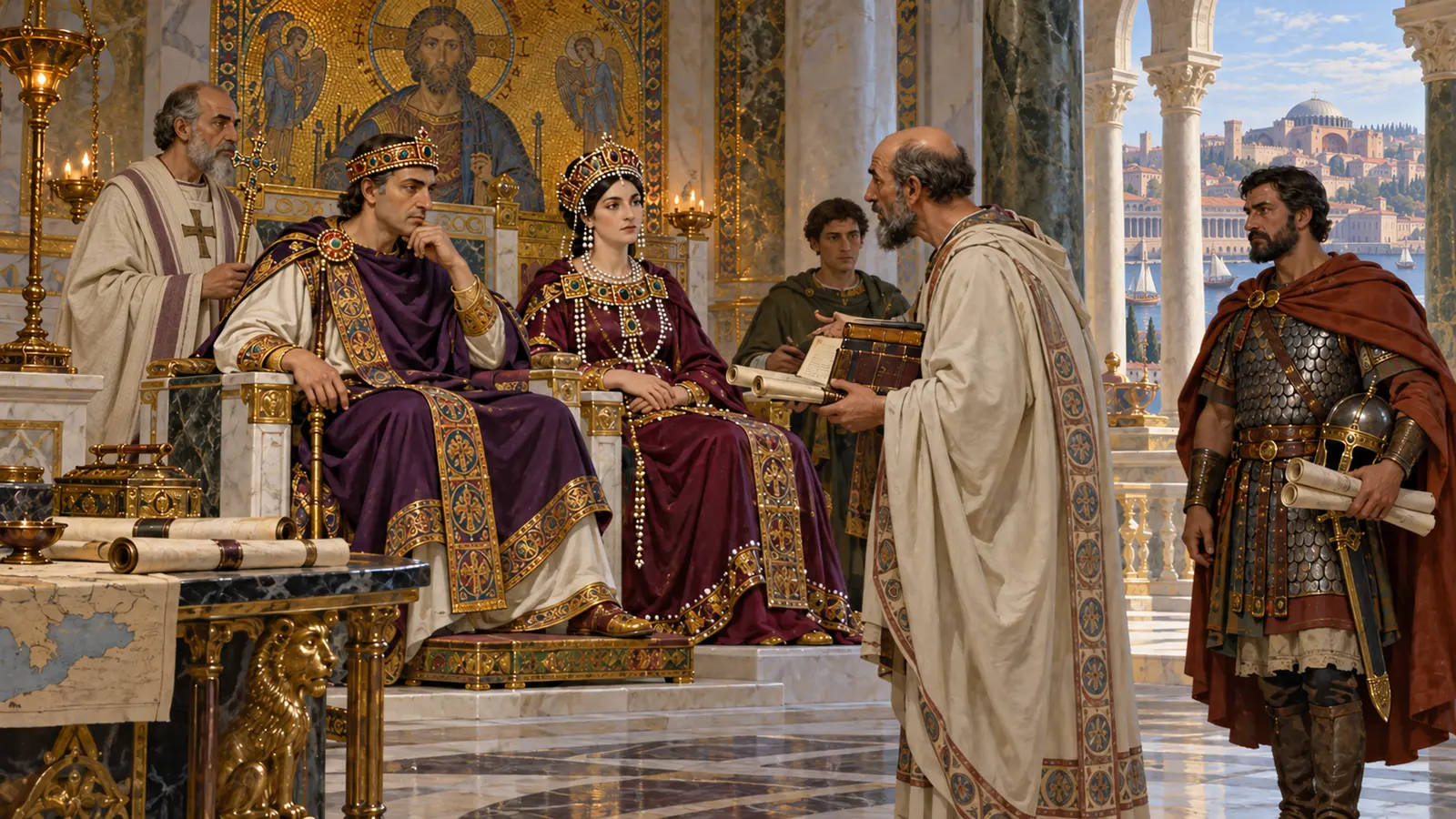
Life and career
Justinian's rise through the household of Justin I joined palace access to a wide administrative ambition. His officials, including jurists and fiscal managers, were indispensable to translating that ambition into collections of law, taxation, and construction. A powerful emperor still depended on others to know local conditions, execute commands, and supply information.
Justinian's reign combined legal compilation, building, doctrinal intervention, fiscal demands, and campaigns on several fronts. Belisarius's African victories and the long war in Italy expanded imperial control but required resources while conflict with Persia continued. The Nika revolt and recurrent epidemic disease also shaped the reign. His legal projects had an exceptionally long afterlife, while the military record must be judged by both recovered territories and the destruction and costs of prolonged war.
Leadership and historical significance
The Nika revolt showed that court policy could combine urban violence, elite disaffection, and a rival imperial claim. Its suppression preserved the dynasty at immense human cost. Later wars repeatedly required choices among Africa, Italy, the Balkans, and Persia, while epidemic and natural disasters altered available resources. His legal legacy is exceptionally durable, but it must be assessed separately from the question of whether the total military and fiscal commitments of the reign were sustainable.
Landmarks
- 529–534 CE — principal stages of legal compilation.
- 532 CE — Nika revolt.
- 533–534 CE — African conquest.
- 535–554 CE — principal Italian war.
- 565 CE — death.
Historical uncertainty
Procopius's Wars, Buildings, and Secret History have different rhetorical purposes. The emperor's reconquest program should not be treated as evidence that all former western provinces were permanently restored.
Connected dossiers: Theodora, Belisarius, Narses, Totila, Khosrow I.