Figures · Civil war the Flavians and the Antonine empire
RF-070 Hadrian
Life and career
Hadrian's rise depended on family connection, service, and a succession whose formal adoption became controversial in later accounts. His travels projected presence across an empire too large for constant direct supervision. Encounters with soldiers, cities, Greek intellectual culture, and local elites produced patronage and monuments as well as inspection.
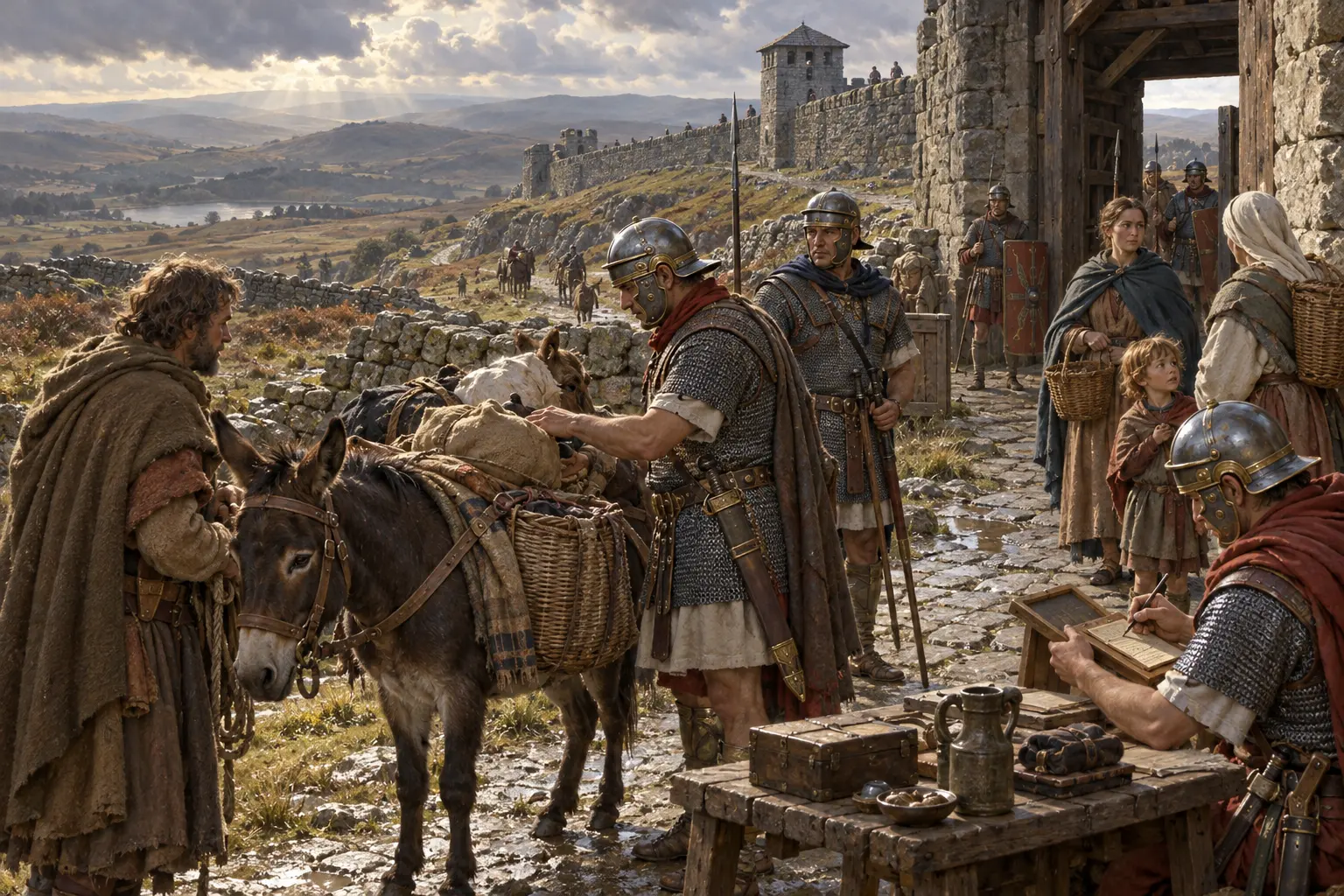
Hadrian emphasized consolidation, provincial travel, army inspection, and an extensive building program. The withdrawal from much of Trajan's eastern annexations and construction of the frontier barrier in Britain make him central to discussions of imperial limits. His reign also included the devastating suppression of the Bar Kokhba revolt in Judaea. Adoption arrangements near the end of his life established the path by which Antoninus, Marcus Aurelius, and Lucius Verus reached power.
Leadership and historical significance
His buildings ranged from the frontier to monumental centers and an elaborate villa near Rome. Grief and commemoration after Antinous's death also reshaped a public religious and urban landscape. The contrast between cultural sophistication and the brutal war in Judaea is indispensable to the dossier. Consolidation was not the absence of violence; it was a selection of boundaries, priorities, and forms of intervention, enforced by the same imperial power that sponsored benefaction and cultural exchange.
Landmarks
- 122 CE — visit to Britain and wall program.
- 132–135 CE — Bar Kokhba revolt.
- 138 CE — adoption of Antoninus and death.
Historical uncertainty
He was not simply a peaceful emperor opposed to conquest. The Historia Augusta preserves useful material but must be checked against Dio, inscriptions, and the material record.
Connected dossiers: Trajan, Antoninus Pius, Marcus Aurelius, Lucius Verus.