Wars · V. The early Principate: conquest and provincial war
W046 Augustus' western, Alpine and Danubian conquests
The Cantabrian and Asturian wars of 29–19 BC extended Roman control in northern Iberia through difficult campaigns and coercive resettlement. Alpine operations, including those associated with Drusus and Tiberius in 15 BC, secured routes between Italy and the northern military zones. Campaigns in Illyricum and toward the Danube connected these projects to the southeast.
Drusus and Tiberius also operated beyond the Rhine. Rivers, coastal shipping, mountain corridors and the ability to supply armies constrained the imperial ambition. The planned campaign against Maroboduus in AD 6 was interrupted by the great revolt in Illyricum.
Command, forces and military problem
| Field | Dossier |
|---|---|
| Roman leadership | Augustus, Agrippa, Drusus, Tiberius and subordinate commanders |
| Opposing or rival parties | Cantabrians, Asturians, Alpine peoples and different northern rulers |
| Forces and capabilities | Provincial and expeditionary armies, allied forces, engineering and river or coastal support |
| Operational problem | Secure routes and frontiers across very different landscapes without treating them as one campaign. |
Campaign geography and operational plates
Augustus: expansion and the inherited Roman world
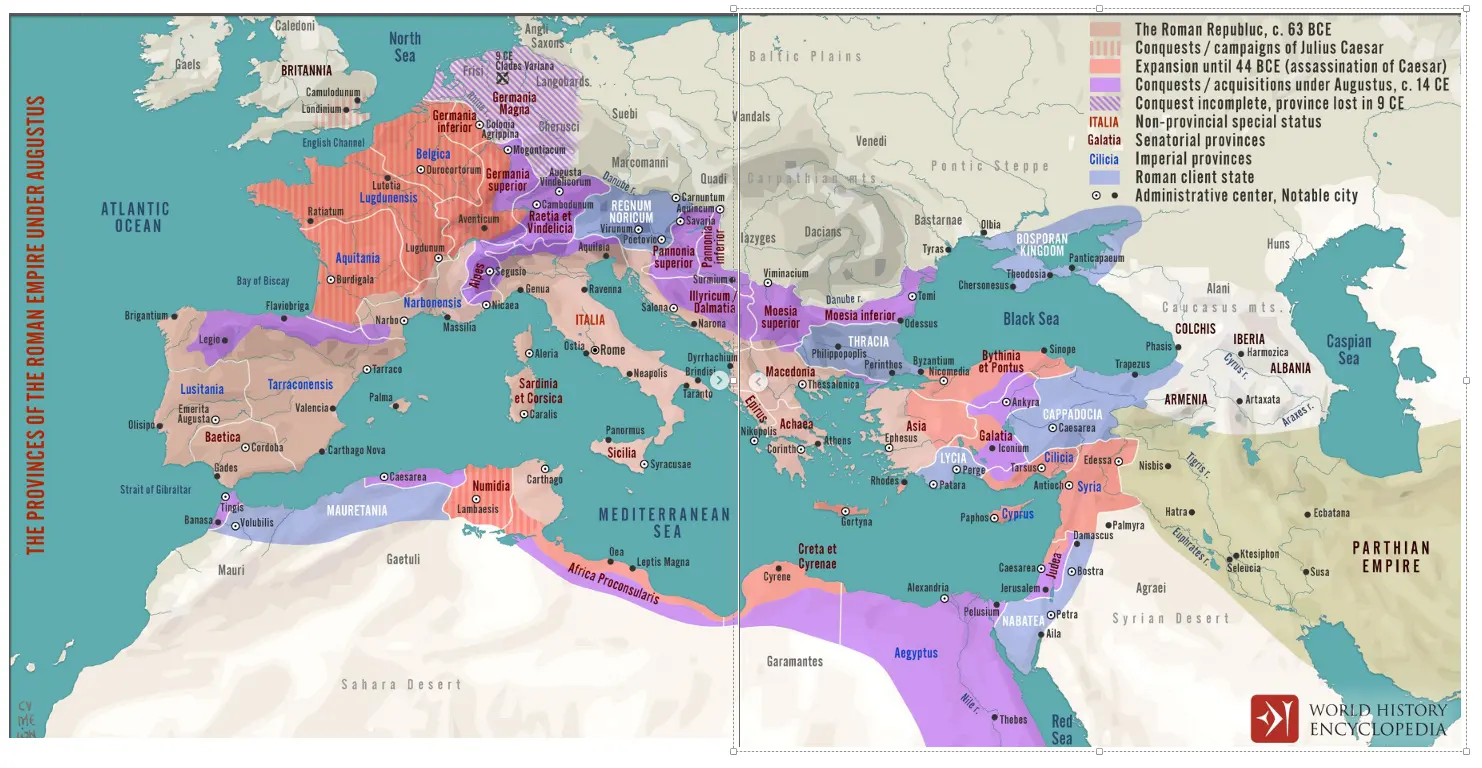
The different layers place conquest beside already established provinces and dependent rulers. Read them as the accumulated results of several campaigns, not as simultaneous deployments. The western, Alpine and Danubian operations discussed here occurred in different years and had different military and administrative consequences.
Hispania: resources, cities and military geography
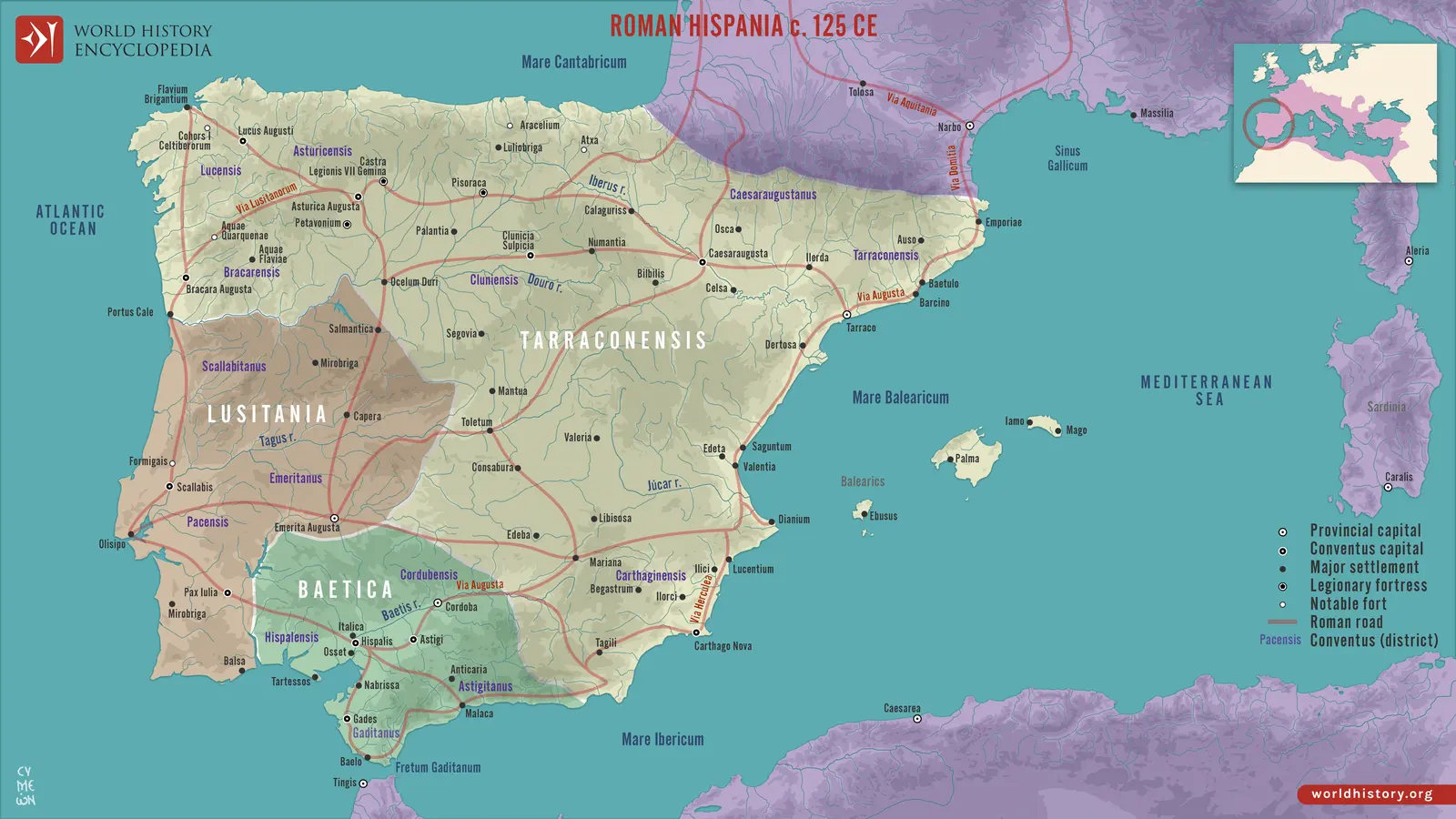
The mature city and road network shows the scale of what Roman rule eventually connected. It should be compared with the much less secure operational situation faced by Sertorius' opponents and by Augustan armies in the north. Mineral resources and later infrastructure help explain the value of control without proving that conquest was driven by one uniform economic plan.
Extended campaign study
The account below develops the operations and their interpretation. Reported numbers and reconstructed tactical details retain the uncertainties described in the dossier.
The Edges of the Inheritance
The first campaigns of the Principate were conducted at the empire's two oldest edges — the Nile and Spain — and they announced the new age's grammar. In Egypt, held by the princeps as a personal domain no senator might even visit without leave, the first prefect Cornelius Gallus — poet, friend of Virgil, conqueror of the Thebaid — carved his deeds on the pyramids and obelisks in three languages, was disgraced for exactly that species of self-advertisement, and opened his veins in 26 BC: the first lesson of the reign, that glory now had a sole proprietor. His successors fought the new state's first foreign wars: Aelius Gallus's expedition of 26–25 BC down the Red Sea coast toward the incense kingdoms of Arabia Felix, a fiasco of thirst, disease, and a treacherous Nabataean guide that reached the walls of Marib and staggered back with the army's bones strewn across six months of desert — the campaign is preserved by Strabo, the prefect's friend, with the guide bearing all blame the friendship required; and the Kushite war of 25–22 BC, when the one-eyed candace Amanirenas of Meroë sacked Syene and Philae and carried off the emperor's statues, and the prefect Petronius stormed south past the cataracts to Napata in reprisal.
Spain was graver. The Cantabri and Astures of the northern mountains — the last unconquered peoples of a peninsula Rome had been fighting over since the Scipios — were the object of the new regime's first full war, and Augustus took the field himself in 26 BC, the last reigning princeps for a century to campaign in person against a foreign enemy. The war was the Numantine problem multiplied by geography: a mountain enemy of hill-forts and ambush who would not stand, columns converging through the passes from Segisama, a fleet landing marines on the Biscay coast behind the tribes, the emperor invalided to Tarraco with the illness that nearly ended the reign in 25, and the premature triumph-closing of Janus's doors that the mountains twice reopened. The rebellions of 24, 22, and 20–19 BC were answered with escalating severity — crucified prisoners singing their defiance from the crosses, mothers killing children in the sieges, captives sold on condition of removal, and finally Agrippa, summoned in 19 to end it, breaking the Cantabri with a thoroughness he declined to advertise: the military-age population largely destroyed or deported to the plains, the hill-forts razed, and the triumph the Senate voted him refused — the second lesson of the reign, taught by its second man, that even earned glory was now best worn invisibly.
The Alps followed, in the swift campaigns that closed the gap between Italy and the northern rivers: the Salassi of the Aosta valley extirpated in 25 BC, forty-four thousand sold at Eporedia and the colony of Augusta Praetoria planted in their chief valley; and in 15 BC the great pincer of the emperor's stepsons — Tiberius striking east from Gaul, Drusus north from Italy through the Brenner — that subjugated the Raeti and Vindelici in a single summer and carried the frontier to the Danube's headwaters.
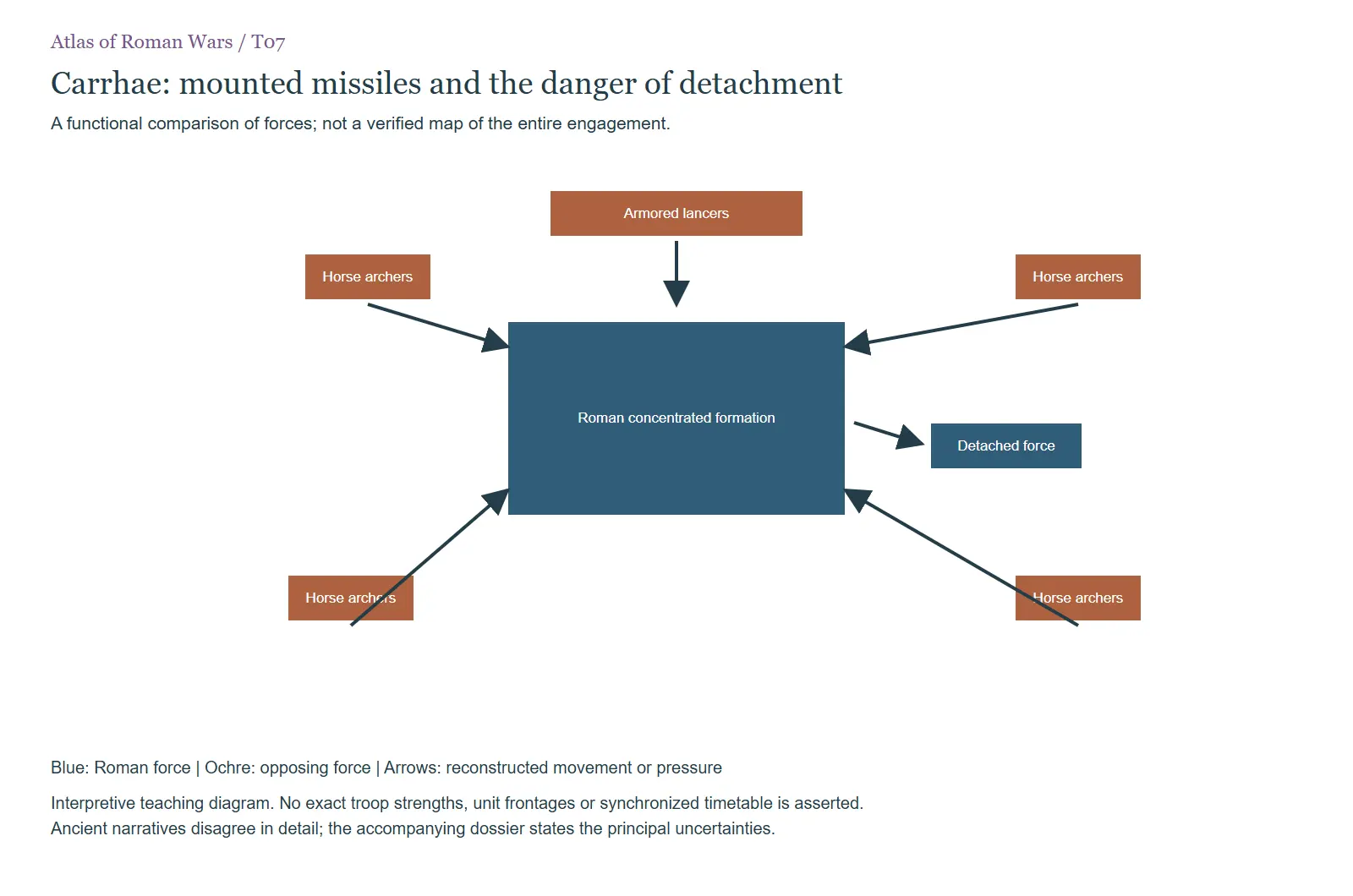
The eastern edge, in the same decade, was settled without a battle — and advertised as though by one. In 20 BC, under the pressure of Tiberius's army posted in Armenia and a diplomacy of exquisite patience, Phraates IV of Parthia returned the eagles of Carrhae and the survivors of Crassus's and Antony's armies; Armenia received a Roman-crowned king; and the standards' recovery was celebrated at Rome with a temple, an arch, the closing of Janus, and the cuirass of the Prima Porta statue, on which a Parthian hands back the eagle beneath a personified sky — the reign's masterpiece of converting a negotiated settlement into an iconography of surrender.
The German Project (12 BC–AD 6)
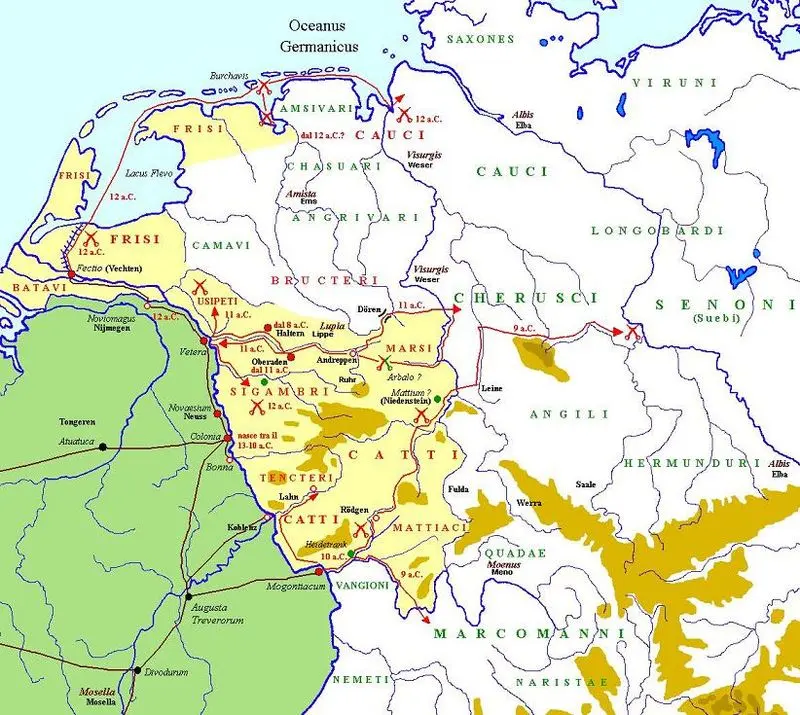
The great exception to the reign's economy of force was Germany, and the account must treat the project on the scale its ambition and its catastrophe deserve. The occasion was supplied in 16 BC, when the Sugambri and their allies crossed the Rhine, mauled the Fifth Legion's cavalry, and took its eagle from the proconsul Marcus Lollius — a defeat trivial in losses and intolerable in symbolism, the clades Lolliana that brought Augustus himself to Gaul for three years and converted the Rhine from a guarded river into a start-line. The instrument of the advance was the emperor's younger stepson, Nero Claudius Drusus, twenty-five years old at his first command and, by the unanimous testimony of a tradition that loved him, the most brilliant and most Republican-mannered prince the dynasty produced. His four campaigns of 12–9 BC were a compound of engineering and audacity that redrew the map: the fifty-mile canal — the fossa Drusiana — cut from Rhine to Zuiderzee to let the fleet into the North Sea; the ocean coast brought over, the Frisii made allies, the Chauci reached across tidal flats that nearly drowned an army learning what the ocean did twice a day; the Lippe corridor fortified — the great base at Oberaden, dated by its timbers' tree-rings to the autumn of 11 BC, the depot at Haltern, the road-forts that archaeology has strung like beads along the river — and the campaigns driven deeper each year: the Sugambri, the Cherusci across the Weser, and in 9 BC the Marcomanni and the long march that touched, first of Roman armies, the bank of the Elbe.
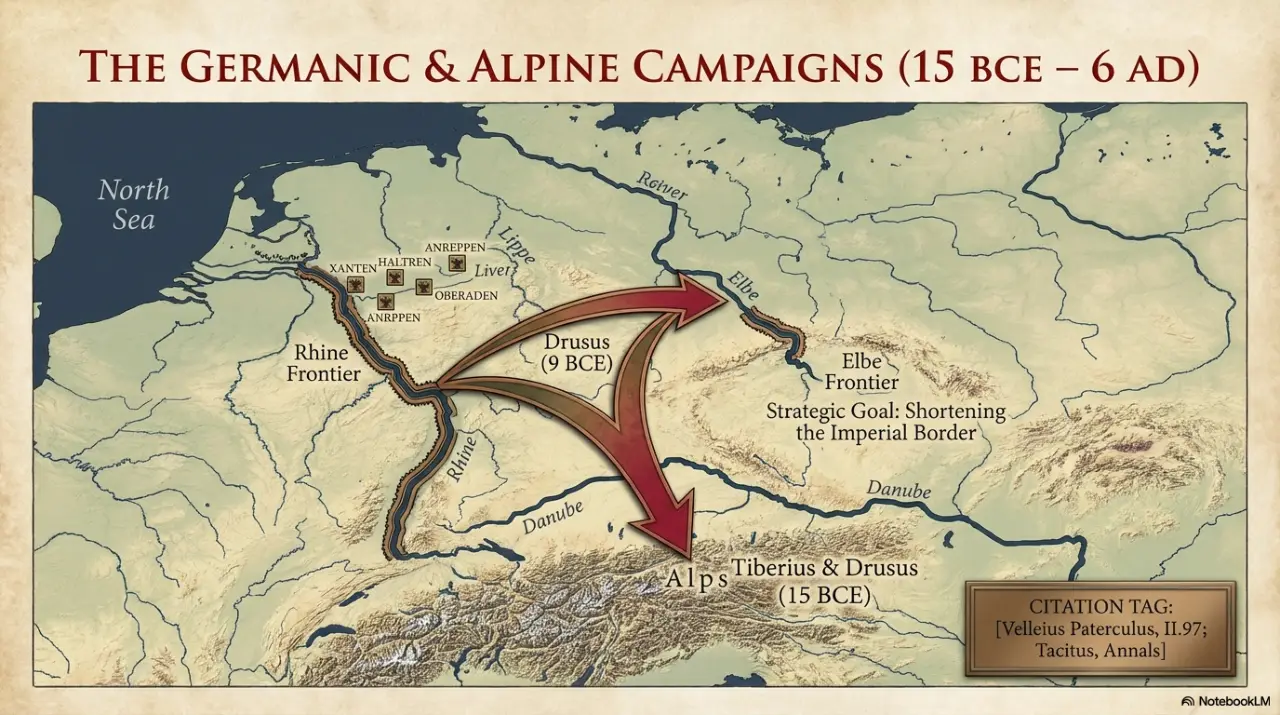
There the tradition placed the omen — the giant barbarian woman who barred the crossing and told the young general in Latin to turn back, for his end was near — and there, on the return march, his horse fell on him; he died thirty days later in the summer camp, his brother Tiberius, riding two hundred miles in a day and a night from the Alps, arriving in time to close his eyes, and walking before the body every step to the Rhine.
Tiberius took up the command and the method changed to his: the campaigns of 8–7 BC that brought the Sugambri to terms and then transplanted forty thousand of them to the Gallic bank — the tribe that had taken Lollius's eagle dissolved by administrative act; the slow conversion of the Lippe and Main corridors into governed space, with winter camps deep in the interior, assizes held, tribute assessed, and the first altar of the imperial cult among the Germans rising at the Ubian city that would one day be Cologne. After the decade's dynastic interruption — Tiberius's self-exile to Rhodes, the deaths of the emperor's grandsons, the adoption of 4 AD that made the Claudian the heir — he returned to the German command and completed, in the campaigns of AD 4–5 that Velleius Paterculus rode in and wrote up, the project's apparent triumph: the interior peoples sworn, the army wintering on the upper Lippe, and in 5 the combined operation that stands as the logistical summit of the ancient world's northern warfare — the fleet sailing from the Rhine mouths around the Jutland peninsula while the legions marched inland, army and navy meeting on the lower Elbe, the ocean squadron pushing on into waters no Mediterranean keel had cut. One power remained on the map between the Elbe and the Danube: Maroboduus, king of the Marcomanni, who had led his people out of the Main valley into the mountain-ringed basin of Bohemia and built there, with Roman deserters and Roman methods, a drilled army the sources put at seventy thousand foot — the first German state, created by the pressure of the advance and targeted for destruction by the plan of AD 6: twelve legions in two army groups, Tiberius from the Danube, Saturninus from the Rhine, the greatest converging operation Rome had ever mounted, five days' march from contact when the couriers reached the columns with the news that Illyricum, behind them, had risen entire.
The chapter halts at that courier, as the empire did. The ancient verdict was written afterward by the man who inherited the ruins, in the state-paper Tacitus summarizes as the advice of Augustus — consilium coercendi intra terminos imperii, the counsel of keeping the empire within its bounds — and the modern literature still divides.
Tactical illustrations
Outcome and critical assessment
Result and caution: the empire's western and northern military geography changed substantially. These operations are a campaign group, not one declared war fought everywhere at once. Augustus' own account of achievements is a political monument; phrases implying universal submission should not be treated as surveyed borders or permanent occupation.
Historical record: IR-VI, chapter 1; Dio, Augustan books; Velleius, book 2. The Res Gestae tradition is an additional political witness, not a neutral territorial inventory.