Wars · VIII. The western imperial system under pressure
W082 The Vandal conquest of Africa and the sack of AD 455
Battles and sieges
Capture of Carthage 439 ADVandal sack of Rome 455 ADGaiseric's forces crossed from Iberia into Africa and fought imperial forces during a changing period of alliance and conflict. The capture of Carthage in AD 439 provided a major urban, fiscal and maritime center. Treaties acknowledged changing power relationships without eliminating future war.
From Africa, the Vandal kingdom could pressure the western government's sea communications and resources. The expedition to Rome in AD 455 followed a new dynastic and political crisis. The sack involved systematic removal of wealth and captives, including members of the imperial family.
Command, forces and military problem
| Field | Dossier |
|---|---|
| Roman leadership | African imperial commanders and the western government |
| Opposing or rival parties | Gaiseric and the Vandal–Alan kingdom |
| Forces and capabilities | Expeditionary and provincial forces, royal armies and a growing maritime capability |
| Operational problem | Prevent or reverse the loss of Carthage and the resources attached to it. |
Campaign geography and operational plates
North Africa: cities, roads and military districts
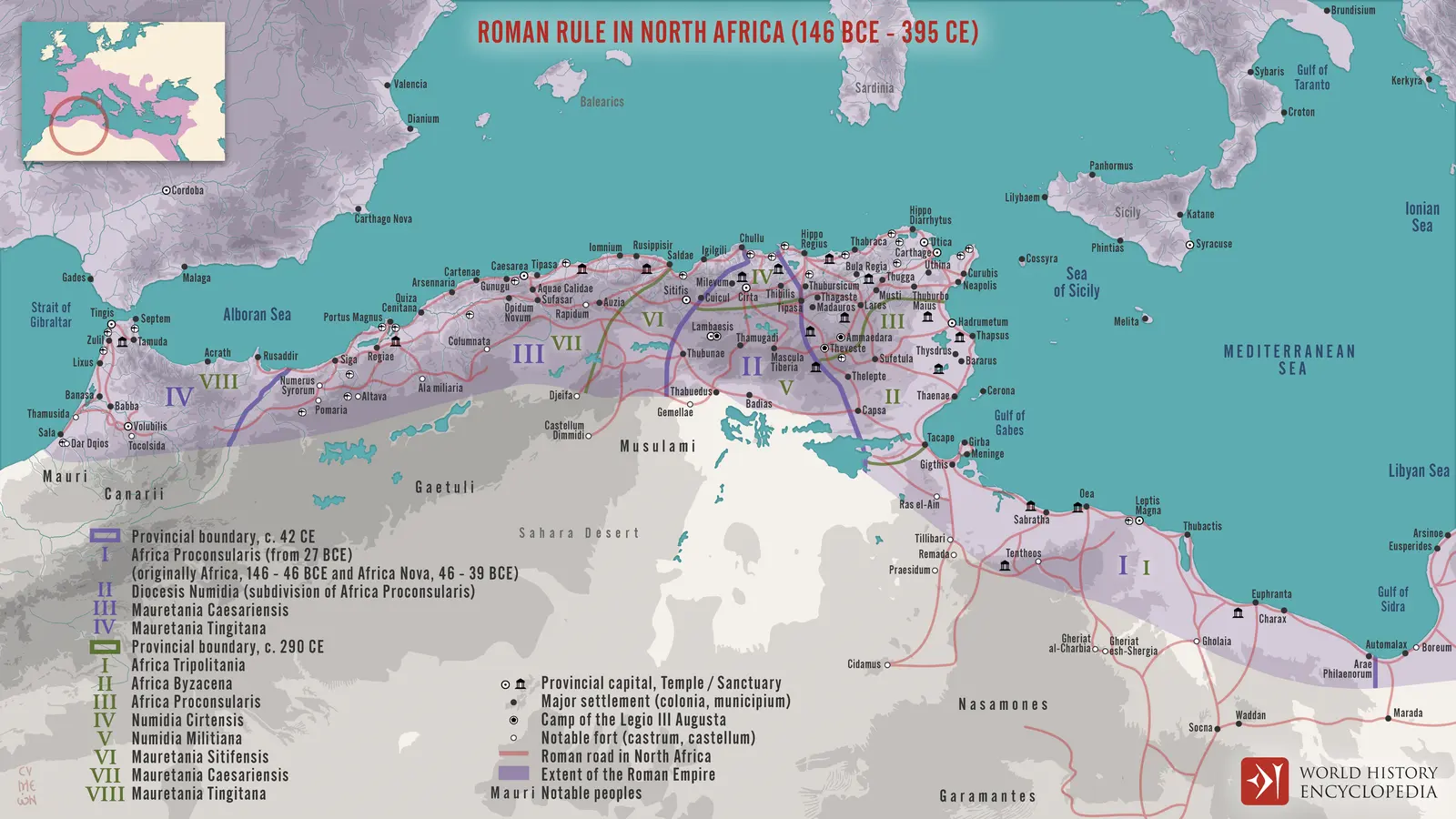
A narrow, connected coastal and upland world contrasts with the much larger interior. The towns, road systems and legionary references help explain the relationship between settled resources and operations beyond them. For Jugurtha or early annexation, treat the later roads and administrative units as a subsequent layer, not as contemporary campaign infrastructure.
Extended campaign study
The account below develops the operations and their interpretation. Reported numbers and reconstructed tactical details retain the uncertainties described in the dossier.
The Loss of Africa (429–442)
The Vandals — Hasding survivors of the Rhine crossing, hammered in Spain by Romano-Gothic campaigns until their king Gaiseric, the fifth century's ablest founder, concluded that safety lay across water — crossed the straits to Mauretania with their whole people (eighty thousand souls by Victor of Vita's transmitted count, the account's most-debated number, printed as transmitted), and marched east along the African coast against the one diocese the western fisc could not lose: the grain, the oil, and the tax-yield that fed Rome and paid the field army. The defense failed in sequence — the count Boniface beaten in the field, Hippo Regius besieged fourteen months (Augustine dying within the walls in the siege's third month, his library ordered preserved), a combined eastern-western relief army under Aspar beaten in turn — and the treaty of 435, settling the Vandals in the Mauretanias and Numidia as nominal federates, bought four years; on 19 October 439, by surprise assault in deep peace, Gaiseric took CARTHAGE — an important city rebuilt after the Republican destruction — with its arsenal, its mint, and the African fleet's harbors, and the western empire's fiscal spine was severed.
Outcome and critical assessment
Result and caution: the western government lost access to a vital revenue base, while a powerful kingdom commanded central Mediterranean resources. The fiscal explanation is significant but should not become a sole-cause formula for every later event. Procopius wrote later and preserves stories about the earlier crossing and Roman political responsibility that are not all equally secure.
Historical record: IR-VIII, chapters 5–6; Procopius, Wars 3.3–5; Hydatius and other chronicles. The transmitted crossing population is not treated as a verified census.