Provinces · Anatolia and the Aegean
RP-32 Galatia
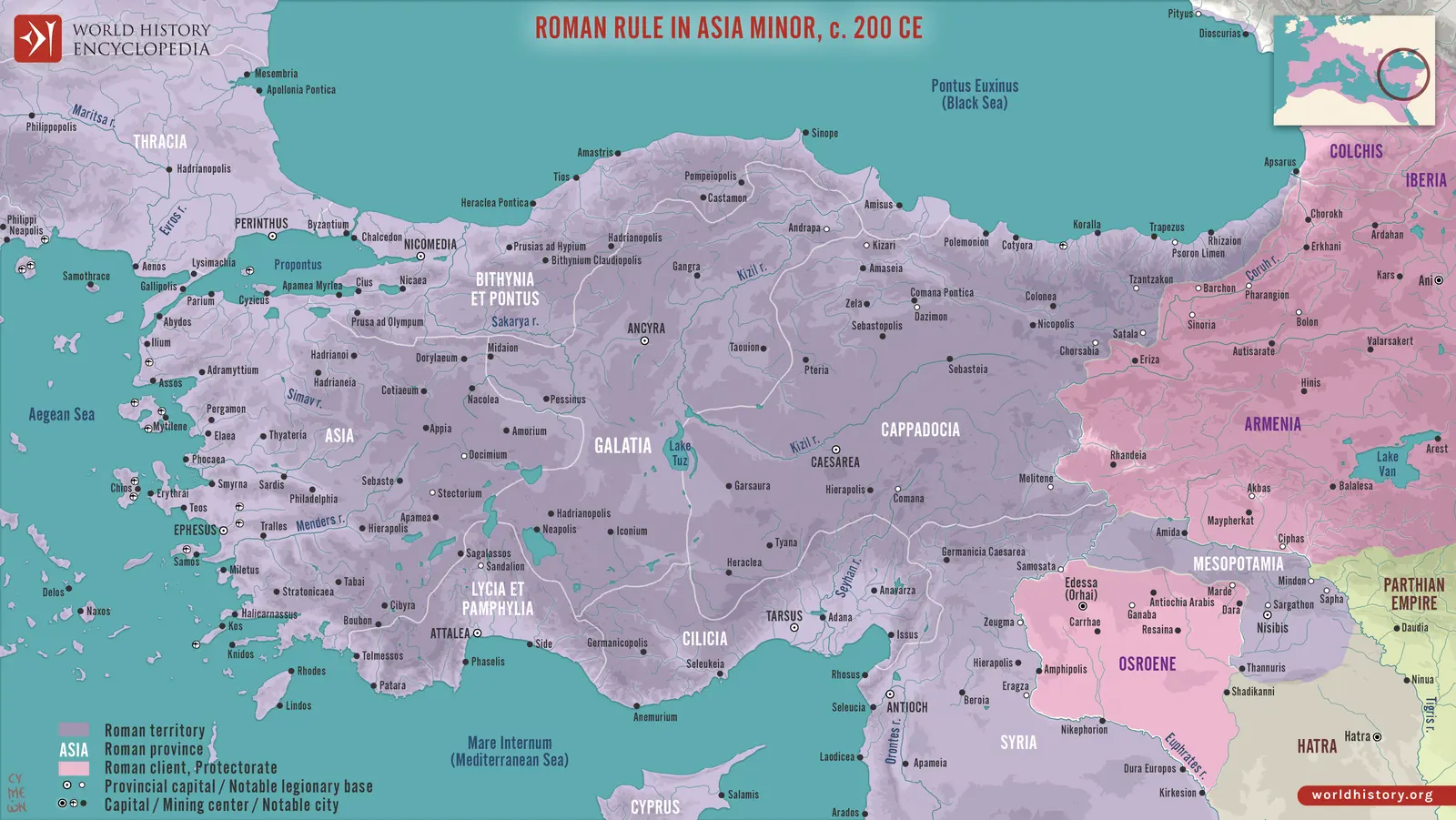
Galatian peoples and the wider province
The Galatians originated in Celtic-speaking groups that entered Anatolia during the Hellenistic period. Their eventual territories and institutions developed through interaction with surrounding kingdoms and cities. By the late Republic, rulers such as Deiotarus and Amyntas operated within a political world heavily influenced by Rome, where personal alliances and military service could determine royal survival.
The province created after Amyntas’s death included more than the ethnic Galatian core. Pisidian, Lycaonian, and other districts entered a broad administrative arrangement extending towards the Taurus. This enlarged geography explains why a city could belong to Roman Galatia without lying in the older land of the Galatian peoples.
Ancyra and provincial government
Ancyra occupied a central plateau position useful for roads, administration, and communication with several Anatolian regions. Its imperial cult institutions and monumental presentation of Augustus’s achievements connected local civic identity to the founding claims of the imperial system. Pessinus retained a religious significance rooted in the cult of the Great Mother, while other towns served regional markets and public administration.
The governor’s responsibilities changed with combinations and separations of neighbouring territories. At times, Galatia was linked to Cappadocia under a larger command. Such arrangements reflected strategic priorities and administrative convenience, not the permanent abolition of local provincial names.
Colonies and the southern interior
Augustan colonies in Pisidian and adjacent districts helped secure routes and settle veterans. Antioch in Pisidia, Lystra, and other foundations introduced Roman civic structures into landscapes with strong local traditions. Roads connected these communities with coastal and plateau centres, supporting military movement, markets, and administration.
Colonial settlement did not make every inhabitant a Latin-speaking veteran or remove older patterns of land use. Indigenous populations, new settlers, merchants, officials, and their descendants formed complex communities. Local institutions and social distinctions adapted to the new political order over generations.
Plateau resources and religion
Agriculture, pastoral activity, wool, livestock, local crafts, and regional trade sustained the province. Conditions varied between uplands, plains, and mountain margins. Long-distance movement relied on roads and stopping places, but local market connections remained essential to the lives of most inhabitants.
Greek civic culture, Roman public institutions, and local traditions coexisted. The survival of a Galatian language into late antiquity, alongside the prominence of Greek and Latin in different settings, illustrates the difference between political integration and complete linguistic replacement. Religious life included local and regional sanctuaries, imperial cult, and later Christian communities.
Christian networks and late division
Early Christian travel and community formation crossed a provincial geography larger than the Galatian ethnic core. Later doctrinal disputes and episcopal organization placed its cities within the wider eastern church. Christianization did not dissolve all regional identities or remove the practical significance of provincial boundaries.
The late separation of Pisidia and Lycaonia and the creation of Galatia Salutaris reduced and differentiated the older jurisdiction. Ancyra remained a major centre, while Pessinus and other cities occupied roles within the new arrangements. The province’s long history shows how a name originating in a migrant people could become a broad Roman jurisdiction and then survive in smaller late administrative units.
Settlement geography
| Ancient place | Modern location |
|---|---|
| Ancyra | Ankara, Turkey |
| Pessinus | Ballıhöyük, Turkey |
| Antiochia Pisidiae | Near Yalvaç, Turkey |
| Iconium | Konya, Turkey |
| Lystra | Near Hatunsaray, Turkey |
| Amaseia | Amasya, Turkey |