Legions · The legions, by number
35 Legio XV Apollinaris
The Fifteenth of Apollo
Identity. Probably an Octavianic foundation around 41–40 BCE. Identity with Caesar’s earlier Fifteenth is uncertain. Apollo is the patron named in its title; a particular animal badge is not treated here as securely established.
Historical outline. The Fifteenth connects Danubian garrison life with the Armenian frontier and the Jewish War. Its long later station at Satala makes it one of the key institutions for the northern eastern frontier. Carnuntum was a major home, but not the terminal point of its geographical history.
Selected chronology
- Early empire: Illyrian/Pannonian service and establishment at Carnuntum.
- Early 60s: transfer east during the Armenian crisis.
- 67–70: Jewish War service; Titus commanded the Fifteenth during the earlier campaigning.
- Flavian period: return to Carnuntum.
- After Trajan’s eastern war: establishment at Satala under Hadrian.
- Late horizon: explicit late military listing at Satala.
The Danubian regiment and Titus’ command
The Fifteenth’s Carnuntum phase linked it with the occupation and defense of the middle Danubian region. Transfers east during Nero’s Armenian crisis placed it within a wider redistribution of military resources. A legion could be sent to reinforce a threatened theater without appearing in the central action of every battle there.
In the Jewish War, Titus commanded XV Apollinaris during the early campaigns. The legion operated alongside the Fifth and Tenth in a combined army with auxiliary and allied contingents. Fortified towns, difficult approaches, and the management of prisoners and occupied communities made this a war of repeated local operations. The capture of Jotapata and the subsequent fate of Josephus link the legion with the personal history behind one of the war’s most important surviving narratives.
Returning west, then establishing at Satala
The return to Carnuntum should not disappear from a simplified route arrow running directly from the Danube to permanent eastern service. Only after Trajan’s eastern war did the Fifteenth acquire its enduring Satala association. Its biography includes departures, temporary deployments, returns, and a later lasting relocation.
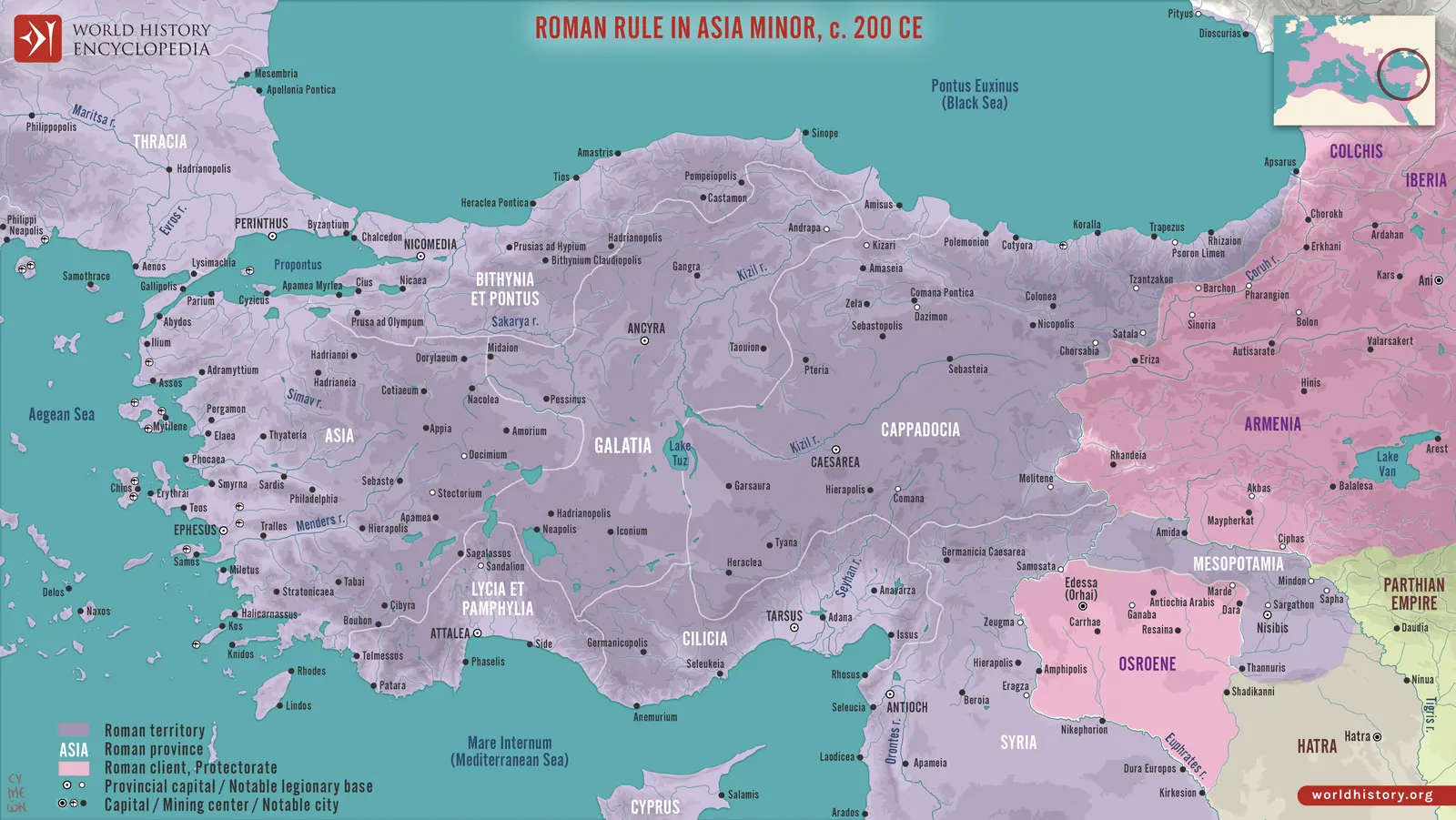
Satala guarded the northern eastern military zone in a landscape shaped by Armenian routes, mountain approaches, and communication with the Black Sea region. Supplying and concentrating forces in such terrain required attention to seasons, transport animals, depots, and local resources. The legion’s usefulness was not confined to a single confrontation with an opposing field army.
Apollo and institutional survival
The Apollinaris title connected the regiment with a divine patron especially meaningful to Octavian’s political world. It does not provide a securely recovered standard design for every period. A griffin is a plausible Apollo-related motif, but plausibility is not a substitute for a specifically verified legionary emblem. Continued late assignment at Satala preserves the institution’s identity while leaving its final organizational end obscure.