Legions · The legions, by number
24 Legio VI Victrix
The Victorious Sixth
Identity. Usually dated to Octavian’s recruitment around 41 BCE. Distinguish it from VI Ferrata, despite possible shared veteran traditions.
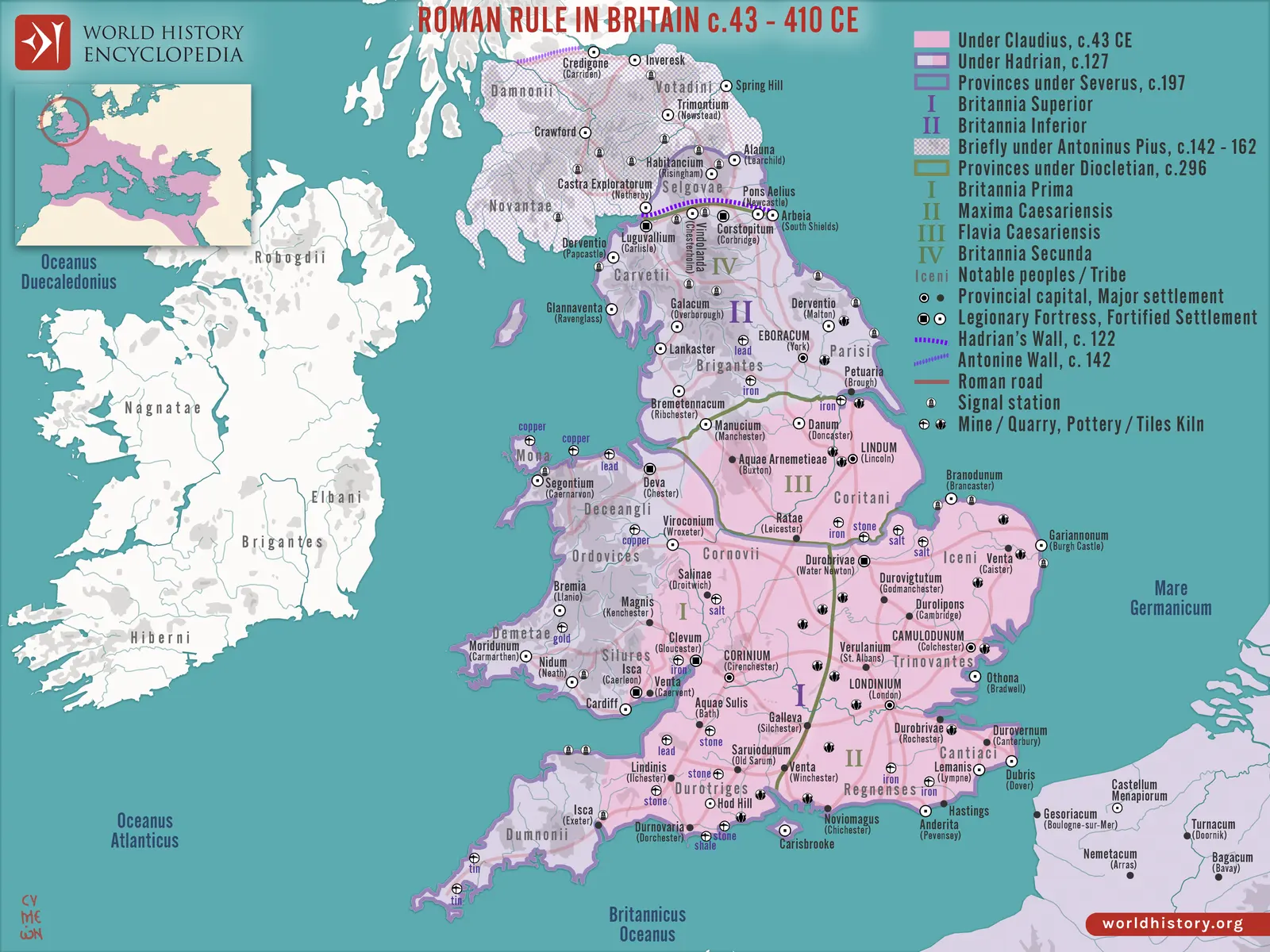
Historical outline. The Sixth’s career passes through Spain and the Lower Rhine before its enduring British assignment. Its transfer to York around 122 belongs to Hadrian’s military reorganization. Building inscriptions and frontier associations make construction part of its history alongside warfare; neither Hadrian’s Wall nor the Antonine Wall was the work of this legion alone.
Selected chronology
- Late Republic–early empire: service under Octavian and establishment in Spain.
- 70: participation in the Flavian recovery of the Rhineland.
- Later first century: Lower Rhine stations, including Neuss and the Xanten district.
- c.122: transfer to Britain and establishment at Eboracum.
- Second–early third centuries: British frontier building and northern campaigning.
- Late horizon: late military records place a prefect of the Sixth Legion under the British dux; the local text omits the surname and station.
The Spanish and Rhine beginnings
VI Victrix’s long Spanish phase placed it within the Augustan conquest and settlement of the peninsula. Military service could leave a civic legacy through veteran communities and the naming of settlements even after the regiment itself departed. The distinction matters: a colony containing veterans is not automatically the legion’s active headquarters.
The Flavian suppression of the Batavian revolt brought the Sixth into the Lower Rhine system. At Neuss and later in the Xanten district, the regiment participated in the rebuilding of a frontier devastated by rebellion. Roads, waterways, and neighboring garrisons gave the army the means to intervene across a broad region; the surviving fortresses were only its most visible fixed points.
York and the northern walls
The move to Eboracum around 122 placed the Sixth near the northern British military zone. York connected river transport with roads toward the frontier. It was a command center and a place of military consumption, administration, burial, family life, and imperial residence. The arrival of a legion changed the surrounding economy while depending on it for food, materials, and skilled labor.
VI Victrix contributed to Hadrian’s Wall and the Antonine Wall. Its building detachments worked within a larger army system that included II Augusta, XX Valeria Victrix, and auxiliary garrisons. The later rebuilding and reoccupation of frontier works reveal repeated strategic adjustments rather than one permanent line established forever in 122.
Civil war and continuity
Clodius Albinus’ struggle with Severus drew British military resources toward the continent. Subsequent northern campaigns and restoration work belong to the consequences of combining imperial rivalry with exposed provincial frontiers. The Sixth’s late record is less complete than its earlier York identity. Its survival cannot be narrated simply as three centuries of identical duties by the same unchanging establishment. Its legacy instead joins a Spanish beginning, Flavian Rhine service, and the military development of northern Britain.