Legions · The legions, by number
23 Legio VI Ferrata
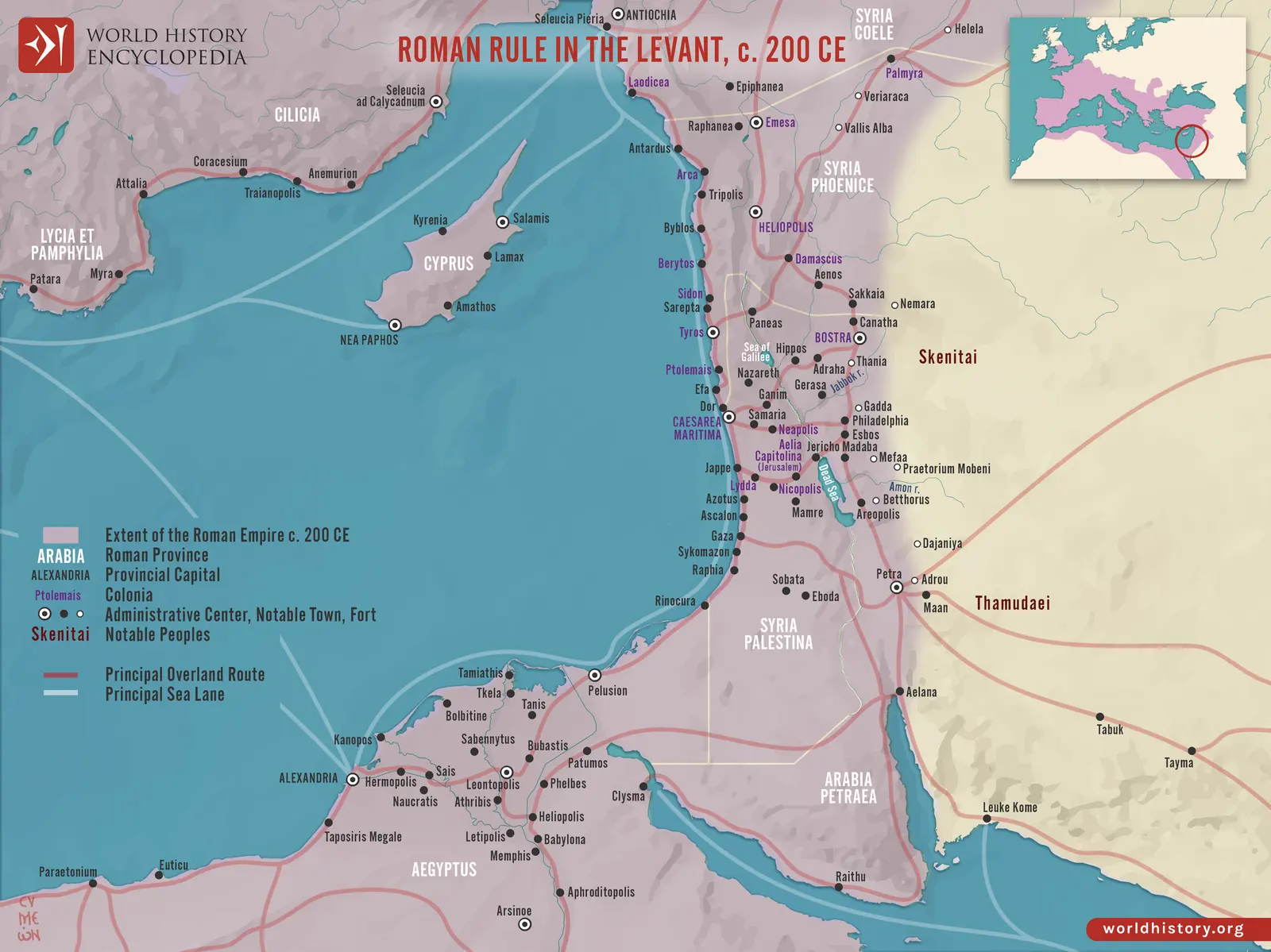
The Sixth campaigned through Caesar’s wars, passed through later civil-war reconstitution, and became part of the eastern military establishment. Subsequent service in Judaea is associated with the base known as Legio, near modern Megiddo.
Endpoint: its late institutional fate is uncertain; the absence of an uncomplicated later roster entry does not establish a particular final battle.
Selected chronology
- 52 BCE: Caesarian foundation.
- 49–47 BCE: campaigning from Spain through the eastern civil-war theaters, including Zela.
- 58–63: Corbulo’s Armenian military world.
- Later first–second centuries: eastern garrison service and establishment near Megiddo.
- Later imperial period: terminal institutional fate uncertain.
The unusually mobile Caesarian Sixth
The Sixth’s late Republican history carried it through several theaters in quick succession. Fighting in Spain, the struggle against Pompey, the Alexandrian crisis, and the Pontic campaign demonstrate the geographical reach of Caesar’s war-making. The Sixth associated with the campaign at Zela in 47 BCE belongs to this highly mobile military world, not to a permanent eastern fortress already established for centuries.
Veteran settlement and later reconstitution linked the Caesarian past with new patrons. Under Antony and then Augustus, the regiment became part of the eastern establishment. Its identity thus passed through political ruptures before acquiring the long provincial associations remembered in the imperial period.
Corbulo’s army and the Syrian frontier
VI Ferrata operated in the Armenian theater with other Syrian legions. Training, the preparation of routes, siege operations, and negotiations over kingship accompanied military advances. Armenia’s importance lay partly in its position between Roman and Parthian power; conquest and diplomatic settlement were intertwined.
The regiment’s part in the military movements of 69 also illustrates the competing claims of civil war and frontier security. An army marching toward Italy could encounter threats on the Danube en route. A neat separation into “eastern legion” and “European legion” cannot describe such operational movements.
Legio in Judaea
The later base near Megiddo placed the Sixth within the occupation of Judaea/Syria Palaestina. Roads connected the fortress with coastal supply and inland districts. The station’s name, Legio, reflects the lasting local visibility of the military establishment. Ferrata’s title should not be turned into a claim for unique iron equipment denied to other Roman infantry. Its distinction was historical and corporate: a particular Caesarian lineage acquired a specifically eastern and Palestinian military life whose final ending remains uncertain.