Legions · The legions, by number
25 Legio VII Claudia Pia Fidelis
The Seventh and Eleventh received their Claudian loyalty identity after refusing to sustain Scribonianus’ rebellion in 42.
Endpoint: late Roman administrative survival in the Danubian system. Related identities: VII Gemina, the legion raised by Galba in 68 and subsequently combined with other manpower.
Selected chronology
- By 58 BCE: service of the Caesarian Seventh.
- After Caesar’s death: reconstitution under Octavian.
- 42: acquisition of the Claudian loyalty identity.
- First century: transfer from Dalmatia into the Danubian military system.
- Late horizon: a Seventh Claudia assignment at Cuppae.
Caesar’s Seventh
The Seventh’s service in Gaul included operations in western districts and the expeditions to Britain. In the first British expedition it became involved in a dangerous encounter while foraging, an illustration of how apparently routine supply work could expose a force to attack. Campaigning required reconnaissance and protection outside the formal battle line.
Civil-war service, demobilization, and renewed enlistment under Octavian connected the early Seventh with the imperial institution. The loyalty embodied in a famous number could help a new political patron assemble an army. That process does not imply that every veteran returned or that the old establishment was restored without change.
Dalmatia and the Claudian title
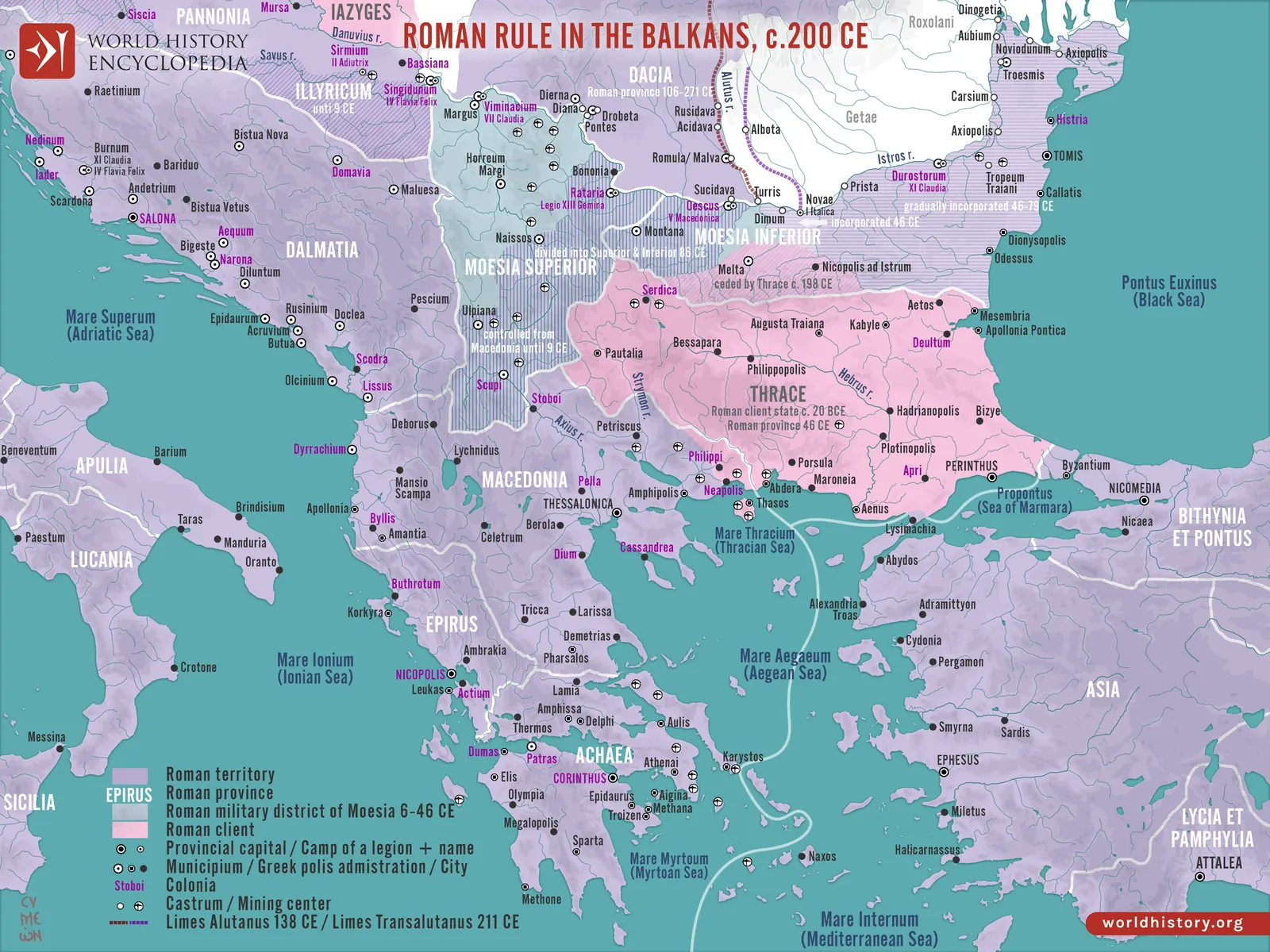
The regiment’s Dalmatian phase linked it with the occupation of the interior and communications toward the Adriatic. In 42 the failure of Scribonianus’ revolt gave both the Seventh and Eleventh the Claudian loyalty identity. This was an important collective political decision, not merely an individual commander’s decoration.
Later establishment in Moesia tied the legion to Viminacium and the Danubian military system. The fortress stood near routes connecting the river with the Balkan interior. Its practical influence extended through supply districts, nearby settlements, roads, and detached posts.
A provincial lineage into late antiquity
Successive generations could retain Claudia Pia Fidelis while serving emperors with little direct connection to Claudius. The title became part of institutional memory. The later Cuppae assignment shows a changed geographical distribution and must be incorporated rather than dismissed because Viminacium is the better-known base. The Seventh’s biography combines an early campaigning tradition, political loyalty in Dalmatia, and centuries of Danubian service. It remains separate throughout from VII Gemina, the much later Spanish foundation.