Legions · The legions, by number
26 Legio VII Gemina
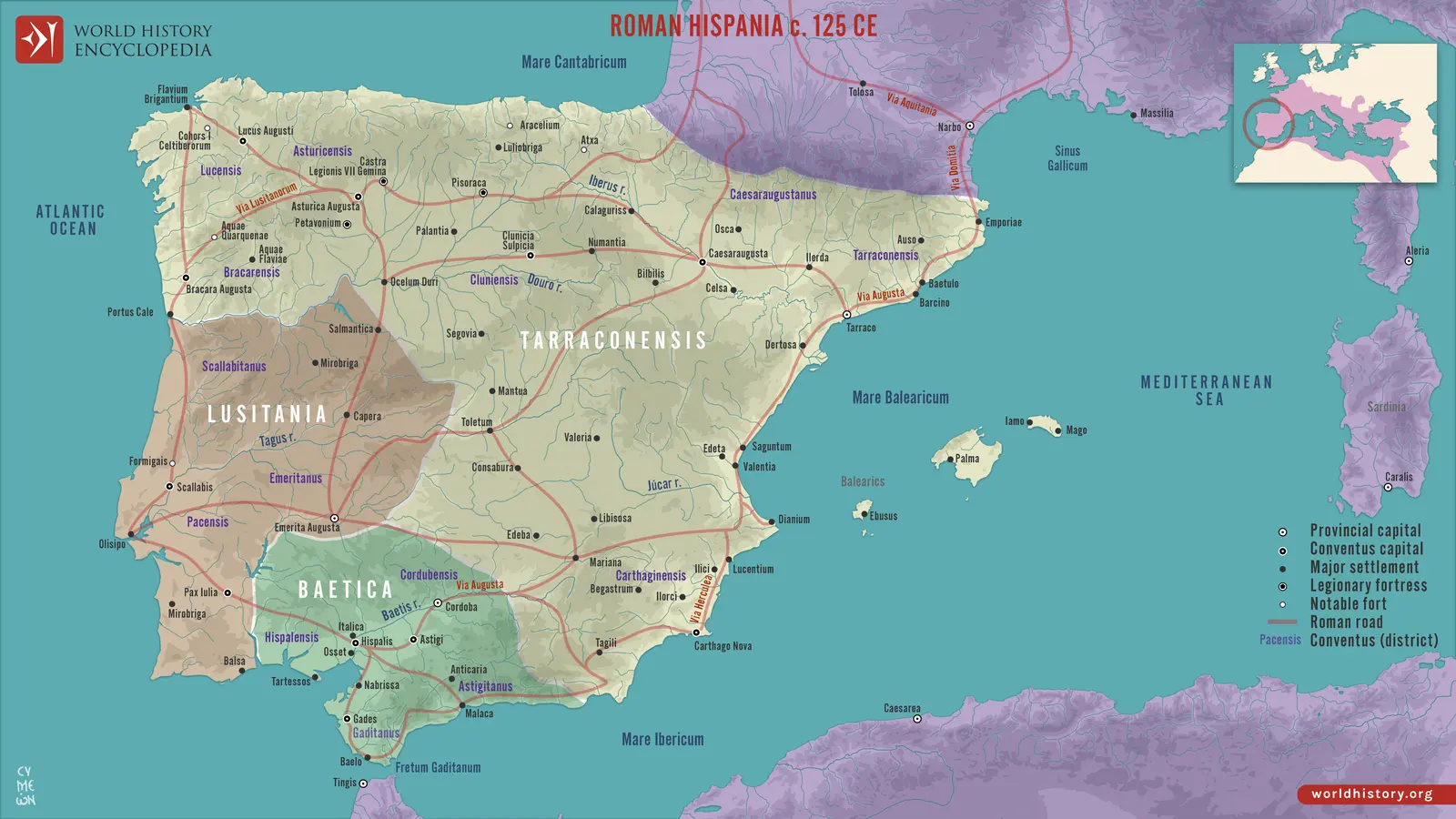
The legion accompanied Galba’s accession project, served in the military turmoil of 69, and emerged from the Flavian reorganization with additional personnel. Its durable Spanish establishment at León gave the city an enduring connection with the word legio.
Endpoint: late Roman evidence continues in the Spanish military establishment; the invasions of the early fifth century are context, not a surviving dissolution notice.
Selected chronology
- 68: Galba raises the Seventh in Spain.
- 69: civil-war campaigning.
- Flavian period: combination and the Gemina identity.
- Mid-70s, conventionally: return to a durable Spanish establishment at León.
- 86–89: Trajan’s command and movement toward the Rhine.
- Late empire: continued Spanish military identity.
Galba’s army and the Flavian reconstruction
The Seventh was raised in 68 to support a challenge to Nero. Unlike an old legion attaching itself to a new claimant, it began its institutional life inside the accession project. Galba’s success temporarily made its founder emperor; his murder exposed the young regiment to another succession struggle before it had acquired a stable provincial role.
The later Gemina identity followed the combination of Galba’s regiment with additional personnel, including men associated with the disbanded I Germanica in the conventional reconstruction. Corporate merger gave the survivors a useful military future while replacing the politically compromised First’s independent identity. Early Pannonian and German service preceded the durable return to Spain.
León and the military economy of Spain
At León the Seventh stood within reach of the northwestern mining and road systems. Its soldiers could be detached for the protection of strategic sites or for administrative duties at provincial centers such as Tarraco. A headquarters in an interior province did not make the legion militarily inactive or cut it off from wider imperial operations.
Trajan commanded the regiment before becoming emperor. Its movement toward the Rhine during Saturninus’ revolt illustrates the potential reach of a Spanish-based formation even when it arrived after the decisive events. Detachments could also be deployed outside the peninsula without permanently moving the parent headquarters.
The Spanish legacy
León’s name preserves the military establishment’s importance to the city’s later history. The institution’s final disappearance belongs to the transformations of late Roman Spain, but no surviving dissolution order supplies a simple endpoint. Its distinctive biography joins revolutionary recruitment, merger, provincial administration, distant detachments, and urban legacy. A securely established exclusive animal emblem is not supplied, and the absence should not be concealed by borrowing a symbol from VII Claudia.