Legions · The legions, by number
21 Legio V Alaudae
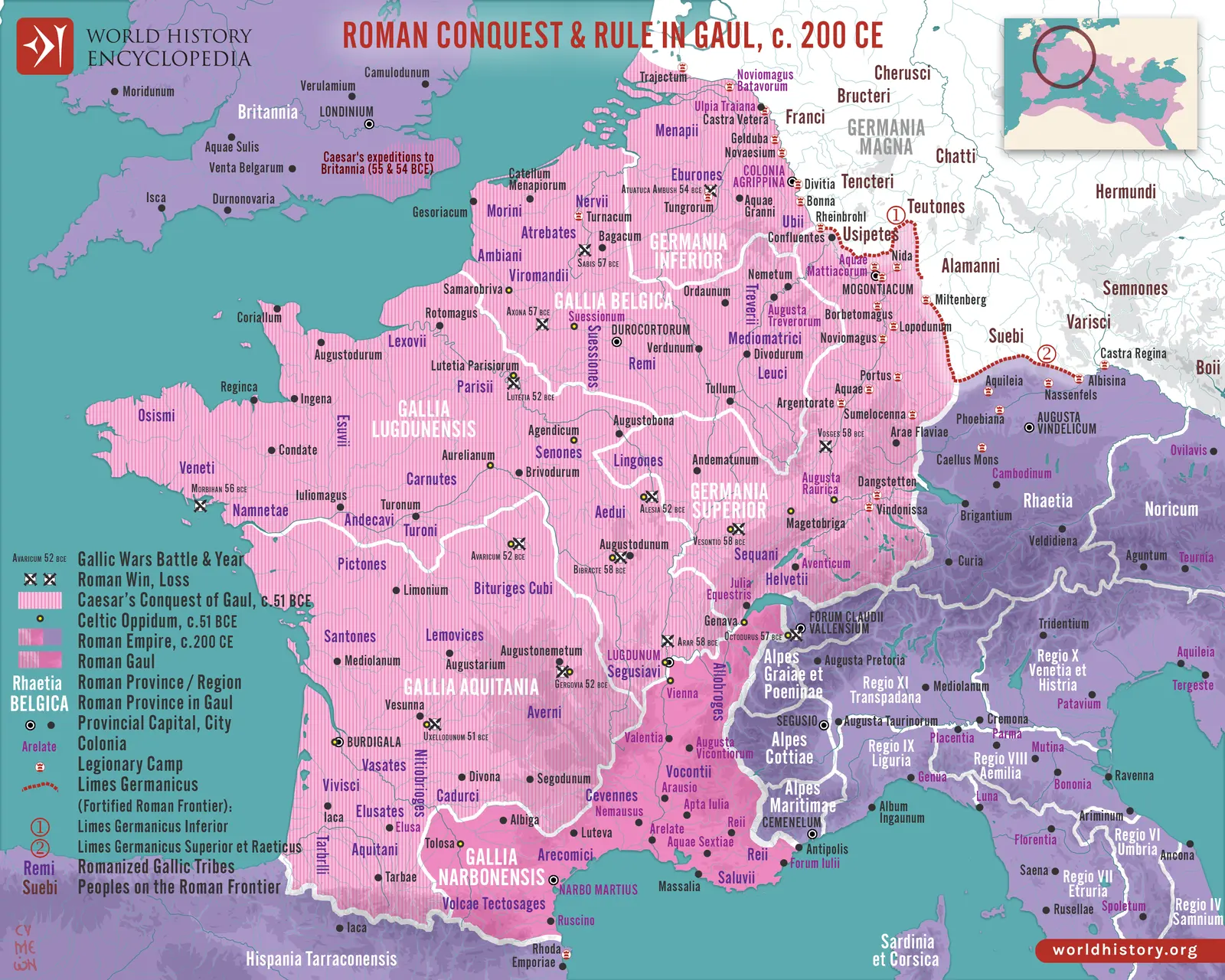
Its history passes from Caesarian civil-war campaigning to the imperial Rhine army and the disaster at Vetera in 69–70. The institutional ending of V Alaudae has been debated: the loss at Vetera in 70 and a proposed later Danubian destruction in 86 belong to competing reconstructions, not two securely documented destructions of the same intact legion.
Endpoint: the garrison disaster of 70 is secure; the survival and fate of any reconstituted Fifth require qualification. Related identities: V Macedonica, which had a much longer documented Danubian biography.
Selected chronology
- c.52 BCE: recruitment in Gaul under Caesar.
- 46 BCE: remembered elephant encounter at Thapsus.
- Early empire: Lower Rhine establishment.
- 69–70: siege and catastrophe at Vetera.
- After 70: proposed institutional survival to 86 remains disputed.
Provincial recruits and the elephant
V Alaudae challenged the older association between legionary status and recruitment from the established citizen body. Caesar’s acceptance of provincial manpower belonged to the military and political improvisation of the late Republic. Recognition and citizenship questions were central to the institution’s formation, not incidental details beside a list of battles.
At Thapsus the regiment’s remembered encounter with elephants became an explanation for its emblem. The image advertised a particular military story. It did not mean that the Fifth was an elephant unit, that it maintained a permanent elephant corps, or that every later soldier possessed special expertise against those animals.
The Fifth at Vetera
The mature Rhine assignment placed the legion beside the Lippe approaches and within the network of Roman occupation along the river. The civil war of 69 drew away forces while leaving garrisons to confront an escalating provincial rebellion. V Alaudae and XV Primigenia became associated with the besieged Vetera establishment.
The siege involved dwindling resources, attempted relief, conflicting political loyalties, and the eventual collapse of the defenders’ position. Surrender did not produce secure protection. The killing of the garrison belongs to the terminal catastrophe of the old frontier order and should not be softened into a routine station change.
Competing accounts of the ending
Whether the Fifth ceased as an institution in 70 or survived in some reconstituted form until a later Danubian disaster is disputed. The difference matters: survival would require recruitment, restoration of command, and recognition of the name, not simply the escape of a few men. A complete dossier preserves the alternatives and the secure Vetera episode without inventing a detailed second life to bridge the uncertainty. The distinctive combination of provincial recruitment, elephant imagery, and a disputed ending makes the Fifth one of the most recognizable yet easily mythologized legions.