Legions · The legions, by number
19 Legio IV Macedonica
The Fourth participated in the military politics of 68–70. Its compromised institutional standing after the Rhine crisis ended the old Macedonian identity. Vespasian’s IV Flavia Felix is normally treated as a refoundation incorporating personnel from the older regiment. The biography must therefore include a terminal event for IV Macedonica and a foundation event for IV Flavia Felix, rather than using the two names interchangeably.
Endpoint: suppression/refoundation in 70. Related identities: IV Scythica, a separate eastern legion, and IV Flavia Felix, its linked successor institution.
Selected chronology
- c.48 BCE: conventional Caesarian foundation.
- 44–43 BCE: transfer into the struggles of Caesar’s successors.
- Augustan period: Spanish service.
- Claudian period: establishment at Mainz.
- 69–70: civil war, Rhine crisis, and suppression/refoundation.
A legion in the politics of Caesar’s successors
The Fourth Macedonian belonged to the armies inherited and contested after Caesar’s death. Its allegiance shifted from Antony toward Octavian in the struggle of 44–43 BCE. The decision illustrates how a legion could influence events rather than merely obey the settled authority of a state. Commanders depended on soldiers whose experience, expectations, and personal networks could redirect a campaign.
The fighting around Mutina and later triumviral wars supplied further stages in its institutional life. Macedonia preserved one geographical association, but the regiment’s later home lay far away in Spain. A surname often outlasted the station that helped produce it.
Spain and the move to Mainz
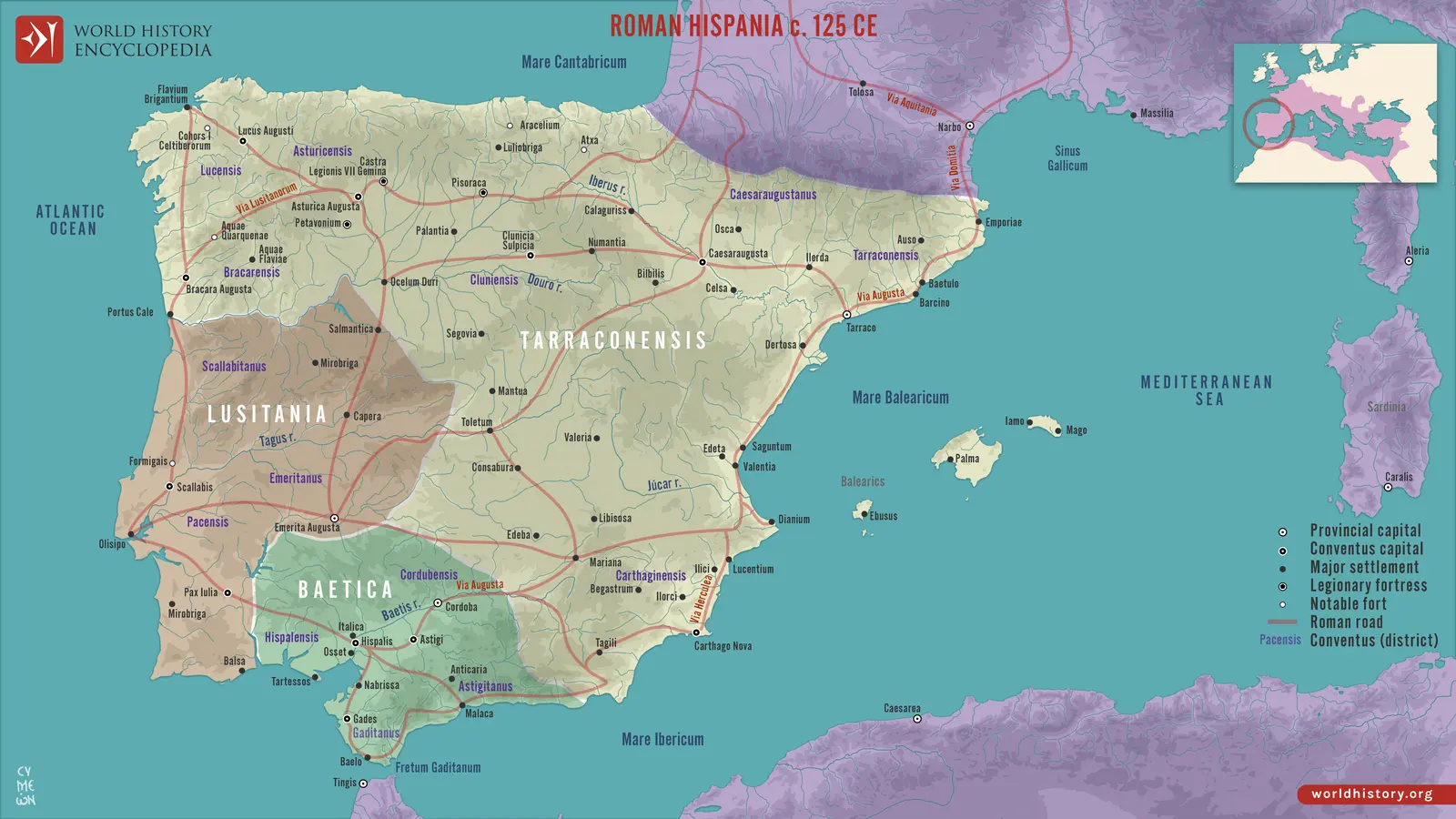
The Cantabrian-war setting placed the Fourth within a long process of conquest and consolidation in northern Spain. A peacetime occupation force could then support roads, settlement, and provincial administration. Transfer to Mainz brought it into a paired fortress and the political world of the Rhine army.
At Mogontiacum the legion shared an establishment with XXII Primigenia. Collective production and neighboring service linked the two formations, while their standards and institutional histories remained separate. Concentrated manpower made the station a strategic resource and a possible danger during an imperial succession.
Refoundation after 70
The civil war and Rhine rebellion damaged IV Macedonica’s standing. The creation of IV Flavia Felix preserved a relationship with the older institution while imposing a new dynastic identity. It is misleading either to erase the personnel relationship or to pretend nothing happened beyond a harmless change of nickname. The Fourth Macedonian’s separate biography ends at this refoundation; the Flavian successor begins a new geographical and political life at Burnum and later on the Danube.