Legions · The legions, by number
18 Legio IV Flavia Felix
The Fortunate Fourth Flavian Legion
Identity. Established by Vespasian in 70 after the disappearance of IV Macedonica’s old institutional identity. A relationship in personnel is probable, but the new name marks a political and organizational refoundation. The lion is associated with its insignia.
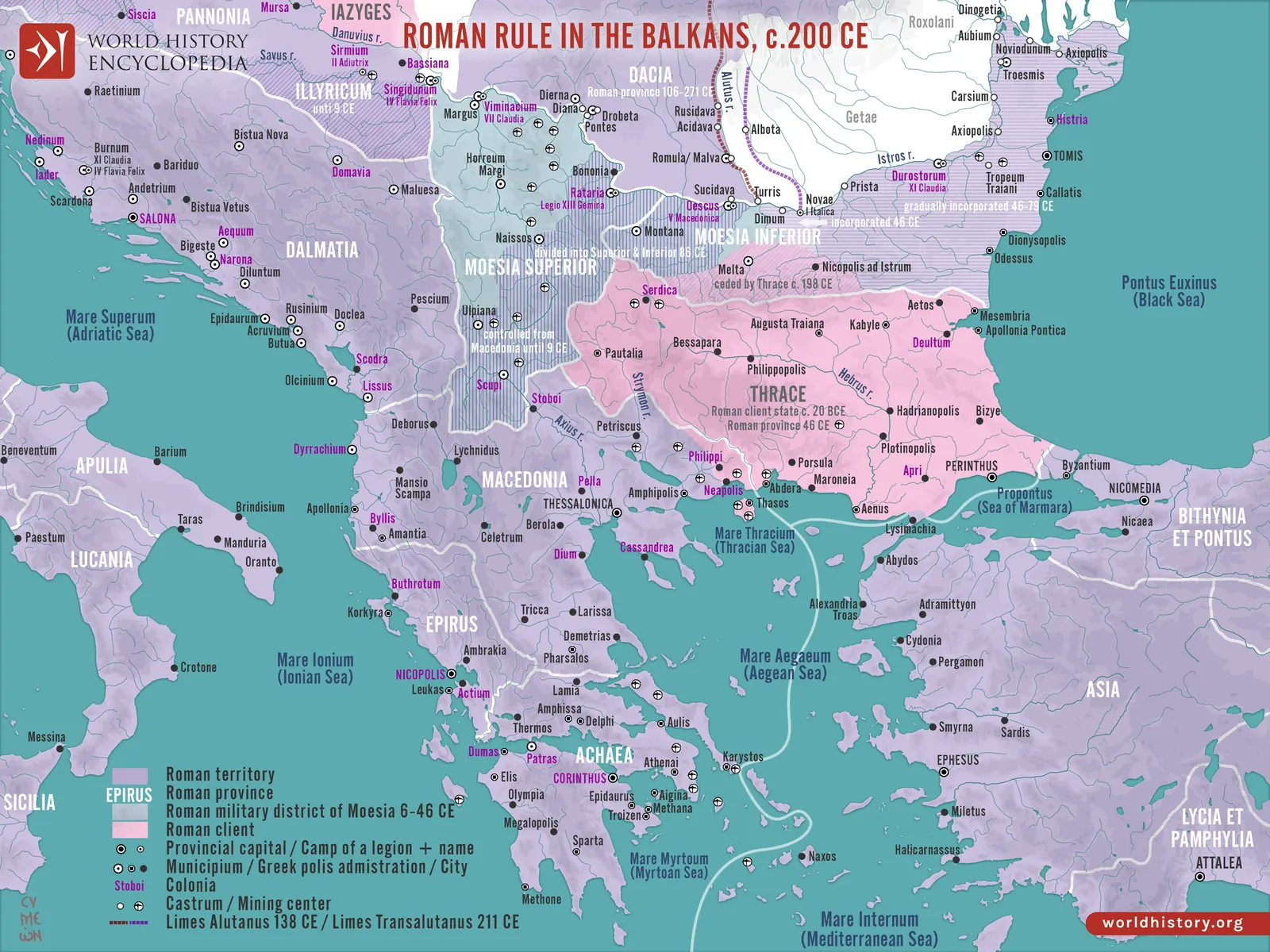
Historical outline. The Fourth’s biography runs from the Flavian reorganization through Dalmatia to the Danube. Burnum was its first major station. Its later association with Singidunum tied it to the river crossings, roads, and wars around Moesia Superior and Dacia.
Selected chronology
- 70: foundation under the new Flavian regime.
- Early Flavian period: station at Burnum, replacing XI Claudia.
- Domitianic period: transfer to the Danubian military system.
- 101–106 and after: service in the Dacian wars and temporary occupation north of the river.
- Hadrianic and later periods: durable association with Singidunum.
- Late horizon: late military records place IV Flavia at Singidunum.
A Flavian refoundation
Vespasian’s new Fourth inherited a number burdened by the political failures of the old IV Macedonica. Refoundation allowed the regime to preserve useful manpower while changing the institution’s public identity. Flavia advertised the new dynasty; Felix proclaimed fortunate success. Neither title means that the legion avoided later reverses or that every old member was retained.
Burnum placed the new formation within Dalmatia’s existing military landscape. Moving it onward to the Danube linked it with the growing Dacian threat and the reorganization of Moesia. The important continuity was an army capable of transferring between provincial roles, not a permanently fixed assignment to one ethnic enemy.
Singidunum and the Dacian corridor
Singidunum stood at the meeting of the Sava and Danube, with routes connecting the river frontier to the Balkan interior. The position supported river traffic, movement toward other Danubian fortresses, and communication through the Morava corridor. It also made the legion part of the network protecting approaches toward Italy and the central Balkans.
The Dacian wars drew the Fourth into an army that combined fighting with extensive preparation of routes and depots. Temporary service north of the Danube and later return to Singidunum reflect the difference between a campaign’s occupation force and a durable provincial base. A fortress name on a map cannot describe every detached body supplied by its parent legion.
A provincial institution
The legion’s mature service included road security and the maintenance of connections with other garrisons. Its lion emblem expressed corporate identity, while soldiers’ inscriptions preserved smaller communities of service and commemoration. A force at the confluence depended on boatmen, merchants, farmers, transport workers, and specialist troops whose labor made legionary operations possible. Its late survival at Singidunum shows the persistence of the name within a reorganized army; the number of men and precise internal structure need not have remained those of the Flavian establishment.