Legions · The legions, by number
17 Legio III Parthica
The Third raised for the Parthian war
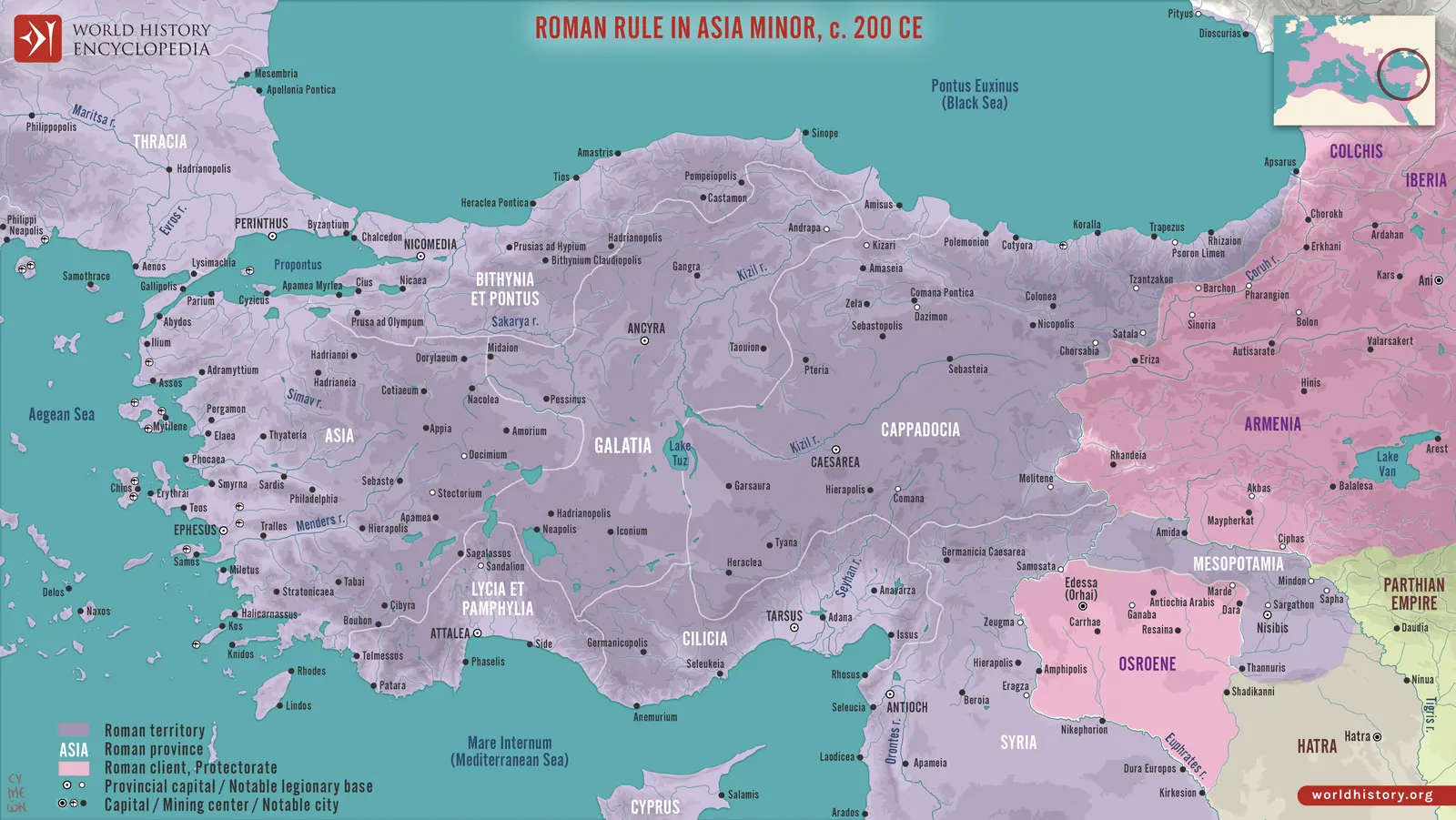
Identity. Raised by Septimius Severus around 197 as one of the three Parthian legions.
Historical outline. III Parthica helped maintain Roman power in northern Mesopotamia after Severus’ annexation. Rhesaena placed it on the communications between major regional centers. Its detailed campaign record is much less recoverable than its geographical role. General narratives of every third-century Persian war should not be converted into a sequence of proven legionary engagements.
Selected chronology
- c.197–198: creation during Severus’ eastern expansion.
- Third century: establishment at Rhesaena, supported in the modern reconstruction by civic coin evidence.
- 243: the battle at Rhesaena belongs to the regional war; the precise contribution of individual legionary components should not be overstated.
- Late horizon: III Parthica is commonly assigned to Apatna/Apadna in reconstructions of the late military register.
The Mesopotamian settlement
III Parthica was one of three new institutions created for Severus’ Parthian war. Whereas II Parthica acquired an Italian reserve role, the First and Third remained tied to the occupied East. The Third’s headquarters at Rhesaena placed it within the road network linking Edessa and Nisibis. Its purpose was not limited to defending a city wall: garrisoning, communication security, and participation in larger regional operations formed part of the same military system.
The Upper Khabur environment offered routes, water, and settlement that could sustain an army, but it also lay within reach of repeated eastern campaigns. A garrison did not automatically control the surrounding countryside in every season. Supplies, transport animals, intelligence, and cooperation between neighboring commands remained necessary.
War under the Sasanians
The replacement of Parthian rule by the Sasanian dynasty changed the adversary while leaving many geographical problems intact. The battle at Rhesaena in 243 belongs to the campaigns of Gordian III and his command establishment. The Third’s presence in the region makes it central to the military landscape, but the exact actions of its individual cohorts are not recoverable. A responsible narrative can describe the battle’s provincial setting without assigning invented maneuvers or casualty totals to the legion.
Soldiers, command, and the obscure ending
Equestrian provincial and legionary command distinguished the Severan Mesopotamian settlement from many older senatorial provinces. Evidence for individual soldiers and regional coin legends preserves fragments of the Third’s corporate life. Proposed centaur symbolism rests on a narrower base than the famous boar of XX Valeria Victrix and should be treated more cautiously in visual reconstructions.
The later assignment to Apatna is reconstructed across a defective administrative entry. It is therefore possible to identify a likely later station without pretending that the institutional path from Rhesaena is completely known. The legion’s obscurity is itself historical: a strategically important unit may leave fewer recoverable individual episodes than a regiment celebrated in an emperor’s narrative of conquest.