Legions · The legions, by number
16 Legio III Italica
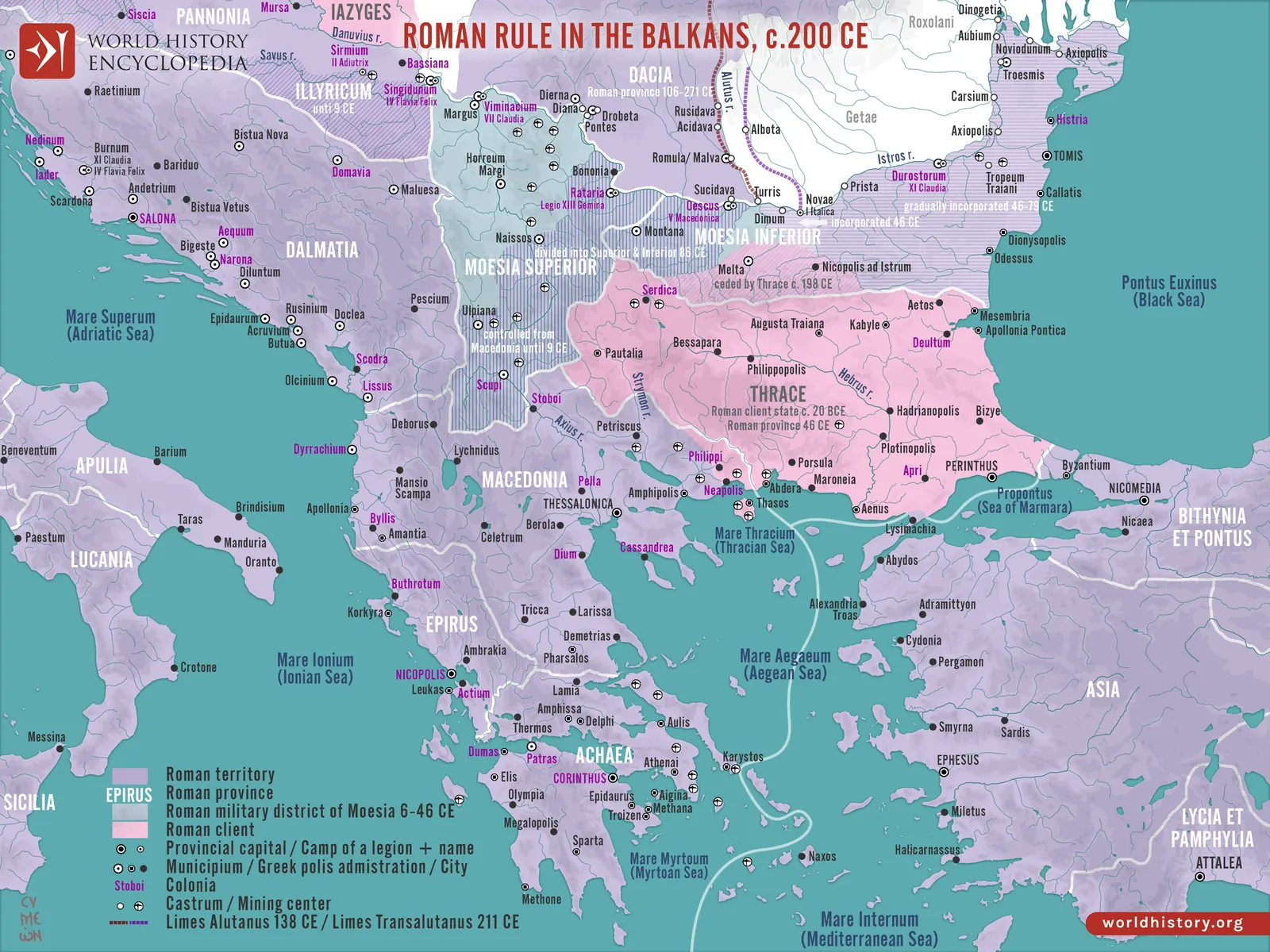
The Third’s history illustrates the reinforcement and militarization of the upper Danubian provinces during the northern wars. Provincial building and a durable fortress establishment followed its emergency recruitment.
Endpoint: late Roman administrative survival in Raetia; a single destruction date is not established here. Related identities: III Diocletiana, an Egyptian foundation of a later era.
Selected chronology
- c.165–166: foundation under Marcus Aurelius.
- 170s: northern-war service and Raetian establishment.
- 179: major fortress establishment at Castra Regina.
- Later empire: continued Raetian garrison and detached service.
- Late Roman period: distributed commands preserving the Third Italian name.
Building a Raetian legion
The Third Italian legion was part of Marcus Aurelius’ response to a strategic crisis extending across the northern provinces. Newly recruited troops had to become an institution through training, the organization of command, the issue of equipment, and the practical experience of service. A foundation date therefore marks a process as well as a ceremonial event.
Raetia occupied the approaches between the upper Danube and the Alpine routes into Italy. Defense required more than guarding a river bank. The army had to maintain roads, communicate with neighboring provinces, and be able to concentrate against forces moving through different corridors.
Castra Regina
The legionary fortress at Castra Regina, modern Regensburg, became the regiment’s enduring center. Its building inscription dates the major establishment to 179. The surviving Porta Praetoria gives a material point of entry into the legion’s world: the fortress was a defended, administered, and supplied installation with gates controlling movement, not simply a symbolic rectangle on a frontier map.
The soldiers’ demands for grain, animals, timber, metalwork, clothing, and repairs connected the garrison with civilian producers. The construction of monumental defenses did not remove the need for field operations; a fortress supported the army’s capacity to leave it as well as its capacity to resist attack.
Concors and the divided late legion
The title Concors expressed harmony within the imperial order in which Marcus Aurelius and Lucius Verus shared power. It should not be interpreted as proof that the regiment never experienced internal conflict. Later administrative subdivisions distributed the institution across several duties and places. The Third’s corporate name survived while the command system around it changed. Its legacy joins the emergency creation of a new legion with the long military and urban development of Regensburg.