Legions · The legions, by number
15 Legio III Gallica
The Third Gallic Legion
Identity. Usually dated to Caesar’s recruitment around 49–48 BCE. Its later life was strongly eastern, despite its Gallic name.
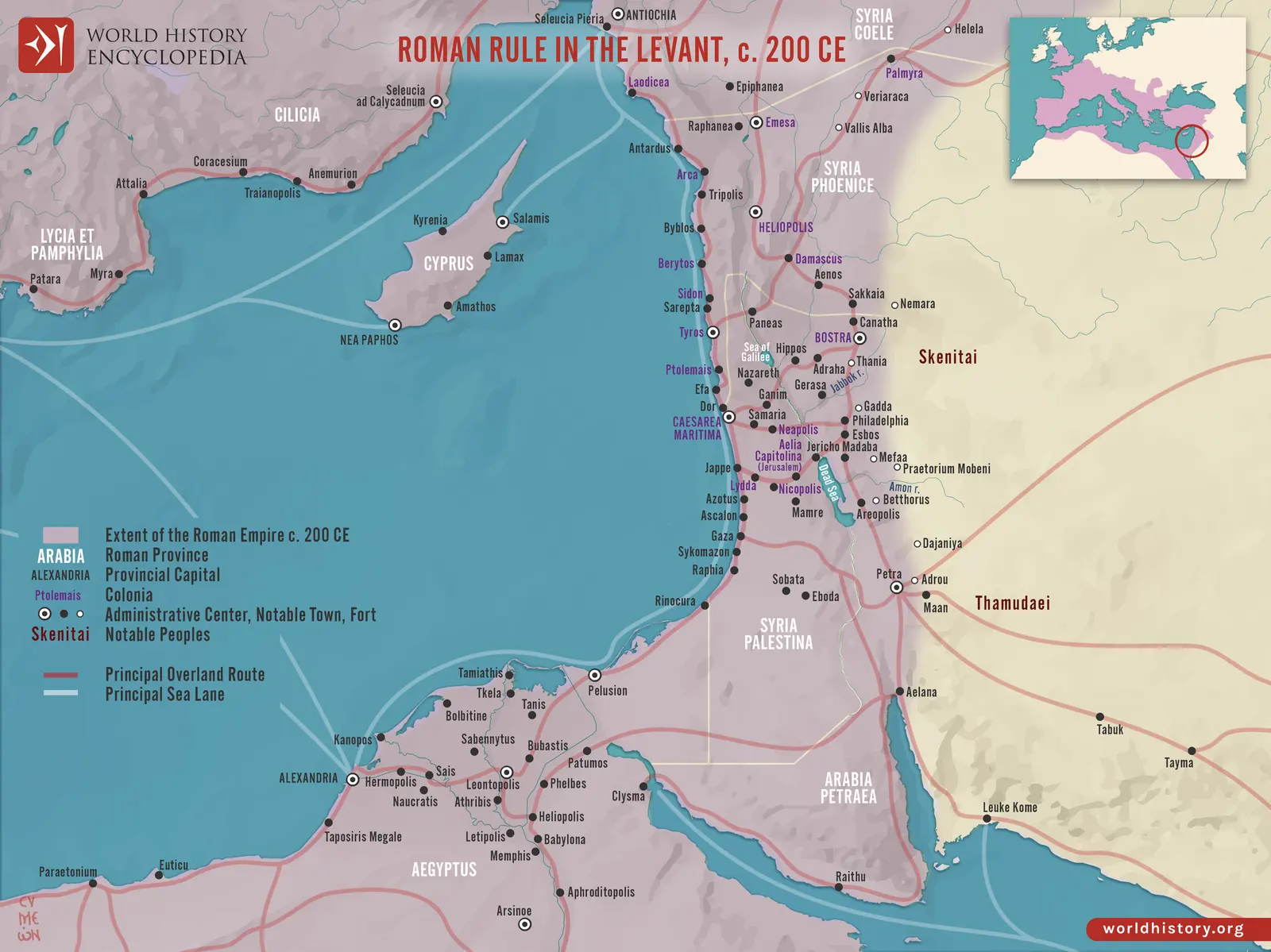
Historical outline. After service in the Caesarian and Antonian military worlds, the Third became a Syrian legion. Its temporary Danubian posting helped place it at the center of Vespasian’s victory in 69. It later returned to Syria. Raphanaea is a well-established second-century association; Antioch should be treated as a regional command connection unless a specific episode establishes residence there.
Selected chronology
- Late Republic–early empire: civil-war origins followed by eastern establishment.
- Neronian period: service under Corbulo in the Armenian conflict.
- 68–69: Danubian service and participation in the Flavian civil-war victory.
- Second–early third centuries: Syrian garrison history, including Raphanaea.
- 218–222 and after: support for Elagabalus, subsequent suppression, and restoration under Severus Alexander.
- Late horizon: late military records place the Third Gallic legion at Danaba.
From a Gallic origin to an eastern social world
The Third’s name preserved an early recruitment association after its military life had become strongly eastern. Service under Antony, incorporation into Augustus’ army, and later Syrian residence placed successive generations in changing political and provincial environments. A legion’s inherited name was not a census of the birthplaces or language of its soldiers.
Corbulo’s Armenian campaigns required the eastern legions to operate through difficult terrain, protect their communications, and coordinate with local rulers and allied forces. Commanders reorganized and trained their armies before the major advances. This was campaigning through mountain routes and contested political territory rather than a simple collision of two unchanging national armies.
The sunrise at Cremona
The legion’s transfer to Moesia brought it into the Danubian army that supported Vespasian in 69. During the night battle near Cremona, its soldiers’ greeting to the rising sun became part of the psychology of the engagement. The opposing side could interpret shouting as the arrival of reinforcements. Battle was shaped by visibility, rumor, exhaustion, and confidence as well as weapons and numbers.
The episode does not establish that all legionaries practiced one cult. It does reveal how a custom associated with the regiment’s eastern experience could become a remembered feature of its public identity. The subsequent return to Syria restored its place in the provincial army while preserving the prestige of Flavian victory.
Making and unmaking emperors
The Third’s support for Elagabalus in 218 demonstrates how a provincial garrison could become a center of dynastic rebellion. Its commander and soldiers were political actors with expectations of reward and influence. Later conflict with the same regime and the legion’s suppression show how unstable those bargains could be. Restoration under Severus Alexander re-established a corporate identity that had already crossed major political ruptures. Raphanaea and later Danaba belong to this evolving Syrian geography; Antioch’s importance as a regional capital must not displace the regiment’s more specific stations.