Provinces · Anatolia and the Aegean
RP-35 Lycia et Pamphylia
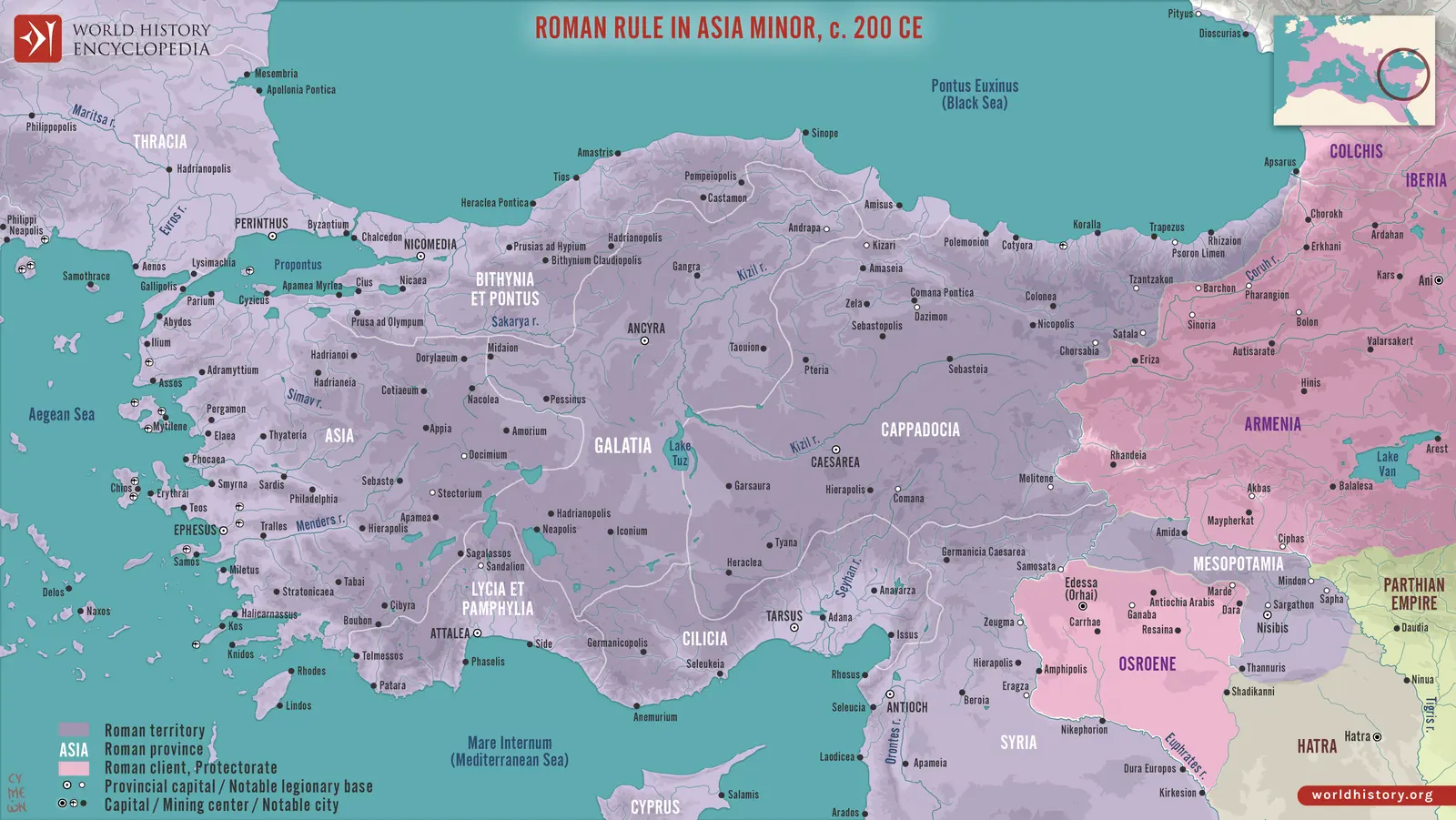
Lycia’s cities and league
Lycia possessed a distinctive civic and regional organization before direct annexation. Its cities, sanctuaries, tombs, and mountain-coastal setting reflected local traditions as well as Hellenistic influence. The Lycian League provided a framework for shared political action, representation, and public identity. Roman rule adapted this regional structure rather than erasing it completely.
Patara combined a useful harbour with religious and political importance. Xanthos preserved deep historical prestige, while Myra, Limyra, and other cities organized their own territories. Difficult terrain could separate neighbouring coastal settlements, making shipping essential to communication. Roads through valleys and uplands linked the coast to the interior under conditions shaped by elevation and season.
Pamphylia’s different landscape
Pamphylia centred on a productive coastal plain backed by the Taurus. Perge, Side, Aspendos, and Attalia each held important urban positions. Ports, river access, farming, and routes towards the interior supported a denser lowland setting than much of mountainous Lycia. Its civic histories and administrative associations consequently differed from those of the Lycian league cities.
The combined province joined these different landscapes under shared Roman authority. Government had to deal with coastal exchange, civic competition, mountain access, and regional institutions. The varying early arrangements explain why the province’s combination should not be reduced to one oversimplified foundation formula.
Public life and regional wealth
Wealthy benefactors supported baths, theatres, aqueducts, festivals, and repairs. Public generosity could respond to disasters as well as enhance prestige. Earthquakes damaged cities and created opportunities for imperial or private intervention; rebuilding showed both resilience and dependence on available wealth and patronage.
Agriculture, olive cultivation, wine, livestock, timber, and maritime trade contributed to the economy in different proportions. Harbours connected the province with Cyprus, the Aegean, Egypt, and the Levant. Local products entered wider markets through merchants and shippers, while rural communities sustained the towns through food and labour.
Religion and Christian transformation
Apollo’s sanctuary at Patara, civic temples, local divine traditions, imperial cult, and household observance formed a varied religious world. Christianity expanded within it and eventually reshaped city institutions and sacred landscapes. Myra’s association with Nicholas became especially important in later Christian memory, but the development of that cult belongs to a longer process than one bishop’s lifetime alone.
Pamphylian and Lycian bishops participated in the wider eastern church. Religious authority could reinforce the standing of a city or create new tensions among neighbouring centres. The Christian province remained connected to its older urban geography even as temples, public buildings, and patterns of patronage changed.
Separate late provinces
Lycia and Pamphylia eventually appeared as distinct jurisdictions within Asiana. Their separation acknowledged practical administrative differences without ending exchange across their boundaries. Later imperial reforms could alter ranks, combinations, and military responsibilities again.
The seventh-century transformation of eastern Mediterranean warfare affected coastal security and trade, but these regions did not share exactly the same political fate as the conquered Levant. Their towns and routes continued within a changing eastern empire. The combined province’s history is therefore an episode within two longer regional histories, each deserving its own identity.
Settlement geography
| Ancient place | Modern location |
|---|---|
| Patara | Near Gelemiş, Turkey |
| Xanthos | Near Kınık, Turkey |
| Myra | Demre, Turkey |
| Phaselis | Near Kemer, Turkey |
| Attalia | Antalya, Turkey |
| Perge | Near Aksu, Turkey |
| Side | Side, Turkey |
| Aspendos | Near Serik, Turkey |
| Termessos | Near Antalya, Turkey |