Provinces · Anatolia and the Aegean
RP-34 Cilicia
Sea, plain, and Taurus
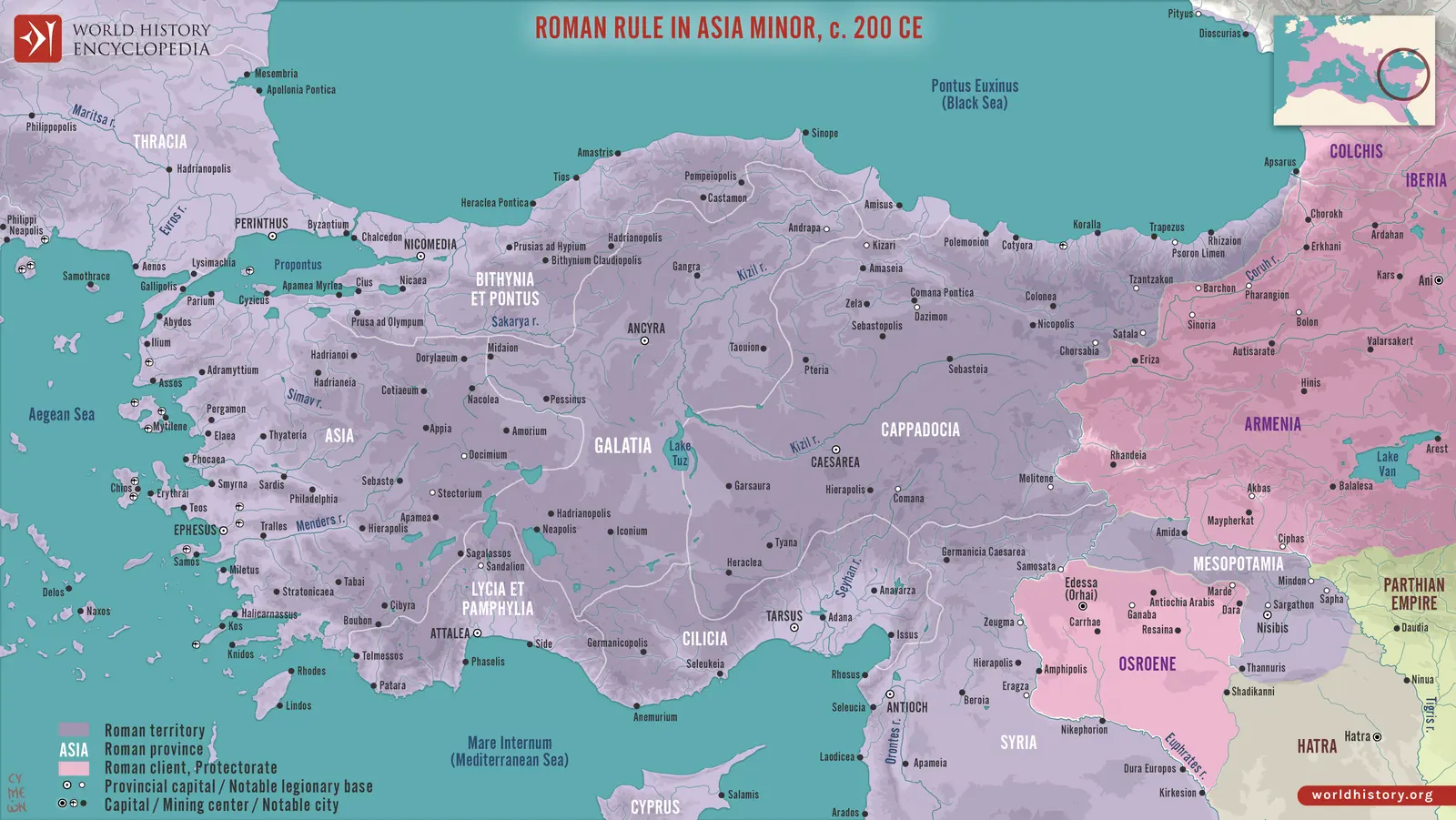
Cilicia contained a sharp contrast between the fertile eastern plain and the rougher western coast and mountain districts. The Taurus passes connected Anatolia to Syria, while ports linked the coast to Cyprus and the wider Mediterranean. These geographical differences shaped settlement, movement, military operations, and the uneven reach of governments.
The region’s cities had Hellenistic and earlier histories. Tarsus combined a productive hinterland with educational and civic prestige. Anazarbus acquired growing prominence, while Seleucia on the Calycadnus served a different western and riverine environment. The Roman province inherited these varied centres rather than organizing an empty coastline around one new capital.
Piracy and the changing Roman command
The anti-piracy commands of the late Republic developed within a Mediterranean crisis involving warfare, enslavement, commerce, and the weakness of competing states. Coastal communities could be involved in maritime raiding without every inhabitant being a pirate. Roman campaigns targeted bases and networks, while political settlements and resettlement formed part of the attempt to stabilize the region.
The earliest Cilician command did not correspond neatly to the later province’s borders. Republican governors could hold responsibilities extending across other Anatolian districts. Pompey’s settlement and later dynastic arrangements further altered authority. Flavian annexation of remaining client territories produced a more coherent imperial provincial organization.
Routes and productive landscapes
The Cilician Gates offered a major passage through the Taurus, making roads and supply points strategically important. Armies moving between Anatolia and Syria depended on access through these corridors. Coastal shipping supplied an alternative or complementary means of movement, particularly where the western terrain made overland travel difficult.
The plain supported cereals and other crops, while woodland, livestock, coastal production, and local manufacture contributed elsewhere. Cities linked agriculture and trade to imperial taxation and military demand. The region’s economy therefore combined productive lowlands with mountain and maritime connections rather than fitting one simple model.
Civic culture and religion
Greek civic and intellectual life remained strong under Roman sovereignty. Tarsus’s reputation for education coexisted with imperial administration and local religious institutions. Paul’s association with the city is one part of its history, not a complete account of its religious life. Traditional cults, imperial observance, Jewish communities, and Christianity existed within a changing urban society.
Christian institutions grew in both cities and rural districts, while pilgrimage and saints’ cults added new routes of movement. Ecclesiastical competition could follow or complicate the prestige of older civic centres. Religious transformation therefore interacted with provincial subdivision and urban rivalry.
Cilicia Prima, Secunda, and Isauria
Late division separated Tarsus-centred Cilicia Prima from the eastern jurisdiction associated with Anazarbus. Isauria acquired a distinct administrative and military character in the mountain-coastal zone. Official portrayals of Isaurian disorder reflect real security problems but also a tendency to characterize difficult regional populations through the language of banditry.
The rise of Isaurian military leaders, culminating in Zeno’s emperorship, shows that the region was deeply involved in imperial politics rather than wholly outside Roman society. Seventh-century wars eventually transformed the Cilician lowlands into a contested frontier zone. This later military landscape differed fundamentally from the densely connected province of the high empire.
Settlement geography
| Ancient place | Modern location |
|---|---|
| Tarsus | Tarsus, Turkey |
| Anazarbus | Near Kozan, Turkey |
| Seleucia ad Calycadnum | Silifke, Turkey |
| Pompeiopolis | Near Mezitli, Turkey |
| Corycus | Kızkalesi, Turkey |