RP-05 Hispania Baetica
A river province open to the sea
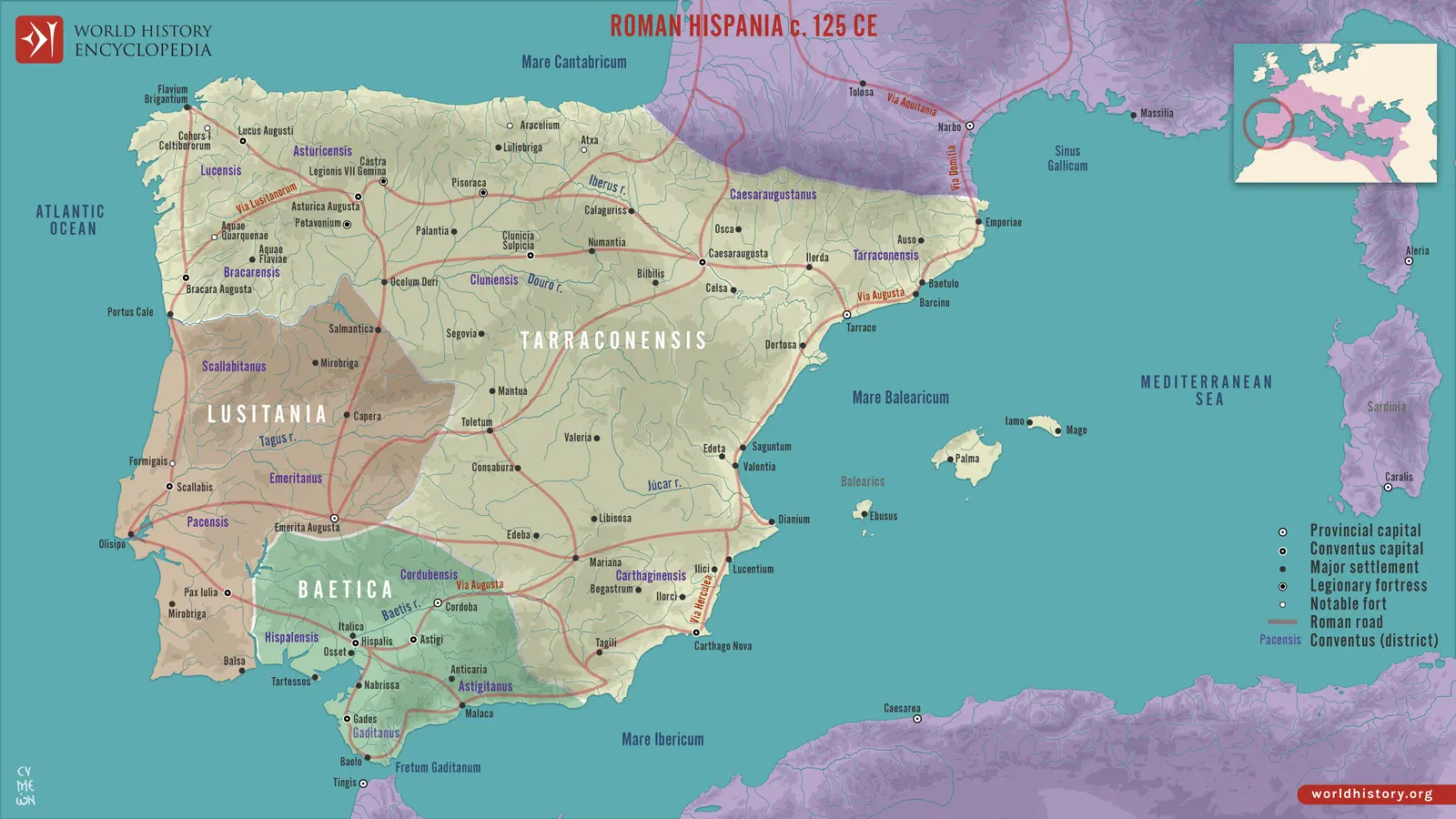
Baetica’s core was the Guadalquivir basin, where river transport connected inland production with estuarine and maritime exchange. The fertile valley, surrounding uplands, and southern coastline supported a combination of cereals, olives, vines, livestock, fishing, and mineral extraction. Its settlements possessed Phoenician, Punic, indigenous, and Roman histories, making it one of the western provinces with the deepest pre-imperial urban inheritance.
Corduba combined gubernatorial prestige with an important inland position. Hispalis linked the valley to commercial shipping. Astigi stood within the productive agricultural landscape, while Gades retained a maritime identity rooted in its Phoenician foundation. Italica, established in the aftermath of the Second Punic War, became associated with veteran settlement and later imperial patronage. These cities were complementary nodes rather than copies of one provincial capital.
Government and municipal advancement
As a public province, Baetica normally lacked the large permanent legionary garrison found farther north. Its proconsul exercised judicial and administrative authority through a provincial landscape in which city governments carried much everyday responsibility. Local councils, magistracies, wealthy patrons, and imperial officials linked civic ambition with the demands of the wider state.
The extension of Latin rights in the Flavian period encouraged municipal reorganization in many Spanish communities. Holding local office could open routes to citizenship for eligible magistrates and families. The resulting charters, elections, council obligations, and legal procedures made Roman municipal identity a practical political structure, not merely the adoption of Latin names. Access nevertheless remained unequal, and the costs of civic prominence could be substantial.
Oil, amphorae, and urban wealth
Baetican olive oil reached consumers and institutions far beyond the province. Production depended on orchards, presses, storage, pottery manufacture, transport, accounting, and shipping. The round-bodied amphorae associated with this trade carried marks and inscriptions connecting estates, workshops, merchants, and official control. Their distribution demonstrates economic integration without requiring the assumption that every farm exported directly to Rome.
Fish-salting establishments and sauces formed another coastal specialization, alongside wine and regional agricultural exchange. Wealth could support theatres, baths, temples, and public benefactions, but monumental town centres coexisted with labouring households, enslaved workers, tenants, and modest rural communities. Prosperity was distributed unevenly within both town and countryside.
Cultural and religious life
Latin public life flourished, yet older local and Mediterranean religious traditions continued. The region produced or nurtured families connected with literature and imperial politics, including the Senecan family and the ancestry of Trajan. Claims about a simple provincial “national character” are less useful than the visible networks connecting local elites to Roman office and patronage.
Christian communities were established by late antiquity, with bishops participating in regional religious and political disputes. The council associated with Elvira in the early fourth century reveals a Christian society negotiating household conduct, status, public office, and contact with traditional cults. It does not imply that the entire population had already become Christian.
From western province to contested southern kingdom
Fifth-century invasions and civil wars disrupted imperial authority. Vandal and Visigothic power developed through warfare and agreements rather than a clean transfer of an intact province. Later Eastern Roman intervention recovered selected southern coastal districts, creating a frontier with the Visigothic kingdom. Baetica’s towns and agricultural zones then belonged to competing political systems, while older Roman urban identities, law, and ecclesiastical structures continued to influence local life.
Settlement geography
| Ancient place | Modern location |
|---|---|
| Corduba | Córdoba |
| Hispalis | Seville |
| Italica | Santiponce, near Seville |
| Gades | Cádiz |
| Malaca | Málaga |
| Astigi | Écija |
| Urso | Osuna |
| Baelo Claudia | Bolonia, near Tarifa |
| Carteia | San Roque |