Provinces · Gaul and the Rhine
RP-09 Gallia Aquitania
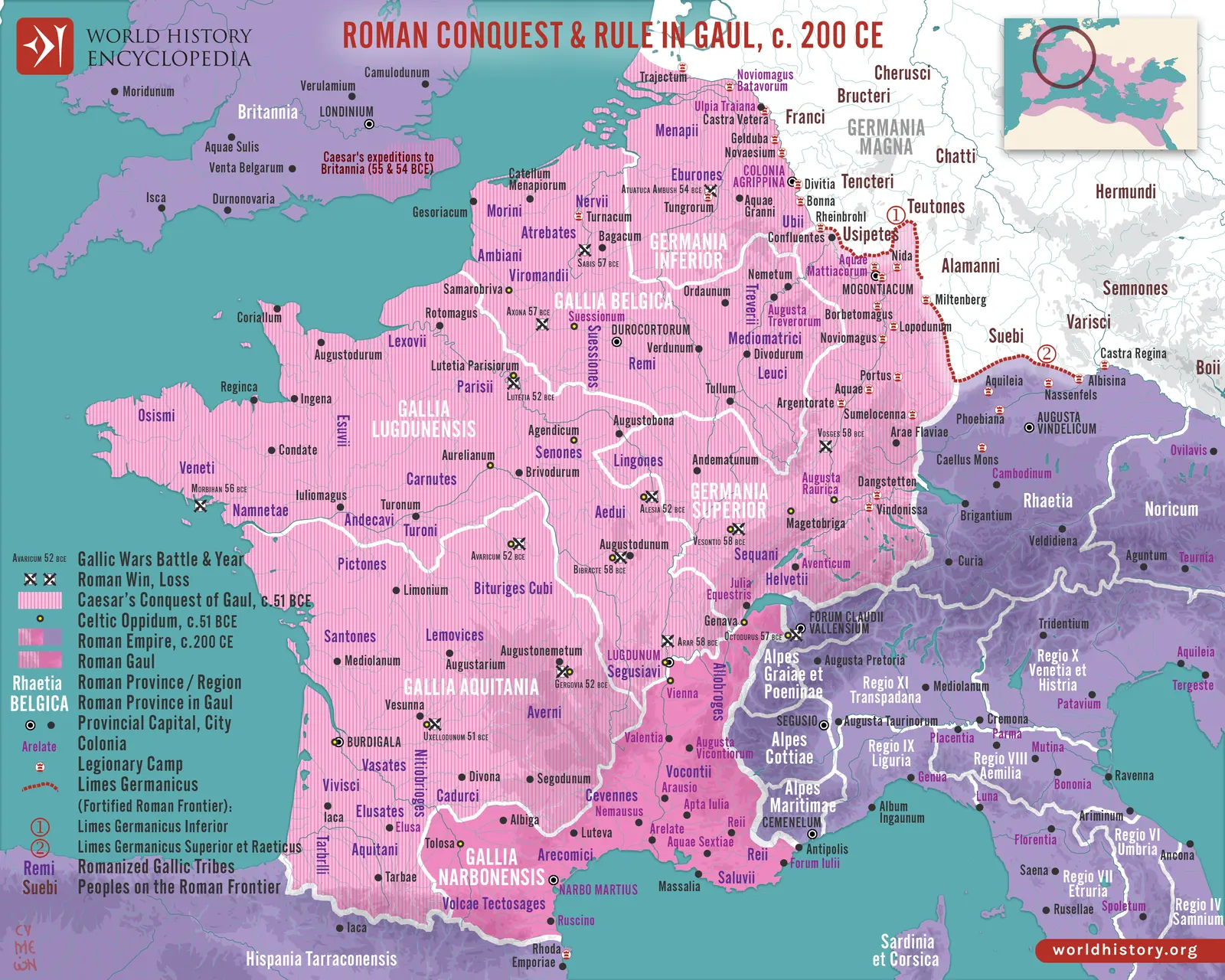
A province larger than its original name
The imperial Aquitania crossed the boundary between the narrower Aquitanian zone south of the Garonne and Celtic-speaking communities farther north. Its enlargement made the province a Roman administrative construction that joined different peoples and landscapes. Atlantic coastlands, the Garonne basin, interior plateaus, and routes towards the Loire supported varied settlement and economic patterns.
The distinction remained politically meaningful. The later emergence of Novempopulana in the southwest reflected a regional identity that had not been dissolved by inclusion in the larger province. Administrative reorganization could therefore recognize older distinctions even while serving new fiscal and governmental purposes.
Conquest and urban consolidation
Caesar’s campaigns brought the region into the Roman political sphere through defeats, agreements, and submissions. Publius Crassus’s operations in Aquitania were part of the wider conquest, but the subsequent establishment of stable government required civic organization and negotiation beyond the battlefield. Roman officials relied on local communities and elites to translate conquest into revenue and order.
Mediolanum Santonum occupied an important early position, while Burdigala grew as a major centre of the Garonne and Atlantic networks. Vesunna, Augustoritum, and other towns developed as civic capitals. Roads and public buildings gave administrative form to regional centres without making their urban histories identical.
Rivers, land, and commerce
The Garonne connected inland districts to the Atlantic. Goods could move between Mediterranean-facing routes and western shipping through a combination of rivers and roads. Wine became particularly important around Bordeaux over time, while farming, livestock, woodland products, pottery, and local manufacture sustained other districts. Salt and coastal activities added to the economic range.
Rural society included estates, villages, isolated farms, tenants, freeholders, and enslaved labour. Wealthy households could invest in villas and urban benefactions, but such sites represent selected social positions. Provincial integration created opportunities for some families while maintaining unequal obligations and access to land.
Cultural life and regional identities
Latin civic institutions developed alongside local traditions and languages. The province’s inclusion in the common religious-political framework of the Three Gauls linked it to Lyon without eliminating its own cities’ importance. Local cults and sanctuaries continued within a broader imperial religious environment. Christianity gradually added episcopal networks, disputes over doctrine, and new forms of patronage.
Late antique Bordeaux’s educational and literary culture illustrates the prominence that a western provincial city could achieve. Teachers, landowners, officials, and bishops belonged to overlapping networks. Their lives linked regional estates to imperial service and to elite culture across Gaul.
Three late provincial landscapes
Aquitania Prima centred on inland districts and Bourges; Aquitania Secunda on the Atlantic southwest and Bordeaux; Novempopulana on the old southwestern Aquitanian zone. The new jurisdictions were neither three identical fragments nor straightforward revivals of pre-Roman states. They gave separate administrative form to regions connected by the older province.
Visigothic settlement and royal expansion made southwestern Gaul a major centre of successor power. Frankish victory at Vouillé in 507 changed the balance again, but local institutions and landed networks survived across the transition. Aquitania’s long history is best understood through the persistence and recombination of its cities, river routes, regional identities, and political obligations.
Settlement geography
| Ancient place | Modern location |
|---|---|
| Burdigala | Bordeaux |
| Mediolanum Santonum | Saintes |
| Lemonum | Poitiers |
| Augustoritum | Limoges |
| Avaricum | Bourges |
| Augustonemetum | Clermont-Ferrand |
| Lugdunum Convenarum | Saint-Bertrand-de-Comminges |
| Vesunna | Périgueux |