Legions · The legions, by number
44 Legio XXII Deiotariana
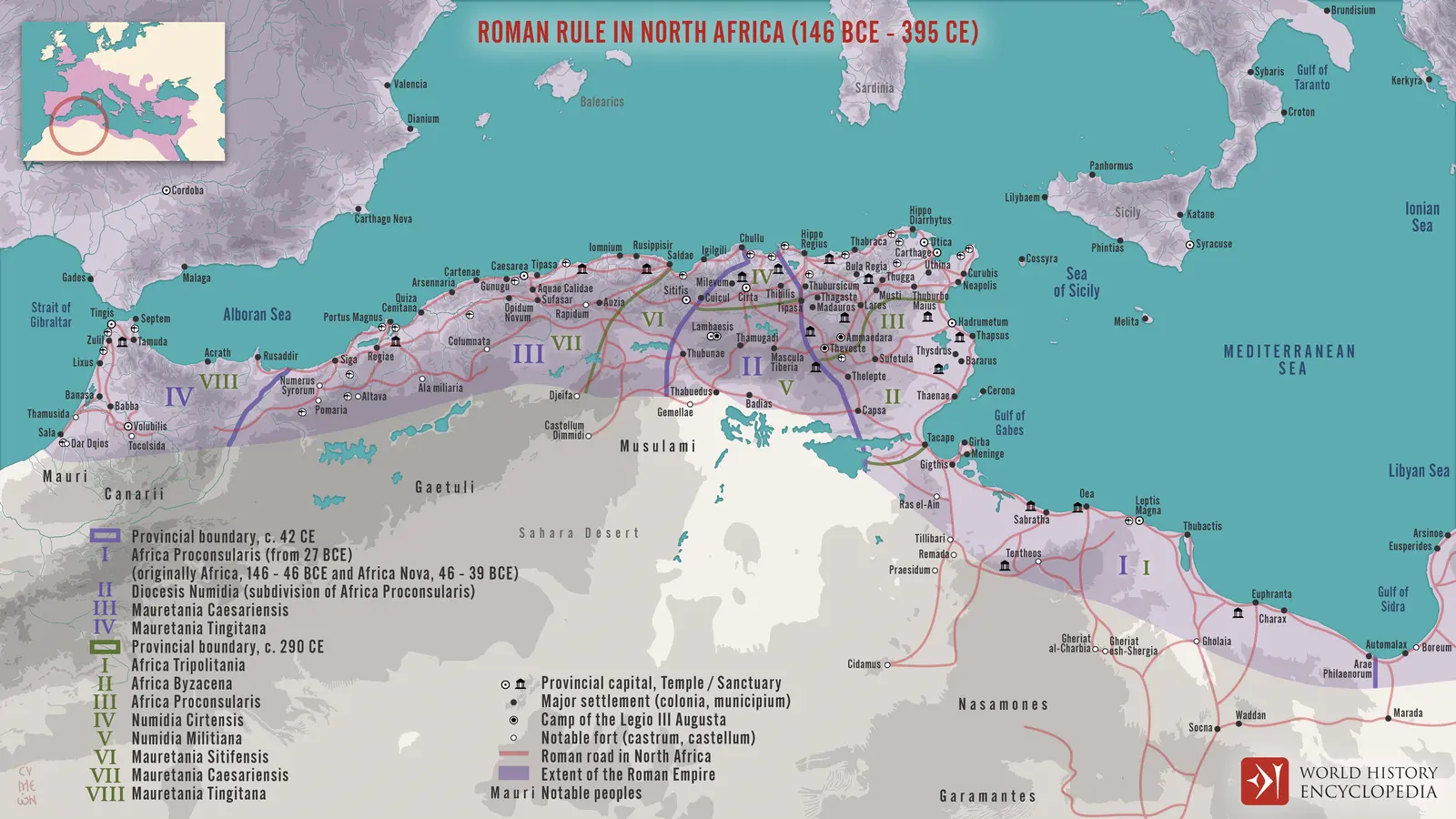
The Twenty-second became part of the Egyptian garrison alongside III Cyrenaica. Its history illustrates the incorporation of an allied kingdom’s manpower into the imperial military system. It survives into the early second-century record and then disappears. A destruction during the Bar Kokhba revolt is a hypothesis; it should not be presented as a documented battle and date.
Endpoint: uncertain within the second-century evidentiary gap. Related identities: XXII Primigenia of the Rhine, a separate Caligulan foundation.
Selected chronology
- Before Roman incorporation: royal military antecedents under Deiotarus and his successors.
- 25 BCE onward: incorporation following the annexation of Galatia.
- Early empire: Egyptian establishment with III Cyrenaica.
- Early second century: last secure phase of the surviving record.
- Later second century: no longer part of the secure later legionary roster; final mechanism unknown.
From a king’s army to an imperial legion
The troops associated with Deiotarus were trained and organized in a Roman military environment before the annexation of Galatia. Their transformation into XXII Deiotariana illustrates how an allied ruler’s forces could be incorporated into the imperial army. The royal antecedent supplied personnel and experience, but Roman incorporation changed the unit’s legal and command setting.
The history also complicates a simple ethnic picture. A Galatian royal connection, a Roman legionary institution, and later Egyptian service are different dimensions of identity. None should be treated as a complete statement of the birthplace, language, or religion of every soldier.
The Egyptian establishment
The Twenty-second’s Alexandrian association placed it alongside III Cyrenaica in an economically and politically important province. Equestrian command distinguished the Egyptian military hierarchy from that of many senatorial provinces. Urban security and the management of distant deployments belonged to the same institution; a garrison near Alexandria could supply troops for operations outside Egypt while remaining rooted in its home establishment.
The soldiers’ life was connected with a great port city, river transport, provincial resources, and an ethnically and socially varied civilian population. That environment should not be reduced to a permanent posture of battle against one neighboring enemy.
The uncertain second-century ending
The regiment’s disappearance has often been attached to the Bar Kokhba war. The proposal is plausible within the wider military pressures of Hadrian’s reign, but no secure narrative identifies a final battle in which XXII Deiotariana was destroyed. Its omission from later rosters establishes a different kind of limit from a surviving account of annihilation.
The proper conclusion preserves both facts: the legion existed into the early second-century record and subsequently lost its separate recoverable identity. Its distinctive legacy is the institutional journey from royal allied manpower to an Egyptian legion, followed by an ending whose uncertainty has encouraged stories more precise than the surviving history allows.