Legions · The legions, by number
42 Legio XX Valeria Victrix
The Twentieth Valeria Victrix
Identity. An Augustan institution whose precise foundation and derivation remain disputed. Its titles have received different explanations; this atlas retains the Latin rather than choosing an uncertain etymology. The boar is a well-known associated badge.
Historical outline. The Twentieth served in the Balkan and Rhine armies before joining Claudius’ invasion of Britain. Its later history includes campaigning under Agricola and the eventual Chester establishment. Its long British reputation should not erase earlier continental service or tempt a historian to invent a precise ending where the evidence grows silent.
Selected chronology
- 6–9: service during the great Balkan revolt.
- After 9: transfer into the Rhine military system.
- 43: participation in the invasion of Britain.
- 60/61: a Twentieth detachment joined Paulinus against Boudicca.
- Later first century: service in Agricola’s military world; northern occupation and subsequent establishment at Chester.
- Second–third centuries: British garrison and frontier work; late-third-century identity is preserved, but its terminal date remains uncertain.
The Twentieth before Britain
The Twentieth’s early imperial service included the Balkan revolt of 6–9. Messalinus’ action with a legion reported at half strength illustrates the difference between a regiment’s nominal establishment and the force actually available in a crisis. Victory depended on command and circumstance, not simply on textbook totals.
After the Varian disaster the Twentieth became part of the rebuilt Rhine military system. Germanicus’ campaigns subjected the Roman army to river movement, difficult marches, hostile terrain, and severe weather. These continental experiences preceded the British reputation that later overshadowed much of the legion’s earlier career.
Conquest, revolt, and the northern advance
The invasion of 43 began a long sequence of British stations and operations. The Twentieth’s detached contribution to Paulinus’ victory over Boudicca must be separated from the deployment of the legion as a whole. Under Agricola the army pushed north into new territory, constructing forts and developing communications as it advanced.
At Mons Graupius the legionary troops occupied a different tactical place from the auxiliary infantry that formed the main fighting line. The presence of a legion in a governor’s command does not automatically make it the decisive assault formation in every battle. The later retreat from the most northerly establishments and the legion’s consolidation at Chester reveal strategic adjustment rather than an uninterrupted conquest of the island.
Deva, building, and memory
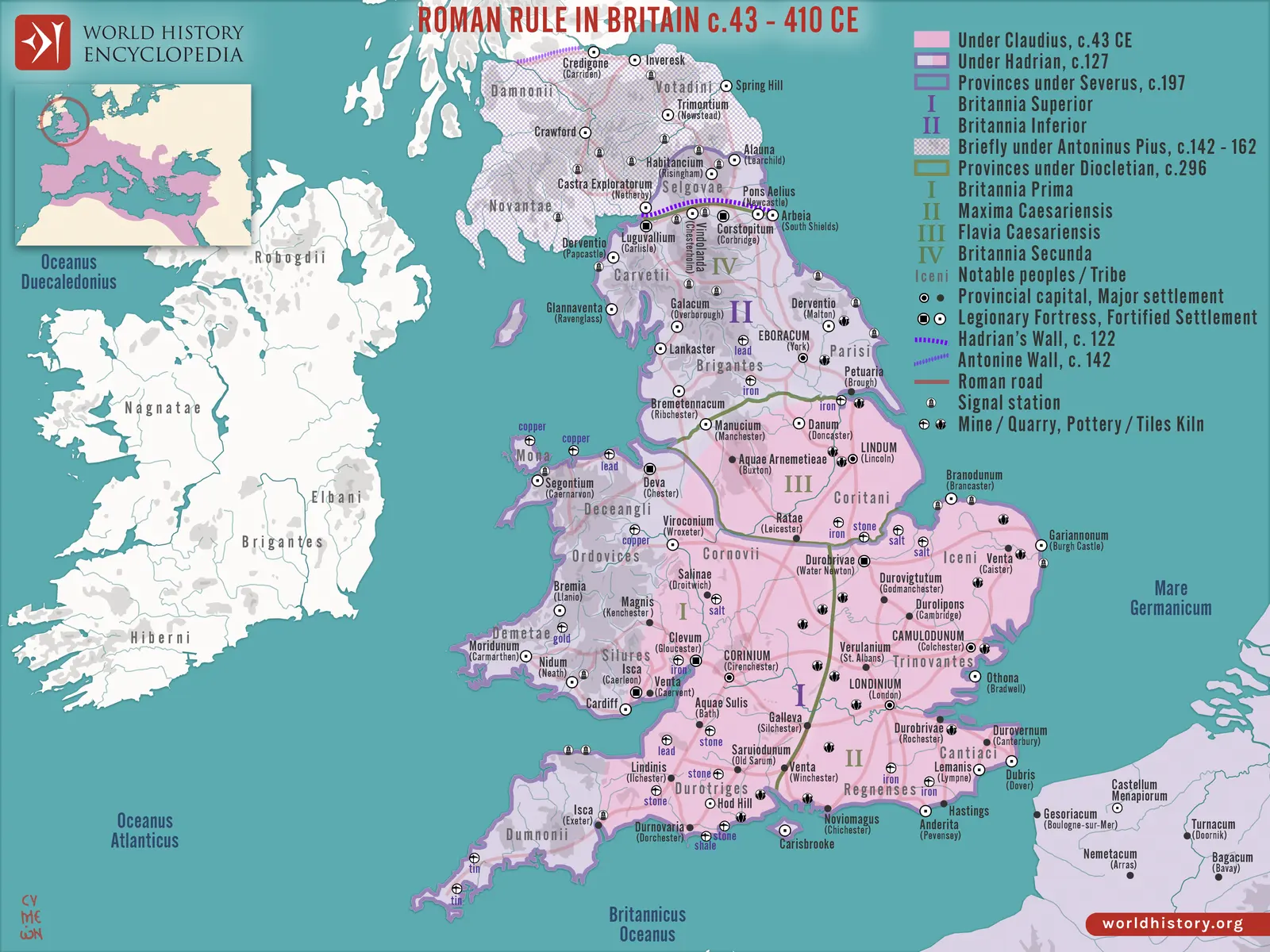
Chester connected the fortress with the Dee and with roads across the western military zone. Manufacturing and supply sites such as the Holt works supported the built establishment. The Twentieth also contributed to northern wall construction; its distance slabs displayed the boar and represented labor as imperial achievement.
Its name continued into the later third century, including the political world of Carausius. The absence of a straightforward later Twentieth entry does not prove a documented destruction in one particular campaign. The legion’s legacy is the combination of an extensive continental beginning, British conquest and occupation, frontier engineering, and a vivid emblem preserved in military material culture.