Legions · The legions, by number
06 Legio I Parthica
The First raised for the Parthian war
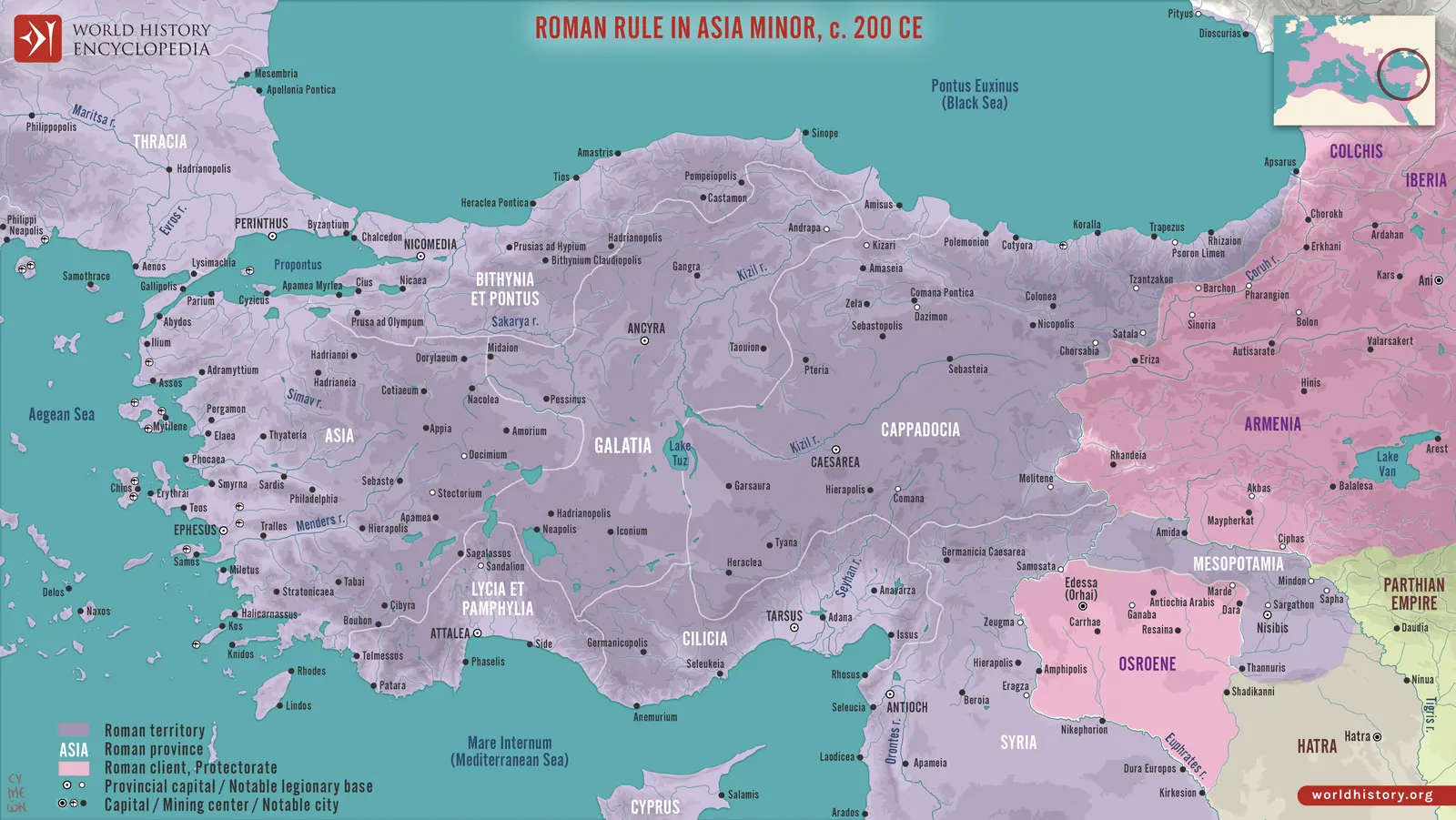
Identity. Raised by Septimius Severus around 197 alongside II and III Parthica. Parthica identifies the founding war, not the ethnicity of the recruits.
Historical outline. The First helped establish Severus’ military settlement in Roman Mesopotamia. Its principal early and middle imperial station was Singara, not a timeless assignment to Nisibis. Its later record joins the history of eastern fortresses lost, evacuated, and reorganized during Rome’s wars with Persia. Its commander belonged to the equestrian administrative structure of the new province.
Selected chronology
- c.197–198: foundation in connection with Severus’ eastern campaign.
- Third century: Mesopotamian garrison service, principally associated with Singara.
- 360: Ammianus names the First and Second legions in Singara when Shapur II captured it; the episode involved deportation of defenders.
- Late administrative horizon: late military records place I Parthica Nisibena at Constantina.
Conquest turned into occupation
Severus’ eastern victories demanded garrisons capable of holding territory after the emperor and the expeditionary army departed. I Parthica belonged to this settlement. Establishing it in Mesopotamia made military occupation more durable but also committed Roman forces to an exposed frontier between major imperial powers. Roads, fortified cities, local water supplies, and the movement of mounted forces shaped this theater as strongly as any continuous boundary line.
Singara lay in the zone of difficult approaches around the Sinjar massif. A legion there had to secure communications and supplies while remaining capable of responding to raids and larger invasions. It formed part of a wider regional defense, not an isolated fortress whose occupants could control every route between the Euphrates and Tigris.
The capture of Singara
In 360 Shapur II attacked Singara. The defenders included the First and Second legions, alongside other forces. Siege engines, artillery, mining, and the struggle around damaged fortifications brought the campaign to a crisis that could not be solved simply by the superiority of infantry in an open-field formation. The city fell and defenders were deported. Captivity is therefore a major part of this legion’s biography; an institutional name appearing later does not imply that the captured men returned unchanged to their barracks.
Command, continuity, and later station
The equestrian command arrangements of Severan Mesopotamia distinguished the province from many senatorial governorships. This was an administrative choice about military power, not proof of an inferior fighting establishment. The later title Nisibena preserves a connection with Nisibis while the late station is Constantina. A regiment could inherit a title from an earlier administrative or geographical relationship after its location changed. No securely established distinctive emblem warrants the invention of an eagle-color scheme or universal shield badge for I Parthica.