Provinces · Gaul and the Rhine
RP-13 Germania Inferior
The lower river and the North Sea
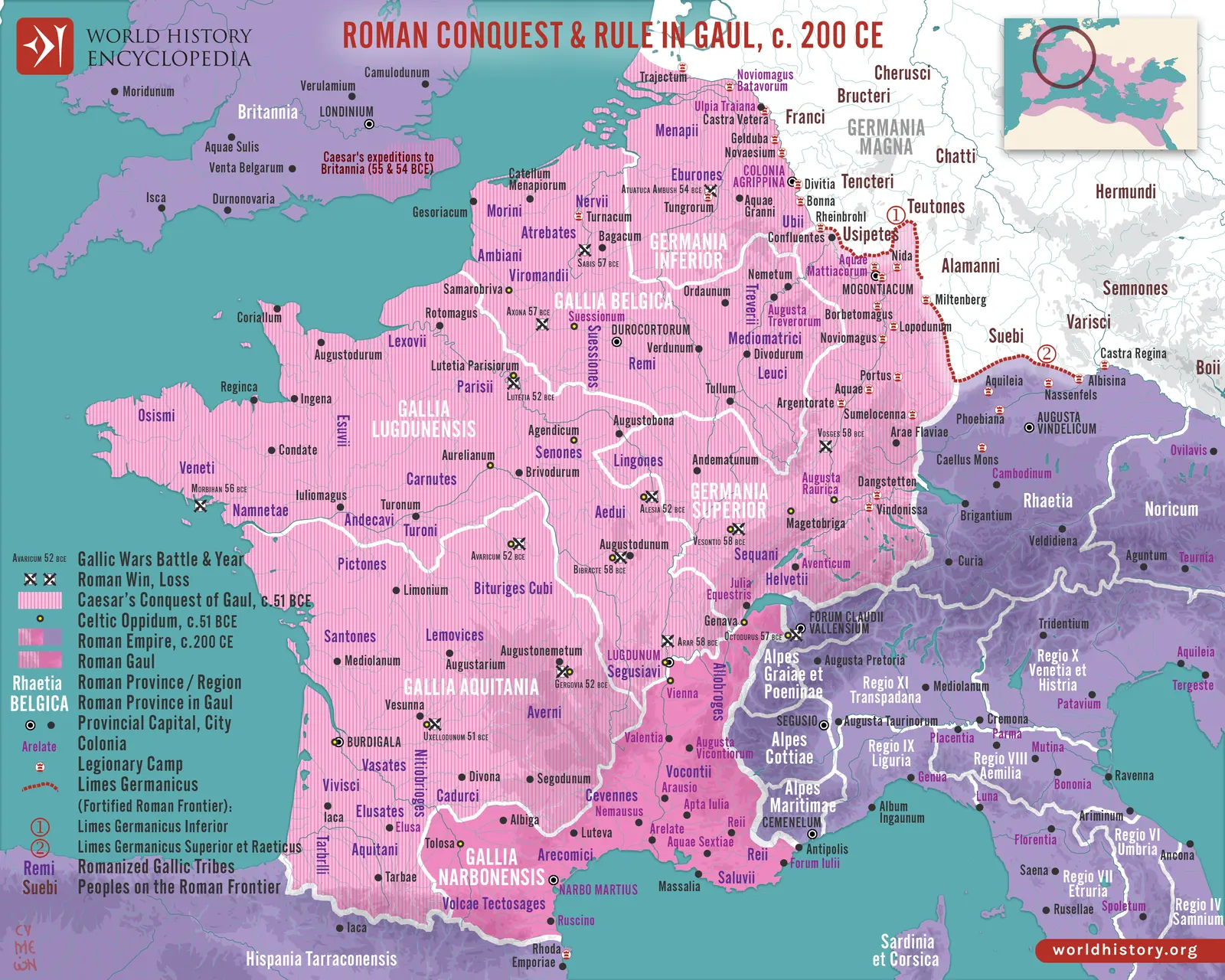
Germania Inferior followed the lower Rhine towards its delta, where waterways, marshes, river islands, and coastal connections mattered as much as roads. Navigable channels supported military movement and commercial transport, but flooding and shifting river courses complicated settlement. The frontier’s economic and strategic environment differed from the wooded uplands and eastern salient of Germania Superior.
Cologne combined a major urban centre with a history of imperial patronage and the settlement of the Ubii. Bonn, Xanten, Nijmegen, and numerous forts provided further points of administration and exchange. The river fleet contributed to transport, patrol, and military support, while settlements at crossings linked the frontier to inland Gaul.
Communities and the Batavian revolt
The Batavian region illustrates a relationship based on privileged recruitment and obligation rather than simple uniform tribute. Military service could bring opportunity, mobility, and influence, but recruitment practices and political distrust could generate acute resentment. The revolt associated with Julius Civilis during the crisis of 69–70 drew together local grievances, army politics, and the uncertainty of imperial succession.
The conflict damaged forts and settlements and exposed the fragility of the lower Rhine military system. Its suppression restored Roman authority but did not eliminate the need to negotiate with regional elites and military communities. Subsequent rebuilding created a new phase of frontier society, later organized within the territorial province under Domitian.
Food, horses, shipping, and markets
The army created demand for grain, meat, hides, horses, fodder, equipment, and transport. Agricultural production and animal husbandry adapted in some districts to these needs. River movement connected camps and civilian settlements with suppliers farther upstream and with Gallic markets. Goods could reach the lower Rhine through complex supply chains rather than being produced beside each fort.
Towns and settlements supported workshops, commercial associations, lodging, religious institutions, and households. Military installations attracted migrants from many parts of the empire. Enslaved and freed people, merchants, craft workers, soldiers’ families, and veterans contributed to a society that was both local and remarkably mobile.
Religious and cultural connections
Public Latin identities coexisted with regional traditions and personal connections across the frontier. Dedications to mother goddesses and other local divine forms are particularly prominent in parts of the Rhineland. Roman gods, imperial observance, and cults introduced through military service added further layers. Religious monuments often reveal the intersection of local belonging and imperial mobility more clearly than broad ethnic labels.
Christian communities became important in cities such as Cologne during late antiquity. Episcopal leadership joined older urban institutions in mediating political change. The relationship between a town’s religious continuity and its military security could vary considerably over time.
Germania Secunda and Frankish power
The late province of Germania Secunda preserved a lower Rhine jurisdiction, but effective control changed under the pressures of civil war, migration, and external attack. Frankish groups could be enemies, recruits, settlers, and allies in different episodes. Their eventual royal power did not arise from a single uniform migration that instantly displaced the entire provincial population.
Cologne’s changing role, the survival and abandonment of particular sites, and the reorganization of river connections reveal a gradual transformation of the Roman frontier world. Some Roman forms endured in law, religion, place names, and political practice even where the army’s earlier establishment disappeared.
Settlement geography
| Ancient place | Modern location |
|---|---|
| Colonia Claudia Ara Agrippinensium | Cologne, Germany |
| Colonia Ulpia Traiana | Xanten, Germany |
| Ulpia Noviomagus | Nijmegen, Netherlands |
| Bonna | Bonn, Germany |
| Novaesium | Neuss, Germany |
| Traiectum | Utrecht, Netherlands |
| Atuatuca Tungrorum | Tongeren, Belgium |