Legions · The legions, by number
46 Legio XXX Ulpia Victrix
The Victorious Thirtieth of Ulpius
Identity. Raised by Trajan around 105. Ulpia derives from his family name, Ulpius. Neptune, Jupiter, and Capricorn appear in its associated imagery.
Historical outline. The Thirtieth was created in the setting of Trajan’s Dacian wars and later became a defining Lower Rhine institution. A Danubian beginning preceded its Xanten establishment. Its cooperation with I Minervia, provincial building work, and service of individual soldiers elsewhere show how a legion’s footprint extended beyond the fortress containing its headquarters.
Selected chronology
- c.105: foundation under Trajan in the Dacian-war context.
- Early career: Danubian service, including Brigetio.
- After c.122: establishment in the Xanten military district after VI Victrix’s departure for Britain.
- Second–third centuries: Lower Rhine service and detached duties; cooperation with I Minervia.
- Later third–fourth centuries: frontier disruption and reorganization.
- Late horizon: a late Roman presence is reported in the modern reconstruction, but its exact institutional end is not securely dated.
The Thirtieth before Xanten
Trajan’s Dacian wars required additional manpower. XXX Ulpia Victrix emerged from that setting and initially belonged to the Danubian military system, including Brigetio. Its later German identity was acquired through relocation, not established by a foundation expressly for the defense of Xanten.
The designation Ulpia tied it to Trajan’s family; Victrix proclaimed a victorious identity. Such names helped a new formation build institutional memory before it possessed the centuries of tradition claimed by older Caesarian lineages. They also made the regiment a visible participant in the emperor’s public presentation of military success.
The Lower Rhine partnership
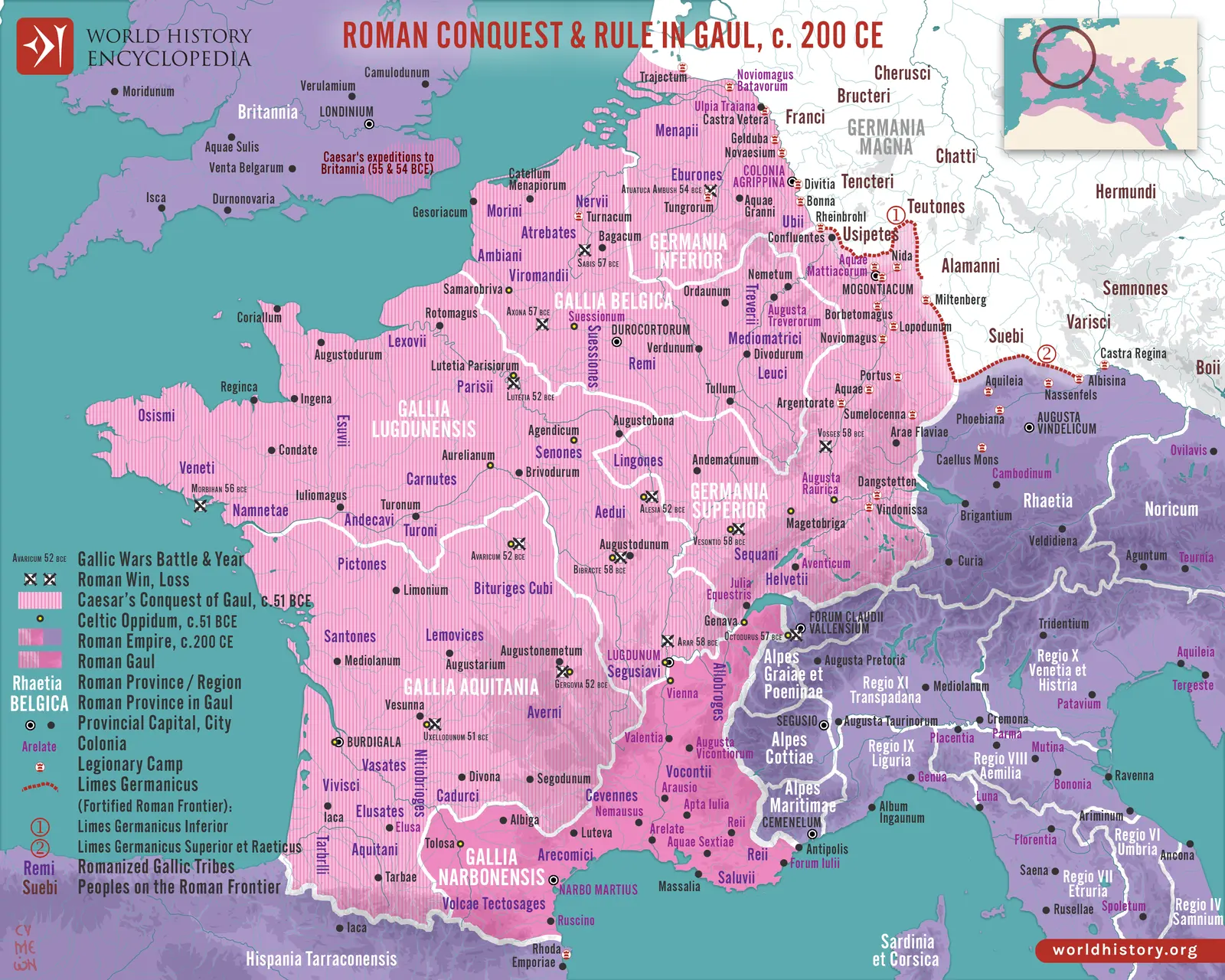
The departure of VI Victrix for Britain created the setting for the Thirtieth’s establishment in the Xanten district. The position connected the legion with the Rhine, the Lippe approaches, neighboring settlements, and a network of smaller military sites. Xanten’s fortress and civilian community must be distinguished even though their histories were closely intertwined.
Cooperation with I Minervia supplied the Lower German command with a durable legionary pair. Soldiers could perform clerical service, operate kilns, maintain infrastructure, and serve in detachments elsewhere in Gaul. These assignments made the legion an administrative and logistical institution as well as an infantry reserve.
Crisis, symbols, and late survival
The third-century Rhine world was marked by raids, civil war, regional imperial regimes, and repeated restoration. A regiment’s political allegiance could follow the authority most immediately able to defend and pay the provincial army. This should not be reduced to a simple modern opposition between national loyalty and treason.
Neptune, Jupiter, and Capricorn belong to the Thirtieth’s emblematic repertoire, with changing emphasis in different periods. A late Xanten identity survived in a military landscape altered by redistribution and new commands. The exact final institutional event is uncertain. Its distinctive story is the transformation of a new Trajanic expansion regiment into a provincial institution whose name became inseparable from the Lower Rhine.