Legions · The legions, by number
29 Legio X Fretensis
The Tenth of the Strait
Identity. Conventionally associated with Octavian’s recruitment around 41–40 BCE and the Sicilian wars. Its maritime title is distinct from X Gemina’s identity. Ship, dolphin, Neptune, and boar imagery are associated with it.
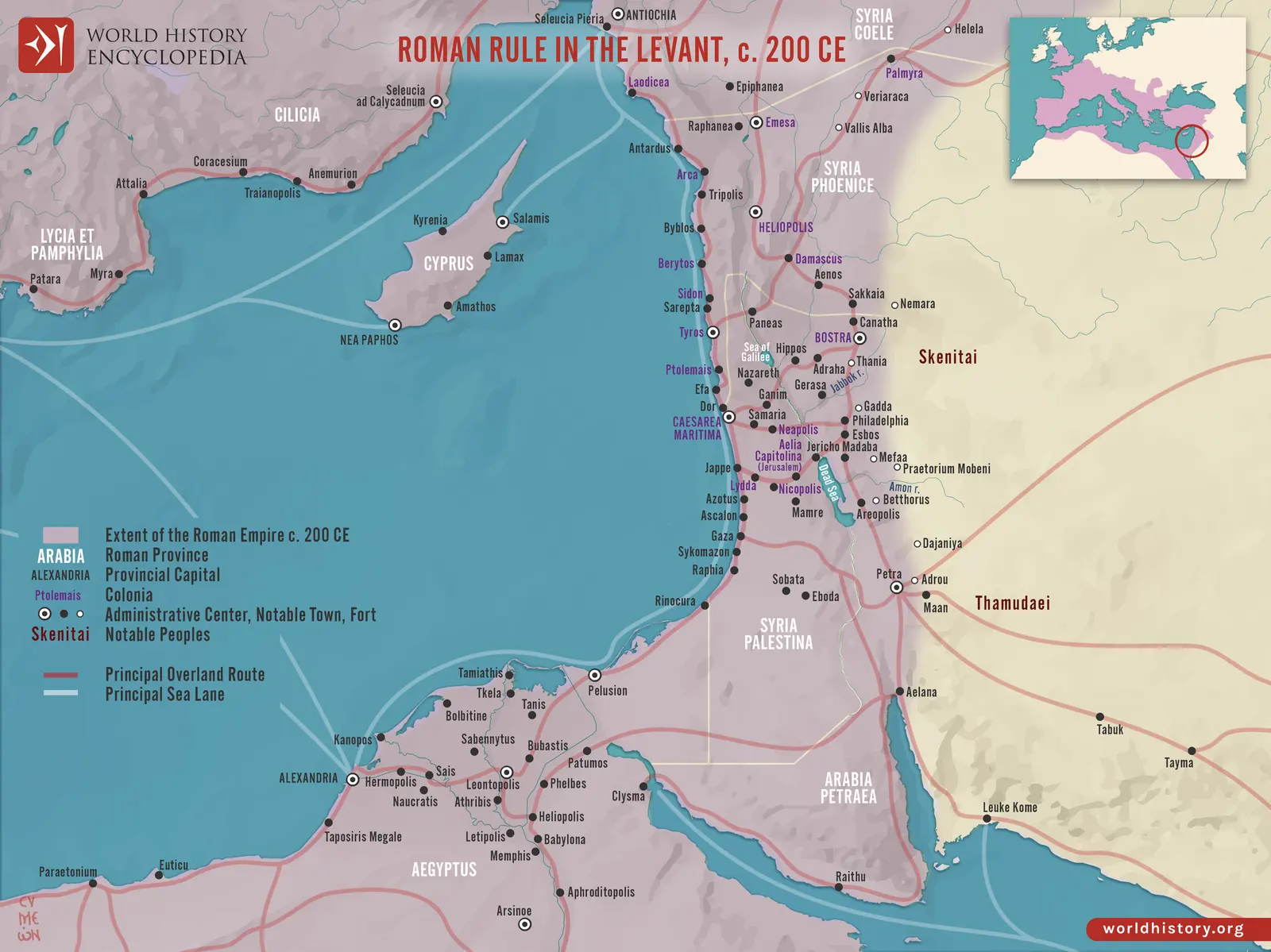
Historical outline. After establishment in the Syrian military system, the Tenth became a major participant in the conquest and occupation of Judaea. Jerusalem and Masada are central to its public memory. Its later station at Aila belongs to a changed eastern frontier. The historical biography must record Roman military achievement together with the destruction and coercion experienced by conquered communities.
Selected chronology
- Early empire: Syrian service, including a Cyrrhus association.
- 67–70: campaigning under Vespasian and Titus; siege of Jerusalem.
- 73/74, conventionally: siege of Masada under Flavius Silva; exact dating is debated.
- Later first–third centuries: Jerusalem-based occupation and other deployments.
- Late horizon: late military records place the legion at Aila.
The army before Jerusalem
The Tenth’s eastern service preceded the Jewish War. Corbulo’s Armenian operations belonged to a military system drawing on Syrian legions, allied rulers, and regional communications. The later war in Judaea required another set of tasks: reducing defended settlements, holding routes, controlling the Jordan valley, and maintaining supplies for forces operating in difficult country.
At Jerusalem in 70 the Tenth occupied a camp on the Mount of Olives. The establishment of that camp did not make it safe from attack. Sorties, unfinished works, terrain, and the need for emergency command intervention show the vulnerability of a powerful army while it was deploying for a siege. Artillery, earthworks, protected approaches, and infantry assaults became elements of a prolonged operation rather than substitutes for it.
Occupation and Masada
After Jerusalem’s capture, Titus left the Tenth in the city’s military establishment. The destruction of the Temple and the devastation of the city were central consequences of Roman victory. A legionary biography must account for these effects on the conquered population rather than reducing the campaign to technical achievement.
At Masada the army under Silva constructed camps and siege works around a difficult elevated position. The operation depended on labor, local resources, transport, and control of the approaches. The famous ramp makes engineering visible, but it was one component of an encompassing system of isolation and coercion. The precise sequence of the defenders’ final deaths remains tied to a particular literary account and should not be treated as an independently recovered transcript.
Symbols and the Red Sea station
Ship and dolphin imagery recalled maritime associations; the boar became especially prominent in the regiment’s material identity. These motifs carried different meanings in different settings and cannot all be reduced to one permanently worn shield badge. The move to Aila connected the legion with the northern Red Sea and southern approaches. Its final recoverable phase is therefore geographically different from its most famous Judaean campaigns.