Provinces · The later western provinces
LW-01 Baetica
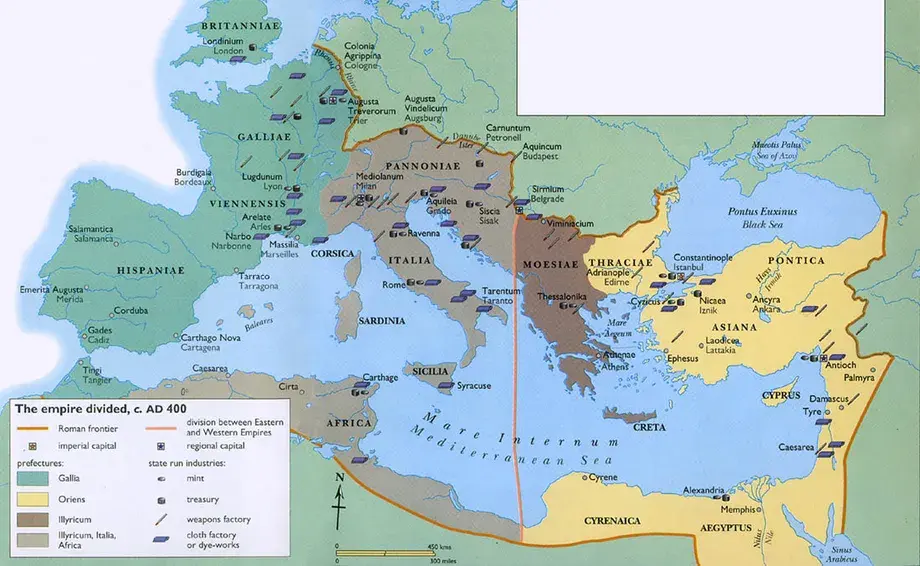
Late Baetica retained its recognizable identity within the Diocese of Hispania. Its Guadalquivir-centred agriculture, cities, estates, and southern ports continued to support a substantial economy. Christian bishops and local landowners joined older civic institutions in organizing provincial society. The smaller scale of other late Hispanic jurisdictions did not require Baetica to be divided in the same fashion.
Fifth-century warfare brought Vandal and Visigothic power, changing sovereignty and property relationships. The province’s later geography also overlapped only partly with the Eastern Roman reconquest in southern Spain. Its Roman institutional legacy continued through law, towns, ecclesiastical organization, and landed society under competing rulers.