Legions · The legions, by number
04 Legio I Macriana Liberatrix
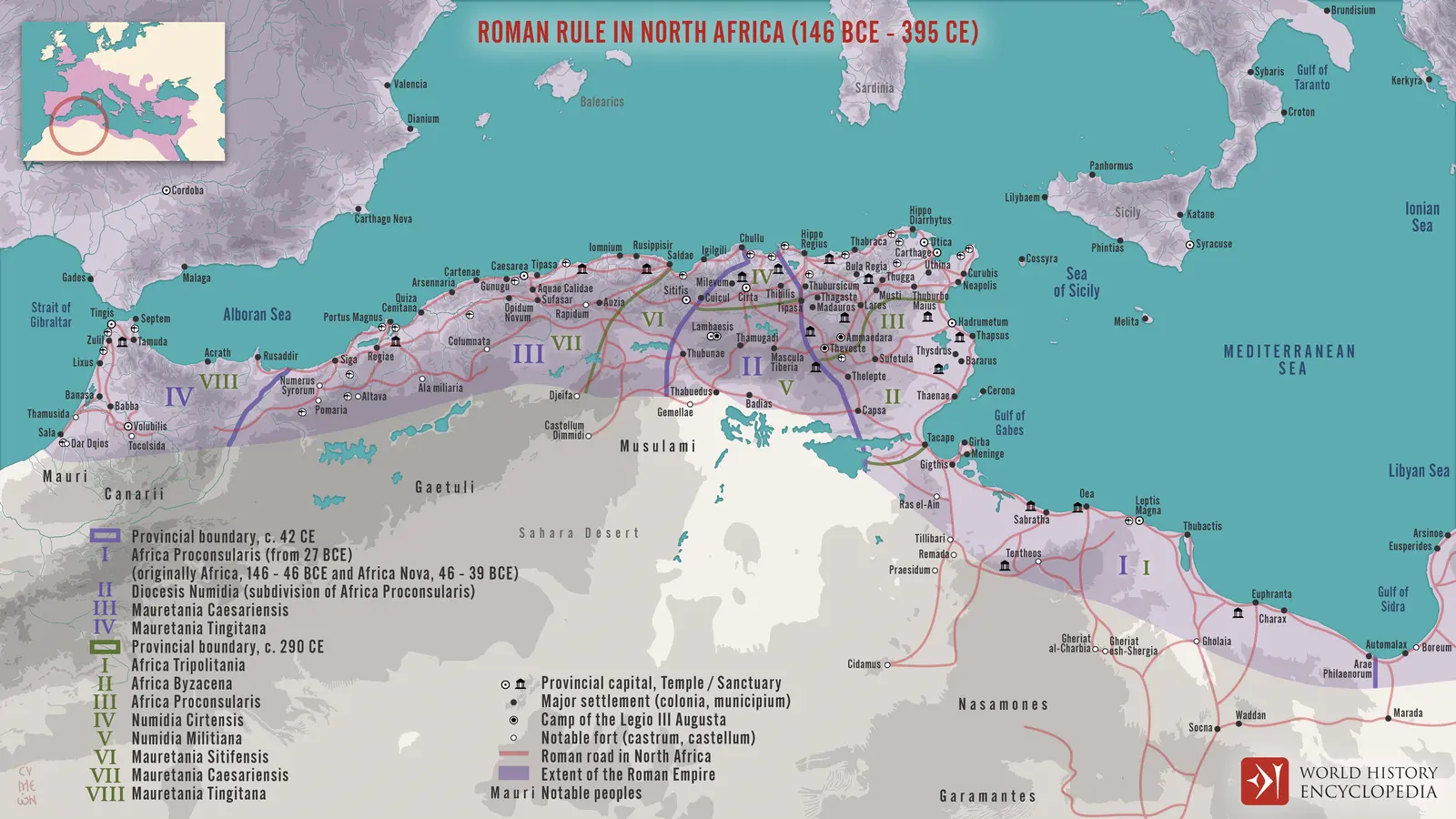
Unlike the centuries-long biographies of the frontier legions, its history is an episode of recruitment and suppression. Galba distrusted Macer, ordered his death, and the new formation was disbanded. A proposed brief revival under Vitellius is uncertain. No extensive campaign itinerary should be supplied for a formation whose independent operational history is barely recoverable.
Endpoint: loss of separate identity around the accession crisis of 68–69; any revival requires explicit qualification.
Selected chronology
- 68: Macer raises a new legion in Africa.
- 68: Macer’s elimination and suppression of his military project under Galba.
- 69: a proposed short Vitellian revival remains uncertain.
The military politics of African grain
Macer’s project mattered because Africa was linked to Rome by revenue and food supply. A provincial commander controlling troops and access to resources could affect politics far beyond his headquarters. Raising another legion increased both practical military capacity and the public appearance of independence.
Liberatrix was a political claim. In the crisis of Nero’s regime, opponents could describe their actions as liberation while competing for authority and recognition. The name does not establish a coherent program of modern national freedom, nor does it reveal the private motives of every recruit. Men could enlist for pay, opportunity, coercion, loyalty, or expectation of a successful patron.
A formation cut short
Galba’s elimination of Macer prevented the new body from developing the long territorial identity of III Augusta. The short interval leaves no extensive sequence of securely identifiable battles, bases, and commanders. That absence should govern the biography: it is possible to explain why the legion was raised and why it was politically dangerous without inventing operational achievements.
The fate of its personnel need not have matched the fate of its corporate name. Disbandment could include discharge, redistribution, or other arrangements that are not recoverable man by man. A proposed Vitellian revival belongs to the uncertain final phase and cannot supply the basis for centuries of further history.
Historical significance
I Macriana Liberatrix represents the failed side of military state-building. Its founder did not become the emperor who could transform a temporary political force into an enduring provincial regiment. Its story belongs beside successful foundations such as VII Gemina because both reveal the same underlying possibility: a provincial recruitment decision could become an instrument in the making or unmaking of Roman imperial power.