Provinces · Earlier divisions, temporary arrangements, and the final ancient reorganizations
AH-24 The restored Italian provinces
Justinian’s conquest of Ostrogothic Italy restored imperial sovereignty through a long and destructive war. The recovery included repeated sieges, reversals, famine, disease, displacement, and changes in property and local authority. It was not a ceremonial transfer of an intact provincial machine from one ruler to another.
Civil institutions, cities, bishops, landowners, and surviving administrative practices formed the basis of restored government. The imperial settlement attempted to regulate authority and repair order, but resources and local conditions varied. Rome, Ravenna, Naples, and other centres occupied different political and strategic positions.
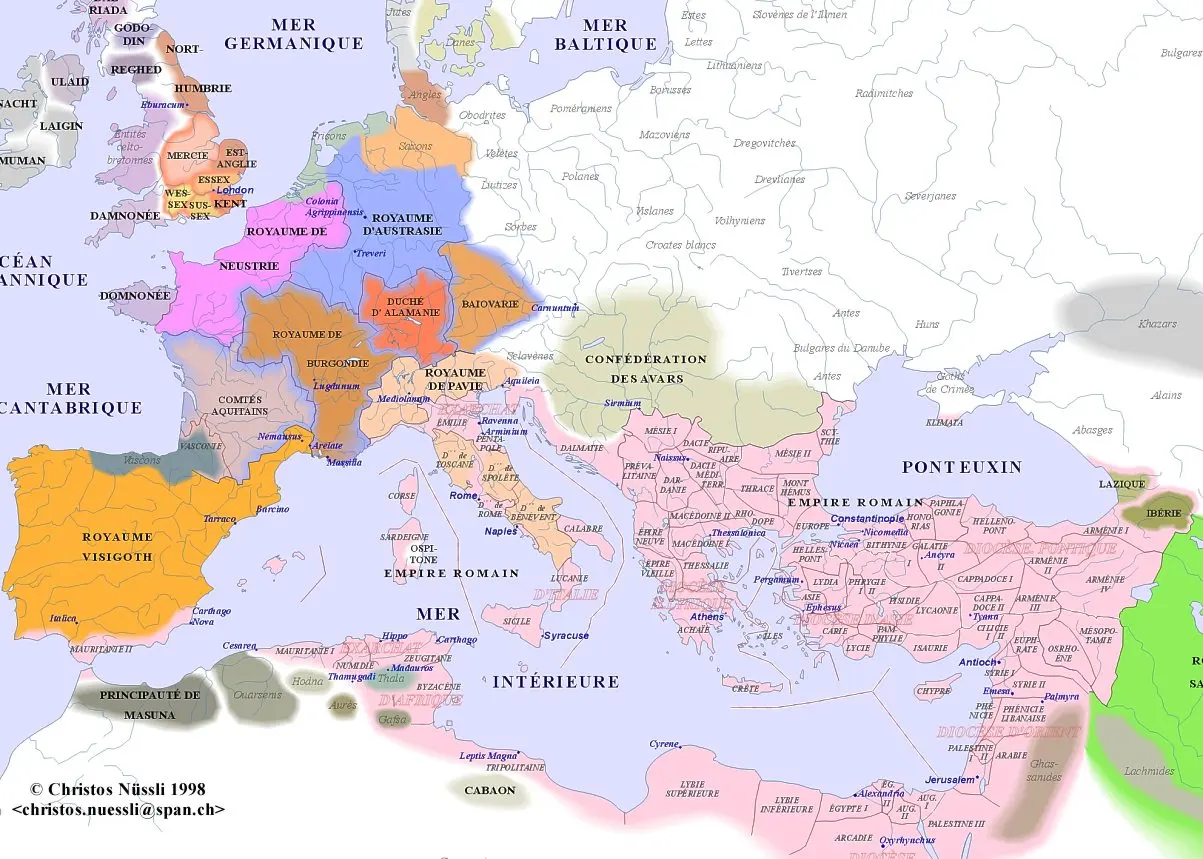
Lombard expansion soon fractured the restored territory. Imperial holdings survived in a network of districts connected by roads, sea routes, and military commands, while other regions entered Lombard rule. The exarch at Ravenna later represented concentrated authority within this fragmented environment.
The late Italian provinces thus lead into a different administrative world. Their names, cities, and ecclesiastical territories could persist, but the practical government of the peninsula no longer resembled one uniform fourth-century roster. This transformation is essential to the history of Roman provincial continuity in the West.