Provinces · Guide
The empire’s provincial transformations
A chronology of the provincial world
| Date | Provincial development | Historical significance |
|---|---|---|
| 241 BCE | Rome acquires Carthaginian Sicily | The beginning of the major overseas territorial system, though allied Syracuse remains separate |
| 238/237 BCE | Sardinia and Corsica acquired | Control of central-western maritime positions expands |
| 227 BCE | Separate praetorian arrangements for the islands | Regular overseas government becomes more clearly institutionalized |
| 218–201 BCE | War brings enduring Roman involvement in Iberia | Military footholds precede the two Spanish provinces |
| 197 BCE | Citerior and Ulterior organized | Two commands govern an Iberian territory still far from completely conquered |
| 168 BCE | Macedonian monarchy defeated | Four republics precede permanent provincial settlement |
| 148–146 BCE | Macedonia organized after renewed war | Direct government replaces the earlier political experiment |
| 146 BCE | Africa created; Corinth destroyed | Roman dominance expands, but southern Greece’s later Achaia is not yet a separate Augustan province |
| 133–129 BCE | Pergamene inheritance, resistance, and Asian settlement | Asia emerges through a sequence rather than a single peaceful transfer |
| 125–118 BCE | Southern Gallic campaigns and Narbo’s foundation | A durable overland-maritime connection between Italy and Spain develops |
| 74–63 BCE | Bithynian acquisition and Pompey’s eastern settlement | Composite provinces and client territories reshape Anatolia and Syria |
| 69–67 BCE | Crete conquered | The later Cretan-Cyrenaican combination follows different acquisition histories |
| 64/63 BCE | Syria annexed | A major eastern military command replaces the Seleucid remnant |
| 58 BCE | Cyprus annexed | An island monarchy enters the changing Republican provincial system |
| 58–50 BCE | Caesar’s Gallic conquest | A large new territory later receives Augustan provincial organization |
| 46 BCE | Africa Nova created | Civil war destroys a regional kingdom and enlarges Roman African territory |
| 42 BCE, conventionally | Cisalpine Gaul incorporated into Italy | A former command becomes part of the privileged Italian homeland |
| Date | Provincial development | Historical significance |
|---|---|---|
| 30 BCE | Egypt conquered | An exceptional imperial prefecture governs the Nile country |
| 27 BCE and subsequent adjustments | Augustan provincial settlement | Public and imperial allocations and major western reorganizations take shape |
| 25 BCE | Galatia annexed | A large Anatolian client kingdom becomes a direct imperial province |
| 19 BCE, conventionally | Northern Spanish conquest completed | The formal provincial system gains firmer control of the peninsula’s remaining northern regions |
| 15 BCE and following years | Alpine-Danubian expansion | Raetia, Noricum, and related districts enter stronger Roman control |
| 6 CE | Direct administration begins in Judaea | One phase of Herodian territory enters the imperial provincial framework |
| 6–9 CE | Great Balkan revolt | Suppression precedes important Illyrian, Dalmatian, and Pannonian reorganization |
| 9–16 CE | Varian disaster and later Germanicus campaigns | The attempt to establish enduring rule far beyond the Rhine is abandoned |
| 17 CE | Cappadocia annexed | A former kingdom becomes an eastern provincial and later military base |
| 40–43 CE | Mauretanian crisis and annexation | Two imperial provinces replace the dependent monarchy |
| 43 CE | Britain invaded; Lycia annexed | Direct government expands in two very different settings |
| 46 CE | Thrace annexed | A client kingdom becomes a province guarding major Balkan approaches |
| 63–64 CE | Cottian and Polemonian annexations | Remaining client arrangements enter direct provincial relationships |
| 72–74 CE, approximately | Flavian eastern consolidation | Commagene and other territories are absorbed; Cilician and Lycian-Pamphylian arrangements develop |
| c. 85–90 CE | Two German territorial provinces emerge | Earlier Rhine army districts acquire clearer provincial form |
| c. 103–107 CE | Pannonia divided | A major Danubian command is separated into Superior and Inferior |
| 106 CE | Dacia and Arabia acquired | Enduring expansion creates two new provinces with very different geographies |
| 114–117 CE | Trajan’s eastern annexations and occupations | Maximum military reach exceeds the durability of provincial government |
| 117/118 CE | Hadrian relinquishes far eastern acquisitions | The frontier system contracts while Dacia and Arabia remain |
| 132–135 CE | Bar Kokhba revolt and Hadrianic transformation | Judaea’s institutional, urban, and regional history changes profoundly |
| c. 194–198 CE | Severan eastern and African reorganizations | Syria divides, Numidia separates, and durable northern Mesopotamian rule develops |
| c. 211–214 CE | British division and Osroene changes | Large commands and surviving royal domains are further differentiated |
| 212 CE | Citizenship extended to most free imperial inhabitants | Legal status broadens without abolishing provincial boundaries or social inequality |
| c. 260 CE | Contraction of the upper German eastern salient | Frontier geography changes during third-century military and political crisis |
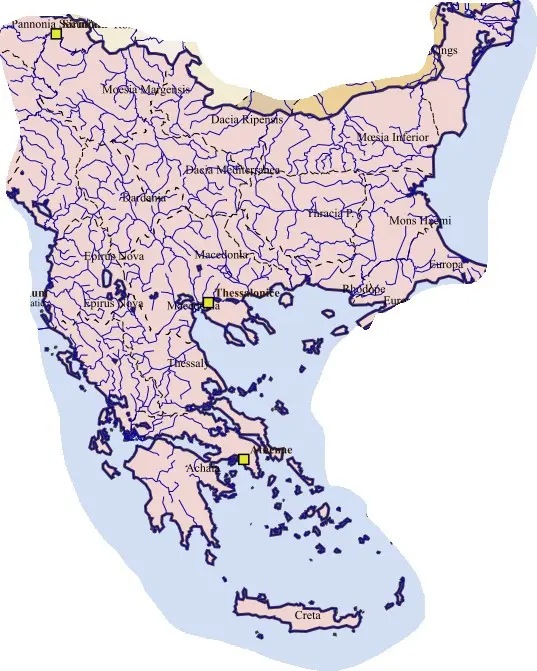
| c. 271–275 CE | North-Danubian Dacia evacuated | A new Dacia is established south of the river |
| Late third–fourth centuries | Large provinces divided and dioceses developed | More localized civil government and differentiated military command reshape the map |
| 330 CE | Constantinople inaugurated | Nearby provinces and eastern communications gain new strategic significance |
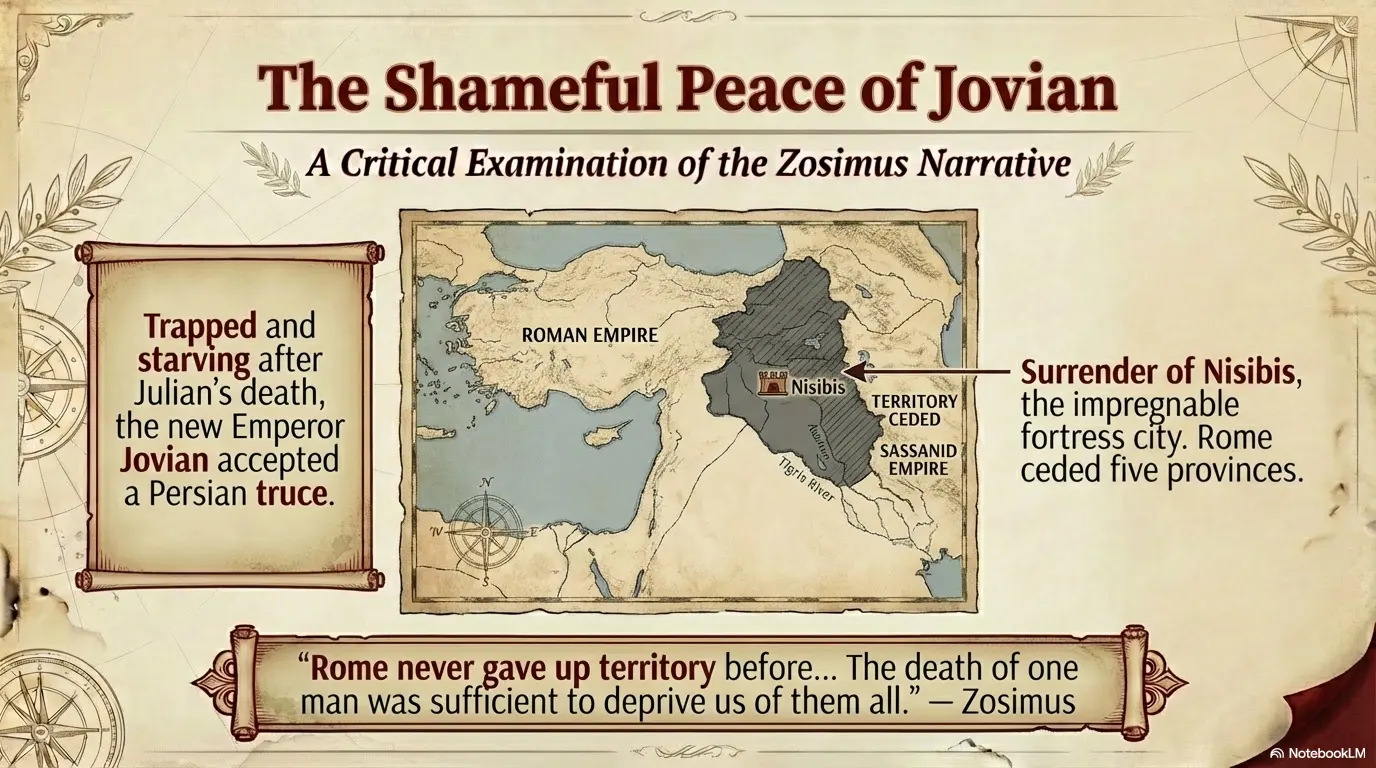
| 363 CE | Jovian cedes Nisibis and other eastern territories | Mesopotamia continues with a reduced and reconfigured frontier |
| 378 CE | Valens defeated at Adrianople | A major disaster changes Balkan conditions without ending the Roman state |
| c. 400 CE | Mature late provincial world | Many familiar large names now designate smaller territories within wider groupings |
| c. 407–410 CE | Central authority breaks down in Britain | Provincial institutions lose their former imperial support through a process rather than a single evacuation |
| Date | Provincial development | Historical significance |
|---|---|---|
| 429–439 CE | Vandal entry into Africa and capture of Carthage | A vital western revenue and maritime system passes beyond imperial government |
| 476 CE | Western emperor in Italy deposed | The event does not abolish all Roman provincial institutions or eastern Roman sovereignty |
| 528/529 CE | Theodorias created | Sixth-century reforms continue to add new provincial identities |
| 533–534 CE | Africa reconquered | Direct imperial government returns under new civil and military arrangements |
| 535–554 CE | Gothic war and Italian recovery | Sovereignty is restored through a prolonged and destructive campaign |
| 536 CE | Armenian reform and quaestura exercitus | Numbered provinces and exceptional cross-regional commands reshape the eastern system |
| From the 550s | Imperial Spania established | Selected Iberian territories return to direct Roman government |
| 568 CE onward | Lombard expansion in Italy | The restored peninsula fragments into competing jurisdictions |
| 591 CE | A new Roman-Persian settlement in the Armenian borderlands | Territorial relationships change again without reproducing Trajan’s annexation |
| Early seventh century | Persian conquests and Roman recovery | Eastern provincial systems experience severe disruption and brief restoration |
| 630s–640s CE | Arab conquest of Syria, Palestine, Mesopotamian districts, and Egypt | Several ancient provincial traditions enter new sovereign and administrative frameworks |
| 698 CE | Carthage falls | The long ancient Roman political centre in Africa is lost |
Government in practical terms
Province. A jurisdiction whose meaning changed from a magistrate’s assigned responsibility to a more territorial administrative unit. Its borders, governor, military establishment, and fiscal relationships could change without the name disappearing.
Public province. A province normally assigned under the Principate to a proconsul within the senatorial-public allocation. It remained part of the empire and subject to imperial power. Public status did not mean the emperor lacked influence over its affairs.
Imperial province. A jurisdiction administered on the emperor’s behalf, often by a senatorial legate or an equestrian official. The title does not imply that every imperial province had the same army or governmental rank.
Proconsul. A governor whose title survived from Republican magistracy and acquired different degrees of prestige. In late antiquity, selected proconsulships retained exceptional standing within a much larger structure of civil provinces.
Prefect and procurator. Titles used for several offices, including particular equestrian provincial governorships. Their meaning depends on the territory, date, and responsibilities involved. An Egyptian prefect, a Judaean prefect, and a financial procurator were not interchangeable offices.
Civitas. A community and its territory, often organized around a principal town. It formed a fundamental unit of provincial government and taxation. Its population included rural inhabitants as well as urban residents.
Colonia and municipium. Forms of civic status with different origins and legal meanings. A settlement’s title could change through grants and reorganization; it should not be assumed from the appearance of a Roman street grid or one imperial name.
Diocese. A late grouping of provinces coordinated by a higher civil authority, often a vicar. This administrative use is distinct from later common usage for a bishop’s territory, although civil and ecclesiastical geography influenced one another.
Praetorian prefecture. A large late civil-administrative sphere containing several provincial groupings. Its mature functions and territorial organization differed from the earlier imperial prefect’s military and court origins.
Dux and comes. Titles associated with military command in the late system, among other uses. A commander’s territory could cross civil provincial boundaries. Holding a military title did not automatically make its holder the civil governor of every district defended.
Client kingdom. A modern descriptive term for a royal polity whose ruler maintained a dependent or allied relationship with Rome. The degree of Roman control varied. Annexation could create a province, enlarge an existing one, or produce a temporary arrangement.
Limes. A frontier system or boundary context whose practical form varied. Roads, rivers, forts, watchtowers, settlements, local agreements, and regulated crossing points mattered alongside walls or barriers. Frontier society extended on both sides of the formal line.
Imperial residence and provincial capital. Different kinds of urban importance. A city could host an emperor, a governor, a bishop, a military commander, a fiscal office, or a provincial festival without possessing every one of those functions at once.
What survived when a province changed rulers
The replacement of imperial government could remove a governor, disrupt taxation, end military payments, or shift property and legal relationships. It did not necessarily erase a city, language, field system, local community, church, or road. Conversely, the survival of Roman titles and buildings does not prove the survival of the entire earlier state apparatus.
Provincial history therefore has several endings: the loss of direct sovereignty, the replacement of an administrative office, the abandonment of a military establishment, the contraction of a city, and the transformation of regional identity. These events could be separated by decades or centuries. The dossiers preserve those distinctions because they explain how Roman provinces became the inhabited landscapes of later Mediterranean and European history.