Provinces · The later eastern provinces
LE-03 Thessalia
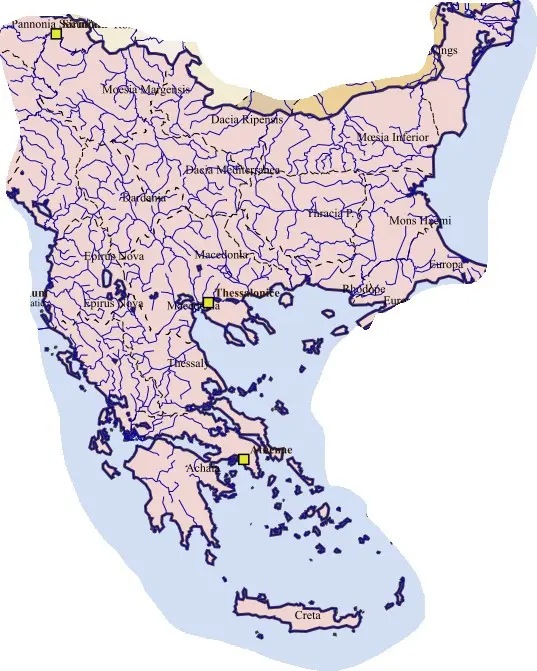
Thessaly’s broad plains supported cereals, livestock, and established rural communities. Mountain boundaries and passes connected the basin with Macedonia, Epirus, and southern Greece. Larissa’s administrative and episcopal roles gave institutional form to a region with a much older geographical identity.
Provincial government relied on towns, landowners, local officials, and productive hinterlands. Military movement through the Balkans brought both demand and disruption. Later incursions and changing settlement affected the province unevenly, while fortified and ecclesiastical centres maintained important continuities. Thessalia’s separate profile is essential because its regional economy and civil institutions were not simply those of Thessalonica or Corinth on a smaller scale.