Provinces · The later western provinces
LW-32 Liguria
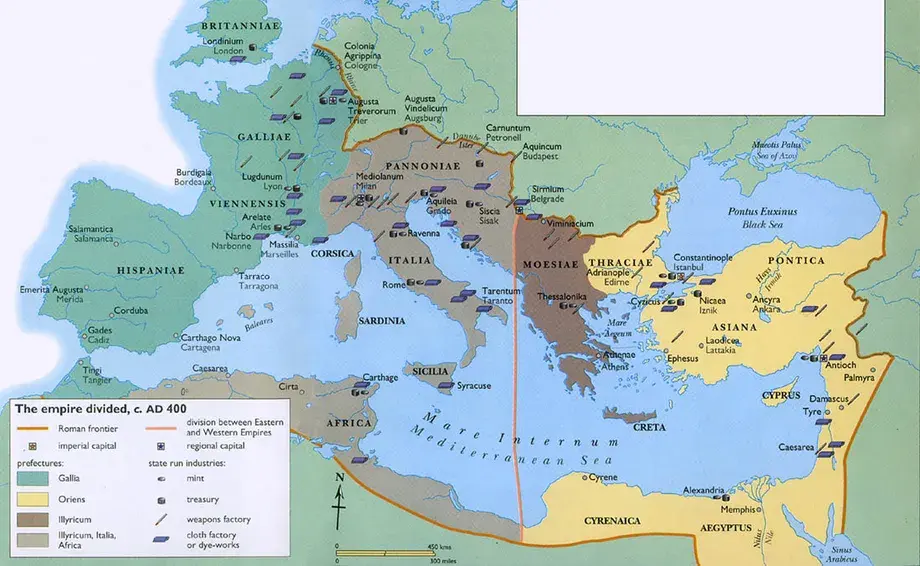
Late Liguria did not correspond simply to the modern coastal region bearing the name. Milan’s position in the northwestern plain and its routes towards Alpine passes gave it exceptional importance. As an imperial residence, the city contained court, military, administrative, and Christian institutions far beyond the needs of an ordinary provincial capital.
Agriculture, trade, workshops, and the demand generated by political power supported the region. The court’s movement and later wars changed that balance. Gothic, Eastern Roman, and Lombard control transformed the jurisdiction, but Milan and other towns retained durable regional roles after the late Roman province’s superior framework had disappeared.